
As COP30 opens, urban Amazon residents swelter / Photo: © AFP

 Swiss vote on what it means to be neutral

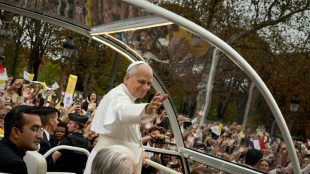
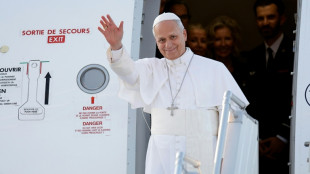
 Pope to meet with victims of clerical sex abuse during France trip
 Iran stands firm on Hormuz plan after US rejection
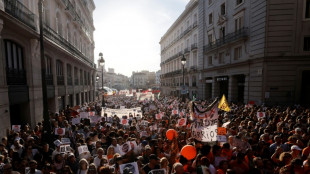
 Madrid protest camp grows after eviction outrage

 Italy winemakers hail bumper harvest but cut output

 Kyiv shoppers feel the pinch from Russian strikes
 Japanese anime actor fights TikTok over AI voice cloning
 Curtain falls on the romance of India's single-screen cinemas

 Smells like teen spirit as US thrash Peru 4-1

 Cavy chaos: Hundreds attend New Zealand's biggest guinea pig show

 Venezuela releases more political prisoners after opposition talks

 England's best 'for a long time' despite Spain defeat, says Kane

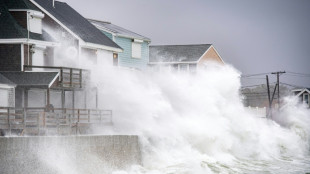 Powerful storm pummels northeast US with rain, high winds

 Filmmaker Mike Leigh wins top prize at Spain festival with 'last film'
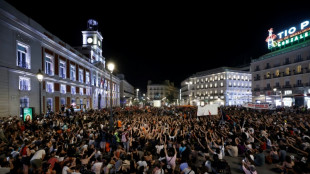
 Spain beat England in Nations League to extend unbeaten run

 Ireland squad vote to play Israel tie despite Gaza unease
 Gutsy Vollering wins cycling road race world title

 Vollering wins cycling road race world title
 Man City's meteoric rise clouded by dark shadow
 Mbappe out for two weeks or more with knee injury say Real
 Lyon collapse away to Stade and suffer first Top 14 loss
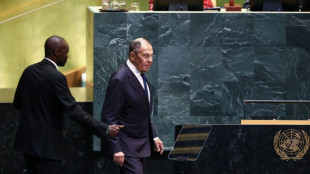 Russia accuses Europe of seeking to thwart Ukraine talks

 Man City chairman defiant over reported Premier League charges

 Germany ready to 'walk through fire' for Klopp, says Tah

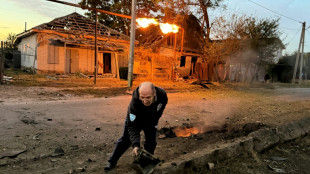 At least 16 killed in Russian and Ukrainian strikes

Outside their run-down home in the Amazon city of Belem, a mother and her little girl laugh as they cool off from the punishing heat in a large blue plastic tub filled with water.
Here in the riverside community of Vila da Barca, tightly packed houses on stilts bake in the sun, in sharp contrast to the dense shaded rainforest canopy surrounding the city of Belem.
Another resident, Rosineide Santos, 56, told AFP that since she moved to the favela two decades ago, "the climate has changed a lot. It's intensely hot from nine in the morning."
Vila da Barca lies a few kilometers from the conference center hosting the United Nations climate talks in the Amazon city of Belem.
But Belem is, paradoxically, one of Brazil's least tree-lined cities.
More than half the population lives in the working-class communities known as favelas that are characterized by dense, low-quality housing.
"No one talks about protecting those of us who live in the urban Amazon, or about how the climate crisis affects our most vulnerable territories," said community leader Gerson Bruno, 35.
Although the Amazon is synonymous with lush greenery, more than 75 percent of the 27 million people living in Brazil's share of the rainforest actually live in urban areas, according to official data.
- Improved services -
Vila da Barca, founded by fishermen a century ago, flanks one of the city's wealthiest areas. Many of the favela's some 7,000 residents however, struggle with poverty.
The lack of basic sanitation worsens the impact of the climate crisis, residents say.
The arrival of COP30, with its flurry of infrastructure projects, was a rare opportunity for Vila da Barca to pressure authorities into delivering better services.
At first, they complained that affluent districts were receiving massive investment, while the mostly black and mixed-race residents of the favela were left behind.
In one example, residents were angered by a plan to build a sewage pumping station inside their community to serve a wealthy neighborhood -- not Vila da Barca itself.
After a "rocky start", Bruno said they had succeeded in securing the construction of a sewage system for the stilt houses and a long-demanded, reliable water supply.
Until just a few months before COP30, many families had to buy jugs of water if they wanted to bathe or wash produce.
Between 1970 and 2023, Belem's maximum temperature rose by 1.96 degrees Celsius, increasing "vulnerability to heat waves, related health problems, and pressure on infrastructure," said a recent study by the Para University Center.
State governor Helder Barbalho told AFP that "the urban Amazon is a major challenge. We need more investment to balance solutions for the forest and for the cities."
Standing at her door on a rickety wooden walkway, 67-year-old retiree Elizabeth Campos Serra has had enough of the stilt houses.
If she could, she would tell President Luiz Inacio Lula da Silva "to get us out of here. I want to live on solid ground."
K.Brown--BTB


