Japanese ivory trade attracts fresh global scrutiny / Photo: © AFP

 AI startup urges optimism from Europe despite safety fears

 'Godlike, invincible': Japan hails 11-year-old Games history-maker

 Nepal's hydropower ambitions face climate reality check

 Power cuts, rubble: millions come home to find Sudan's capital unlivable

 Internationals keep Presidents Cup lead with late fightbacks

 Tuchel to 'keep pushing' England to reach Spain's level

 Alcaraz saves match points to keep Europe ahead in Laver Cup

 Spain success driven by hunger to improve, says De La Fuente

 Lyon collapse at Stade Francais to suffer first Top 14 loss
 Oyarzabal and Spain sink England again as Modric shines for Croatia

 Housing protesters camp in central Madrid after mass demonstration

 Louise Trotter expands her palette at Bottega Veneta

 Pope prays at Lourdes after huge Paris mass

 USA trims International lead after Presidents Cup four-balls

 Russia accuses Europe of blocking Ukraine talks, as strikes drag on

 'He said hello': Families pray with pope on Paris avenue

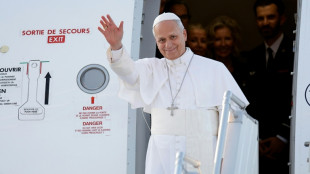 Pope celebrates giant Paris mass, flies to Lourdes

 Thousands march in Madrid over eviction of 87-year-old woman
 England women back to winning ways with last-gasp defeat of New Zealand

 Trump rejects Iran proposal for deal to reopen Hormuz

 England's Cox says injured Buttler leaves 'big shoes to fill'

 Ruthless Perpignan upset sloppy Bordeaux-Begles
 Deadly abbey attack feeds anti-Ukrainian sentiment in Poland
 Antonelli says he drove 'safety-first' on his worst weekend of season

 Fernandez fights back to reach Singapore Open final

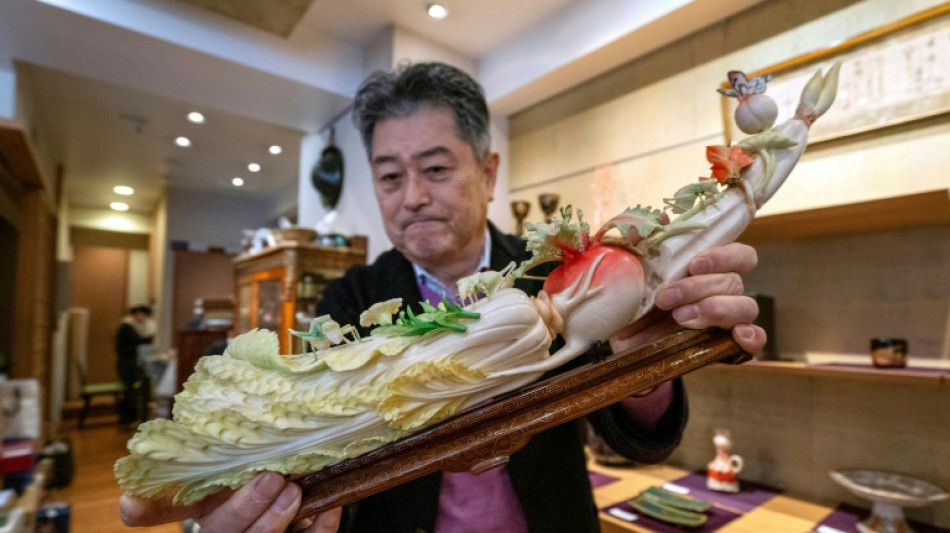
At his store in Tokyo's ritzy Ginza district, Hajime Sasaki displays a disparate array of wares, from chopsticks to Buddha statues -- including many made of ivory.
International trade in elephant ivory is illegal, but Japan hosts one of the world's largest remaining legal domestic markets for the product, which can only be bought and sold within its borders.
It is fed with stockpiles of ivory imported before the international ban more than 30 years ago, or bought in one-off government auctions.
But conservationists warn Japan's ivory often leaks overseas, fuelling black market trade, while driving demand and undermining bans in countries like China.
Sasaki's shop displays pamphlets in Chinese and English explaining that ivory cannot be taken abroad, but he still "receives many Chinese customers", he told AFP.
"Tourists give up buying ivory when I explain you can't bring it outside Japan," said the softly-spoken 69-year-old.
Conservationists estimate between 10,000 and 15,000 elephants from the two African species are killed for their tusks each year.
And seizure data suggests ivory is leaving Japan's domestic market.
Since 2008, more than 3,600 kilograms (four US tons) of ivory linked to Japan has been seized by authorities around the world, according to data presented at a recent global wildlife trade meeting in Uzbekistan.
Dozens of interceptions were destined for China, according to the document presented at the meeting of the Convention on International Trade in Endangered Species of Wild Fauna and Flora (CITES).
The data suggests "some weakness in Japan's law enforcement", the document warned.
- 'Organised criminals' -
In 2023, a shipment reportedly bound for Thailand carrying 710 pieces was intercepted, another CITES document said.
Shipments of that size "suggest organised criminals are also involved", said Matt Collis, senior policy director at the International Fund for Animal Welfare (IFAW).
At the CITES meeting, four African nations unsuccessfully urged adoption of a document that would have called for the closure of all remaining domestic ivory markets.
And Japan fiercely denies that its national market impacts elephant conservation.
It disputed the interpretation of the data presented at CITES, and said it continues to "implement strict control measures" to prevent leakage.
Japan's alleged leakage problem is particularly problematic for China, once the world's biggest market for ivory, which banned trade in 2017 -- around the same time as the United States.
"China is doing their best to enforce their domestic ivory ban and to change public perceptions," said Collis.
"But you have a neighbouring country that is undermining these efforts by not enforcing controls and perpetuating demand."
Ivory was once widely used in Japan for personal seals and musical instruments.
Today the country has a 250-tonne stockpile, boosted by two CITES-approved auctions in 1999 and 2008.
At Sasaki's shop, shelves are lined with exquisitely-carved ornaments. A Buddha statue worth more than $1,500 (238,000 yen) is safely housed inside a gold-painted cabinet.
But there is little demand.
Sasaki says he has just one or two buyers a month, mostly older Japanese.
That is partly due to growing awareness of the ivory trade's devastating impact, said Masayuki Sakamoto, director of the Japan Tiger and Elephant Fund (JTEF).
"So inventory in Japan is piling up, and demand from China and other countries persists," he said.
- 'Sustainable use' -
Although China's ban has tamped down interest somewhat, ivory carvings, jewellery and trinkets remain highly prized in Asia's largest economy.
"Given the size of China, even lower levels of demand can provide powerful incentives for traffickers to seek to get ivory into China's black market," Collis said.
Experts also question Japan's system for tracking its domestic ivory, which is based mostly on tracing whole tusks, even though trade is primarily in small, derivative products.
Japan has shown little interest in curtailing domestic sales, and supported a proposal by Namibia at CITES that would have allowed a one-off government auction of the African country's ivory stocks to other governments.
The bid was defeated, to the relief of conservationists who argue further sales will only fuel demand.
But Sasaki said he felt the tusks should be sold to help conservation efforts, echoing the Tokyo Ivory and Crafts Association, which says it backs "sustainable use" of ivory, as a "form of conservation".
"Smuggling is bad", said Sasaki.
"But I think reusing elephant tusks would be better (than disposing of them), and generate income."
C.Meier--BTB


