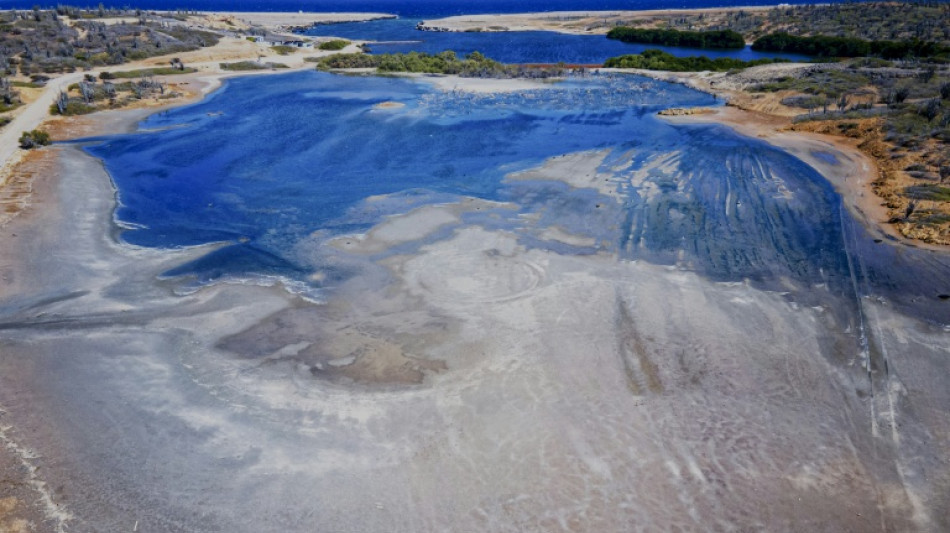
Netherlands 'insufficiently' protects Caribbean island from climate change: court / Photo: © ANP/AFP

 Japanese anime actor fights TikTok over AI voice cloning

 Curtain falls on the romance of India's single-screen cinemas

 Smells like teen spirit as US thrash Peru 4-1

 Cavy chaos: Hundreds attend New Zealand's biggest guinea pig show

 Venezuela releases more political prisoners after opposition talks

 England's best 'for a long time' despite Spain defeat, says Kane

 Powerful storm pummels northeast US with rain, high winds

 Filmmaker Mike Leigh wins top prize at Spain festival with 'last film'

 Spain beat England in Nations League to extend unbeaten run

 Ireland squad vote to play Israel tie despite Gaza unease

 Gutsy Vollering wins cycling road race world title

 Vollering wins cycling road race world title
 Man City's meteoric rise clouded by dark shadow

 Mbappe out for two weeks or more with knee injury say Real

 Lyon collapse away to Stade and suffer first Top 14 loss

 Russia accuses Europe of seeking to thwart Ukraine talks

 Man City chairman defiant over reported Premier League charges

 Germany ready to 'walk through fire' for Klopp, says Tah

 At least 16 killed in Russian and Ukrainian strikes

 Powerful storm pummels US Northeast

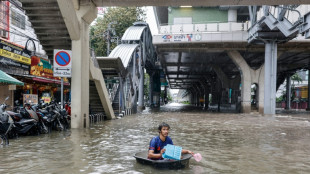 Bangkok declares disaster after homes flooded, roads submerged by heavy rain

 Norris calls for errant Colapinto to be banned for causing Baku crash

 Russell finds himself again and prepares to heap pressure on Antonelli

 South Korea hold nerve to win Asian Games basketball gold

 Russell holds off Verstappen to claim imperious victory in Baku

The Netherlands "insufficiently" protects the tiny Caribbean territory of Bonaire from climate change, a Dutch court ruled Wednesday in a potentially landmark environmental justice ruling.
Residents of the Dutch territory off the coast of Venezuela teamed up with Greenpeace to sue the Dutch government, demanding "concrete measures" to shield the island from rising waters.
The ruling by the Hague District Court warned that Bonaire residents "are being treated differently from the inhabitants of the European part of the Netherlands without good reason", calling it a violation of their human rights.
It ordered the Netherlands to set binding interim targets within 18 months "for the reduction of greenhouse gas emissions across the entire economy".
The ruling follows an advisory opinion from the International Court of Justice, which found that states violating their climate obligations were committing an "unlawful" act.
"The Bonaire case is the first major test case on a state's mitigation and adaptation ambition following the ICJ's groundbreaking ruling and could set a precedent with global relevance," said Greenpeace.
The low-lying Netherlands is famous for its protective measures against rising waters, mainly based on an extensive system of barriers and dykes.
But campaigners argue that it does not provide the same protection for its overseas territories such as Bonaire.
They had called for a plan in place for Bonaire by April 2027 and for the Netherlands to reduce CO2 emissions to zero by 2040 rather than 2050 as agreed at an EU level.
The government had argued it was an "autonomous task" of the local authorities to develop a plan to counter the ravages of climate change.
Campaigners pointed to a survey by Amsterdam's Vrije Universiteit showing the sea could swallow as much as a fifth of Bonaire by the end of the century.
Bonaire is a former Dutch colony in the Caribbean.
In 2010, it became one of three so-called special municipalities of the Netherlands along with Saba and St Eustatius.
- 'Unbearable' -
During court hearings last year, some of the island's 27,000 residents shared their experiences battling rising seas and temperatures.
"Climate change is not a distant threat for us," Bonaire farmer Onnie Emerenciana told judges.
"Where we used to work, play, walk, or fish during the day, the heat is now often unbearable."
The climates in Europe and the Caribbean are not the same, the court said in its ruling.
"There is no good reason why measures for the inhabitants of Bonaire, who will be affected by climate change sooner and more severely, should be taken later and less systematically than for the European part of the Netherlands," it added.
The use of courts and other legal avenues to pursue climate litigation has grown rapidly over the past decade, with most lawsuits targeting governments.
Claimants argue a relatively small number of major polluters bear a historic liability for losses caused by droughts, storms and other climate-fuelled extremes.
The ICJ opinion, requested by the United Nations, aimed to clarify international law as it relates to climate change.
In what was largely seen as a win for environmental campaigners, the judges said polluters could be liable for reparations to countries suffering from climate damage.
Wednesday's case "is the first European adaptation ruling on overseas territories that could have groundbreaking legal consequences worldwide", said Greenpeace.
"It should not matter where you were born: everyone has the right to protection against floods, storms, and extreme heat," said Marieke Vellekoop, director of Greenpeace Netherlands.
J.Horn--BTB


