Colombian deforestation policy 'failure' a headache for new government / Photo: © AFP/File

 Ireland squad vote to play Israel tie despite Gaza unease

 Gutsy Vollering wins cycling road race world title

 Vollering wins cycling road race world title
 Man City's meteoric rise clouded by dark shadow
 Mbappe out for two weeks or more with knee injury say Real
 Lyon collapse away to Stade and suffer first Top 14 loss

 Russia accuses Europe of seeking to thwart Ukraine talks

 Man City chairman defiant over reported Premier League charges

 Germany ready to 'walk through fire' for Klopp, says Tah

 At least 16 killed in Russian and Ukrainian strikes

 Powerful storm pummels US Northeast
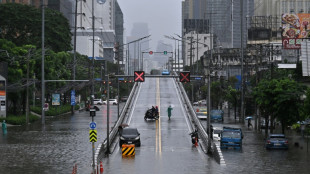
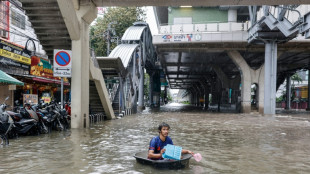 Bangkok declares disaster after homes flooded, roads submerged by heavy rain

 Norris calls for errant Colapinto to be banned for causing Baku crash

 Russell finds himself again and prepares to heap pressure on Antonelli
 South Korea hold nerve to win Asian Games basketball gold

 Russell holds off Verstappen to claim imperious victory in Baku

 Russell holds off Verstappen to win Azerbaijan Grand Prix

 India's Kohli says 2027 ODI World Cup will be his last

 Huge crowds cheer Pope Leo along Champs-Elysees ahead of Paris mass

 Putellas wants to bring 'winning culture and mentality' to London City

 Rare Italian opera returns to Moscow after nearly 120-year hiatus

 Pope to celebrate giant Paris mass after 'peace' appeal
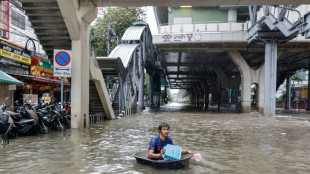 Homes flooded, roads submerged: Bangkok declares disaster over heavy rains

 Ahead of Paris mass, pope urges life together in 'dignity and peace'

 Austria 'ghetto' language classes leave children to repeat school
Colombian President Ivan Duque's environmental policies "failed" according to experts who dispute the outgoing right-wing government's claims to have reduced deforestation.
With conservative Duque due to hand over to his left-wing successor Gustavo Petro on Sunday, the new government will have to find solutions to the problem.
The South American country is one of the most biodiverse in the world, according to the United Nations, but between 2018 and 2021 it lost an area of forest larger than the size of the Gaza Strip (7,000 square kilometers, 2,700 square miles), according to official data.
The Duque government "focused on military and judicial operations" to tackle deforestation, particularly in the Amazon rainforest, but these "failed," according to former environment minister Manuel Rodriguez (1991-96).
And even though the deforestation figure is worse than the previous four years, from 2014-2017 (6,500 square kilometers), the government has defended its record.
"This phenomena reduced by 34 percent compared to the trend model," said environment minister Carlos Correa when presenting the 2021 deforestation figure of 1,741 square kilometers.
But instead of comparing that figure to the 1,717 square kilometers from 2020, the government contrasted it against a projection model based on the trend between 2008 and 2017, when deforestation was out of control.
"So, faced with a hypothetical catastrophic scenario, is losing 1,700 square kilometers of forest good? I don't think so," said Rodrigo Botero, director of the Conservation and Development Foundation.
Botero says the authorities' own figures show that rainforest loss increased between 2019 and 2021.
"We are still at a very high point on the deforestation curve," Botero told AFP.
"The fact that we have had three consecutive years of increase means that there is no control over the structural variables, it's an alarming sign."
Colombia is not the only South American country struggling to rein in the loss of forests.
Neighboring Brazil, which is home to the majority of the Amazon rainforest, saw a record amount lost in the first half of 2022.
The figure of 3,750 square kilometers topped the previous record for the first half of the year, set in 2021.
- 'Modest' government success -
President-elect Petro, who will be Colombia's first ever left-wing leader, has said he will prioritize the fight against climate change and environmental protection.
Petro says he will suspend oil exploration to progressively move to clean energy and will restrict the expansion of farming in the Amazon.
He also aims to create environmental reserves where indigenous and peasant communities can develop sustainable projects.
But before then, the new president will need to decide what to do about his predecessor's strategy.
In April 2019, eight months after coming to power, Duque launched the Artemisa military operation to fight deforestation using 23,000 soldiers.
Since then, around 100 people have been arrested and a similar number of pieces of machinery confiscated.
"Artemisa had 20 interventions, over four years that's a pretty modest number," said Rodriguez.
"You have to create a state presence in terms of education and the generation of employment."
Peasants have complained that the military operation attacked the weakest links in the chain rather than the large-scale architects of deforestation.
Farming, land grabbing and the growing of drug crops are the main sources of deforestation.
As part of the Paris climate accords, Colombia committed to eliminate deforestation by 2030.
To do so, the environment ministry projects a reduction to 1,550 kilometers squared of lost forest in 2022 and just 1,000 square kilometers a year by 2025.
The government of Norway, which like Germany and the United Kingdom sends millions of dollars in aid to Colombia to preserve its forests, has expressed its alarm at the likelihood that Colombia will miss its first target.
And it could cost the country.
"We are not seeing a constant reduction in the rate of deforestation ... the country could lose up to $260 million up to 2025 for not slowing it," Ole Bergum, Norway's climate and forests advisor in Colombia, told the El Tiempo newspaper.
jss/vel/das/bc/jh
K.Brown--BTB