Kast putting conservative stamp on Chile in first 30 days / Photo: © AFP/File

 Internationals keep Presidents Cup lead with late fightbacks

 Tuchel to 'keep pushing' England to reach Spain's level

 Alcaraz saves match points to keep Europe ahead in Laver Cup
 Spain success driven by hunger to improve, says De La Fuente

 Lyon collapse at Stade Francais to suffer first Top 14 loss
 Oyarzabal and Spain sink England again as Modric shines for Croatia
 Housing protesters camp in central Madrid after mass demonstration

 Louise Trotter expands her palette at Bottega Veneta

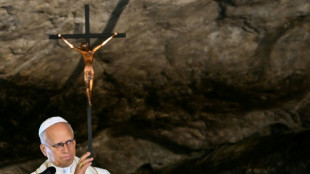 Pope prays at Lourdes after huge Paris mass

 USA trims International lead after Presidents Cup four-balls

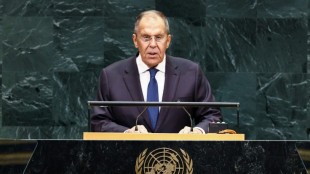 Russia accuses Europe of blocking Ukraine talks, as strikes drag on

 'He said hello': Families pray with pope on Paris avenue

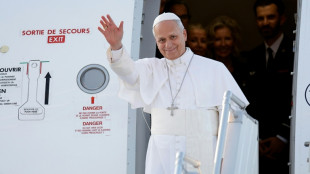 Pope celebrates giant Paris mass, flies to Lourdes

 Thousands march in Madrid over eviction of 87-year-old woman
 England women back to winning ways with last-gasp defeat of New Zealand

 Trump rejects Iran proposal for deal to reopen Hormuz

 England's Cox says injured Buttler leaves 'big shoes to fill'
 Ruthless Perpignan upset sloppy Bordeaux-Begles
 Deadly abbey attack feeds anti-Ukrainian sentiment in Poland

 Antonelli says he drove 'safety-first' on his worst weekend of season

 Fernandez fights back to reach Singapore Open final

 Giant statue of Pope Leo XIV takes shape in Peru workshop

 Ukraine crush holders Italy to reach first BJK Cup final

 Pope celebrates giant Paris mass in landmark visit

 Germany selects Munich for Olympics host bid

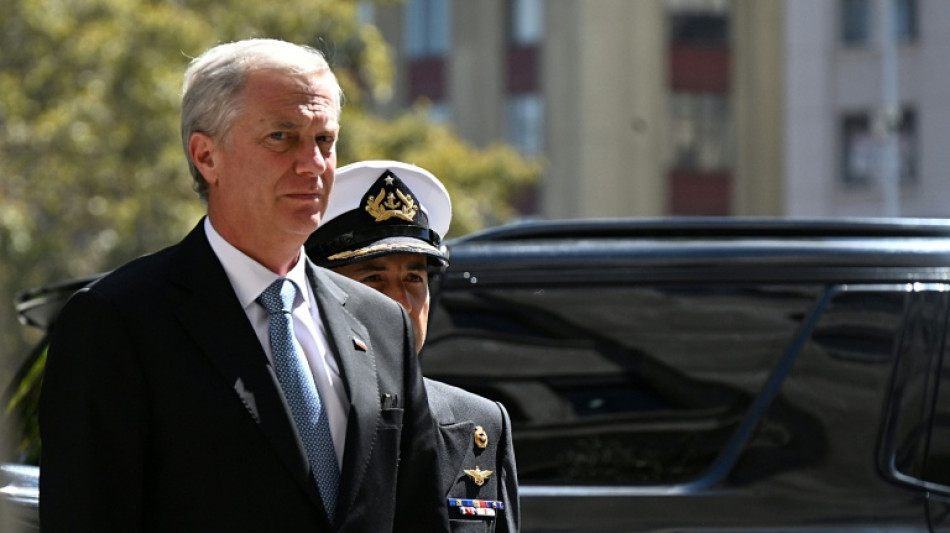
Just three weeks into his term, Chile's new President Jose Antonio Kast has lost no time in tilting the rudder sharply to the right as he looks to slash spending and crack down on immigration, both policies a major about-turn on predecessor Gabriel Boric.
Kast, a lawyer of 60, has promised not to shrink from making radical policy choices to revive the economy but also bring illegal immigration under control.
This week saw Kast's team cancel leftist Boric's plans to grant legal status to tens of thousands of migrants who entered the country without permission.
Boric had prepared a decree giving the green light to 182,000 people who applied for legal status.
But after Kast campaigned with a pledge to crack down on the issue, Migration Service director Frank Sauerbaum told AFP "we are not going to proceed with a massive granting of residency papers as proposed by the Boric government."
Kast had already ordered the start of construction of new barriers on the Peruvian border to crack down on people sneaking in. The border with Bolivia will also be tightened.
He blames a rise in murders, kidnappings and extortion on undocumented immigrants.
He has also axed more than 40 environmental decrees which he sees as holding back economic activity and cut ministry budgets by some three percent.
One of the new government's most controversial measures is the scaling back of government schemes designed to cushion the impact of fluctuations in fuel prices, which have soared by 30 percent for petrol and 60 percent for diesel in a country heavily reliant on imports.
Kast's election brought the most right-wing president to power in Chile since the military dictatorship of Augusto Pinochet from 1973 to 1990.
But the opening gambits of the professed Pinochet admirer have shocked some.
"They're undoing everything the left has achieved, and I don't think they understand how ordinary people feel," complains Rodrigo Araya, a 27-year-old chef from Santiago.
For political scientist Rodrigo Espinoza, the change of direction was at least expected.
Espinoza points out that "reversing certain decisions made by the previous administration was part" of Kast's campaign pledges.
Measures such as the migration clampdown were largely introduced by decree, bypassing congress, where the president lacks a majority.
- "Tough measures" -
"These are tough measures," Kast concedes.
"But we cannot buy popularity with money we do not have."
The government cites a budget deficit running at 3.6 percent and public debt topping 40 percent, both as a portion of GDP.
Kast's embrace of austerity measures has already sparked protests, chiefly by students and environmental activists.
Gonzalo Mueller, director of the Centre for Public Policy at Chile's private University of Development, says the goal is to rectify controversial decisions rather than to "dismantle a legacy" of what went before Kast arrived.
Kast has sought to hit the ground running on policy yet his approval rating has slumped from 57 percent to 43 percent since he took office on March 11, says a recent poll by the Cadem institute.
Some of that loss of support is a reaction to scaling back Boric's environmental protections.
One focused on the protection of species such as the Humboldt penguin, which is endemic to the Chilean coast and classified as 'vulnerable' by the International Union for Conservation of Nature.
The measure proposed designating the creature a ‘natural monument’ and extending its protection to the whole of Chile, prohibiting any activity likely to affect it.
"This sends the wrong signal," warns Chilean scientist Alejandro Simeone, a specialist in the species.
"We are in a situation where everything is so negative, so complex, that it is likely" the species will disappear within a few decades.
According to a study he led, the population of the bird slumped 63 percent between 2022 and 2025, due to the combined effects of avian flu, the El Nino weather phenomenon and pressure from industrial fishing.
Cristina Dorador, a specialist in salt desert conservation, said austerity and conservation are not mutually exclusive.
"It is a mistake to frame the issue as a stark dichotomy: protecting nature does not mean giving up all economic activity."
K.Brown--BTB


