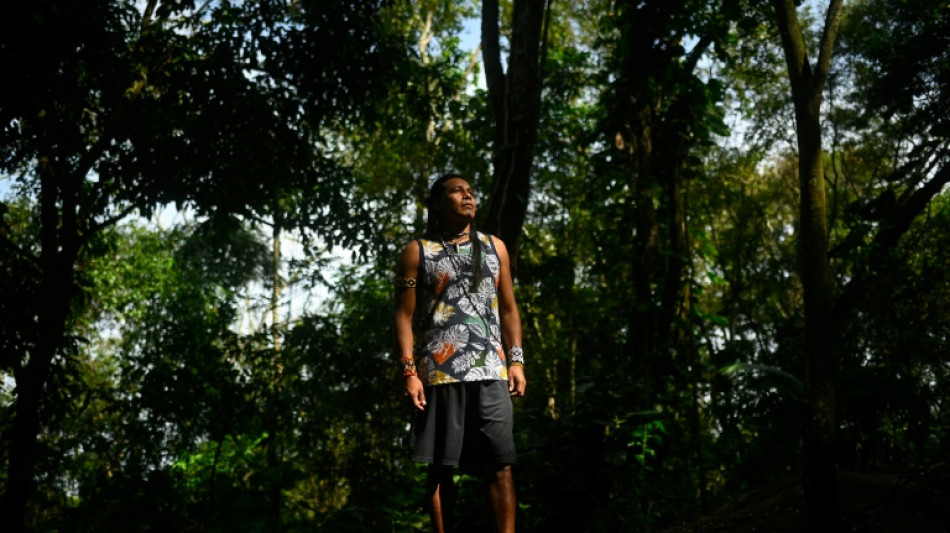
Seeking water, Brazil indigenous group finds new home / Photo: © AFP

 Venezuela releases more political prisoners after opposition talks

 England's best 'for a long time' despite Spain defeat, says Kane

 Powerful storm pummels northeast US with rain, high winds

 Filmmaker Mike Leigh wins top prize at Spain festival with 'last film'

 Spain beat England in Nations League to extend unbeaten run

 Ireland squad vote to play Israel tie despite Gaza unease
 Gutsy Vollering wins cycling road race world title

 Vollering wins cycling road race world title

 Man City's meteoric rise clouded by dark shadow
 Mbappe out for two weeks or more with knee injury say Real

 Lyon collapse away to Stade and suffer first Top 14 loss

 Russia accuses Europe of seeking to thwart Ukraine talks

 Man City chairman defiant over reported Premier League charges

 Germany ready to 'walk through fire' for Klopp, says Tah

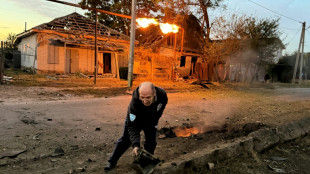 At least 16 killed in Russian and Ukrainian strikes

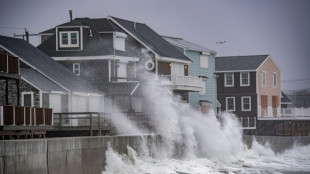 Powerful storm pummels US Northeast
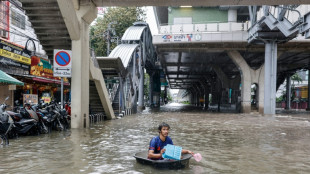 Bangkok declares disaster after homes flooded, roads submerged by heavy rain

 Norris calls for errant Colapinto to be banned for causing Baku crash

 Russell finds himself again and prepares to heap pressure on Antonelli
 South Korea hold nerve to win Asian Games basketball gold

 Russell holds off Verstappen to claim imperious victory in Baku

 Russell holds off Verstappen to win Azerbaijan Grand Prix

 India's Kohli says 2027 ODI World Cup will be his last

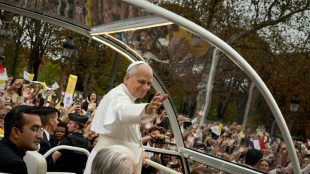
 Huge crowds cheer Pope Leo along Champs-Elysees ahead of Paris mass

 Putellas wants to bring 'winning culture and mentality' to London City
Clutching a machete and a cell phone, indigenous leader Vanderlei Weraxunu tours his community's future home, a swathe of tropical forest land north of Rio de Janeiro where his people will finally have water.
Weraxunu is one of around 50 members of the Mbya Guarani people who will soon establish a new home in the middle of what will be Brazil's first municipal nature reserve, where they plan to live according to their ancestral lifestyle.
The project promises to transform the lives of community members, who have been living in a settlement with no access to potable water in Marica county, in Rio de Janeiro state.
Hailing from different regions of Brazil, the community of Mbya Guarani moved there a decade ago and founded a village, Ceu Azul (Blue Sky) on a plot of land donated by a businessman.
But the land, a former coffee plantation, is too degraded to farm crops, and the village has to have water trucked in by the municipal government.
"A river ran through it 150 years ago. But then the former owner turned it into a coffee plantation and it was devastated," says the youthful, chiseled Weraxunu, sporting a beaded armband, traditional face paint and long black hair.
"They cut down the forest and that caused the river to dry up," he adds, as a black- and bronze-furred monkey playfully performs acrobatics on his arms and shoulders.
South America is home to an estimated 280,000 Guarani, divided into several subgroups including the Mbya.
They have a long history of conflicts with non-native farmers, who had often forced them from their ancestral land.
- 'Guardians of nature' -
After years of negotiations with the government, Weraxunu's community is now set to move in the coming months to a 50-hectare (125-acre) plot of public land about 35 kilometers (20 miles) away, donated by the municipality.
"We'll have more resources, we'll be able to plant (manioc and sweet potato) and gather medicinal herbs," says Weraxunu.
They also plan to bring back native crops such as Guarani maize, which they hold sacred, as well as bamboo for the handcrafts that are an important source of the community's income.
"Until now, we've had to bring in bamboo from other places" to make traditional baskets, says Maria Helena Jaxuka, a Guarani cacique, or chief.
"It will allow us to preserve nature, as well as our culture and way of life," says Weraxunu.
"The Guarani and all indigenous peoples are the guardians of nature, which gives us life."
Y.Bouchard--BTB



