Exiting fossil fuels key to energy security: nations at Colombia talks / Photo: © AFP

 Ireland squad vote to play Israel tie despite Gaza unease

 Gutsy Vollering wins cycling road race world title

 Vollering wins cycling road race world title
 Man City's meteoric rise clouded by dark shadow
 Mbappe out for two weeks or more with knee injury say Real
 Lyon collapse away to Stade and suffer first Top 14 loss

 Russia accuses Europe of seeking to thwart Ukraine talks

 Man City chairman defiant over reported Premier League charges
 Germany ready to 'walk through fire' for Klopp, says Tah

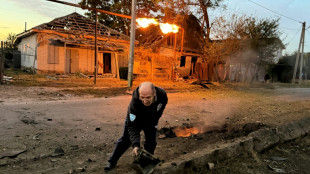 At least 16 killed in Russian and Ukrainian strikes

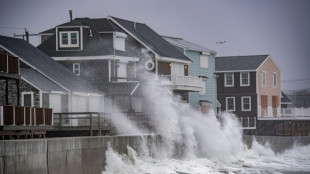 Powerful storm pummels US Northeast

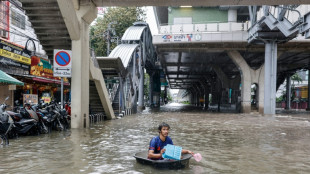 Bangkok declares disaster after homes flooded, roads submerged by heavy rain

 Norris calls for errant Colapinto to be banned for causing Baku crash

 Russell finds himself again and prepares to heap pressure on Antonelli

 South Korea hold nerve to win Asian Games basketball gold

 Russell holds off Verstappen to claim imperious victory in Baku

 Russell holds off Verstappen to win Azerbaijan Grand Prix
 India's Kohli says 2027 ODI World Cup will be his last
 Huge crowds cheer Pope Leo along Champs-Elysees ahead of Paris mass

 Putellas wants to bring 'winning culture and mentality' to London City

 Rare Italian opera returns to Moscow after nearly 120-year hiatus

 Pope to celebrate giant Paris mass after 'peace' appeal
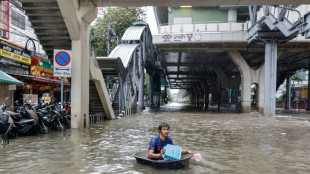 Homes flooded, roads submerged: Bangkok declares disaster over heavy rains

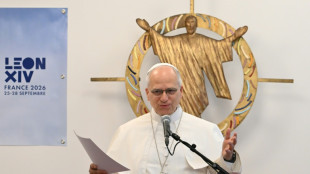 Ahead of Paris mass, pope urges life together in 'dignity and peace'

 Austria 'ghetto' language classes leave children to repeat school
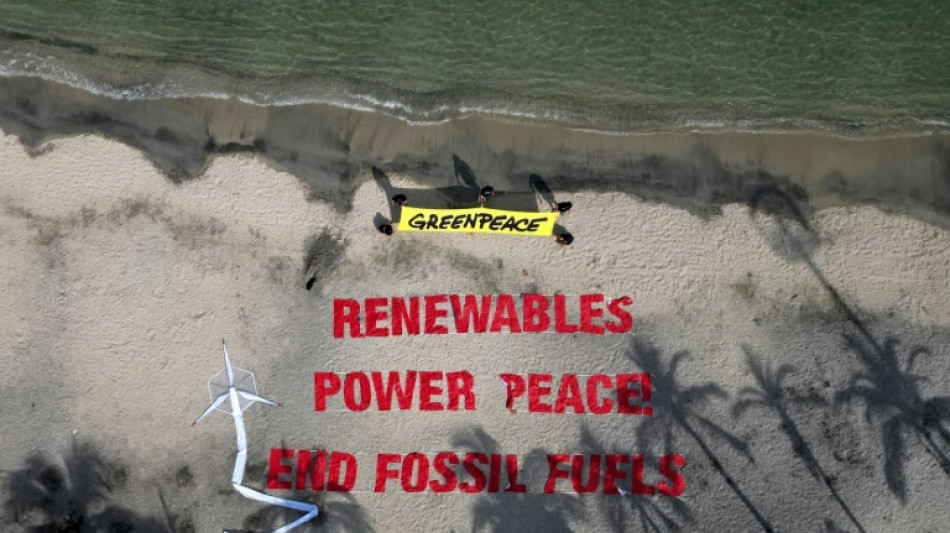
The first global talks on phasing out fossil fuels kicked off in Colombia on Tuesday with nations casting an exit from oil and gas as not just a climate priority but vital for energy independence.
Ministers are seeking to reignite the shift away from planet-heating fossil fuels at the conference in Santa Marta amid a deepening global energy crisis triggered by the Iran war.
"We in Europe...are losing half a billion euros each day this war continues," the EU's climate envoy Wopke Hoekstra told delegates in the coastal city.
"We already had a very good reason to move on (from fossil fuels) for climate action...We now also have it for commercial reasons, and reasons of independence."
The conference was announced last year after nations failed to include an explicit reference to fossil fuels in the final deal reached at the UN COP30 climate summit in Brazil.
But organizers say the Middle East war -- which has throttled Gulf energy exports -- had underscored the urgency of breaking fossil fuel dependence.
In a speech to delegates on Tuesday, Colombia's leftist President Gustavo Petro delivered a blunt message: fossil fuels "lead to death," he said.
Some import-reliant nations in Santa Marta spoke of fuel rationing and soaring prices at home as energy supplies dried up.
"Some people use independence, some people use sovereignty, but basically they need energy security," the UK's climate envoy Rachel Kyte told AFP in Santa Marta.
"Increasingly, the world is concluding that fossil fuels are a source of instability."
- COP frustration -
On the list of attendees are major fossil fuel producers Canada, Norway and Australia, and developing oil giants Nigeria, Angola and Brazil.
They join coal-reliant emerging markets Turkey and Vietnam, and small island nations extremely vulnerable to climate shocks, among others.
But the world's biggest emitters of greenhouse gases -- including the United States, China and India -- are not attending, nor are oil-rich Gulf states.
The conference bypasses the United Nations climate talks and reflects a growing impatience with its failure to tackle fossil fuels, the main driver of global warming.
Nearly 200 countries agreed at COP28 in 2023 to transition away from fossil fuels, but efforts to turn that pledge into action have stalled.
"We all know that this convening arose out of our collective frustration at the continuing failure of the UNFCCC process to address the root cause of the problem," Vanuatu's Climate Minister Ralph Regenvanu said in Santa Marta.
- Fossil farewell -
The conference is not expected to produce binding commitments but a set of proposals for countries wanting to gradually swap out fossil fuel production and consumption for cleaner forms of energy.
This is a particular challenge for developing countries heavily reliant on oil and gas revenue, like hosts Colombia.
Santa Marta is home to one of the country's biggest coal ports, and oil tankers can be seen along the coast's horizon.
But even European nations have weighed increasing coal and gas use in the wake of the Iran war, underlining the challenge of reducing reliance on fossil fuels even in advanced economies.
On Tuesday, France unveiled a fossil fuel "roadmap" setting deadlines to phase out coal by 2030, oil by 2045 and gas by 2050 for energy purposes.
Nations will discuss how to pursue these plans, as well as reforming fossil fuel subsidies that throw up barriers to renewable energy investment, among other issues.
Analysis by the International Institute for Sustainable Development on Monday showed that governments still spent five times more public money on fossil fuels than renewable alternatives.
A scientific panel has also published a 12-point "menu" of policy options for governments in Santa Marta that includes "halting all new and expanding fossil fuel extraction and infrastructure projects."
Even as record investments flow into renewable energy, scientists warn the pace is still too slow to keep global temperature rises to safer levels.
The world has already warmed about 1.4C above pre-industrial times and is tracking to blow past 1.5C in a matter of years.
Above that threshold, scientists warn that coral reefs and Greenland ice sheets could disappear, among other catastrophic and irreversible impacts.
F.Müller--BTB