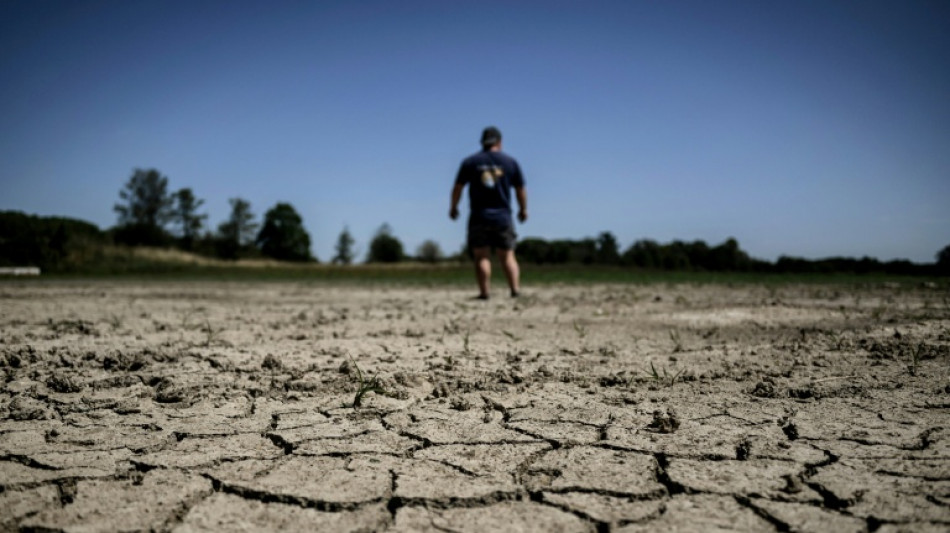
French pair propose new term to define 'environment' / Photo: © AFP/File

 Ireland squad vote to play Israel tie despite Gaza unease
 Gutsy Vollering wins cycling road race world title

 Vollering wins cycling road race world title
 Man City's meteoric rise clouded by dark shadow
 Mbappe out for two weeks or more with knee injury say Real
 Lyon collapse away to Stade and suffer first Top 14 loss
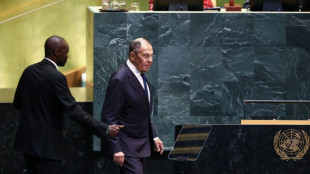 Russia accuses Europe of seeking to thwart Ukraine talks

 Man City chairman defiant over reported Premier League charges
 Germany ready to 'walk through fire' for Klopp, says Tah

 At least 16 killed in Russian and Ukrainian strikes

 Powerful storm pummels US Northeast
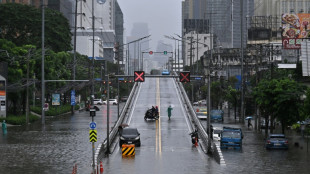
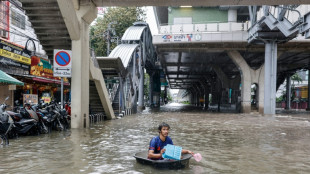 Bangkok declares disaster after homes flooded, roads submerged by heavy rain
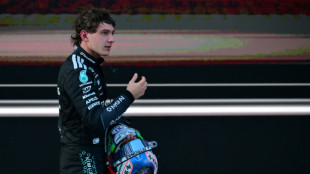
 Norris calls for errant Colapinto to be banned for causing Baku crash

 Russell finds himself again and prepares to heap pressure on Antonelli
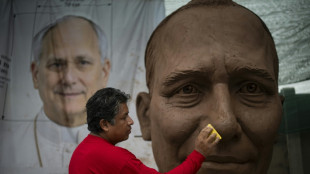
 South Korea hold nerve to win Asian Games basketball gold
 Russell holds off Verstappen to claim imperious victory in Baku
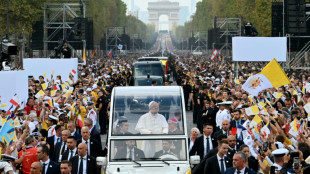
 Russell holds off Verstappen to win Azerbaijan Grand Prix
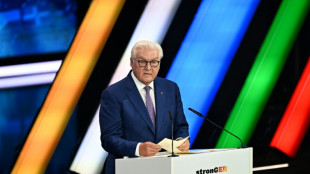
 India's Kohli says 2027 ODI World Cup will be his last

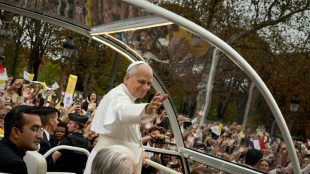
 Huge crowds cheer Pope Leo along Champs-Elysees ahead of Paris mass

 Putellas wants to bring 'winning culture and mentality' to London City
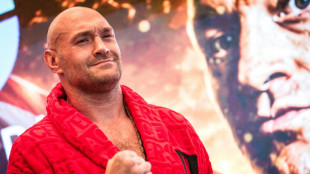
 Rare Italian opera returns to Moscow after nearly 120-year hiatus

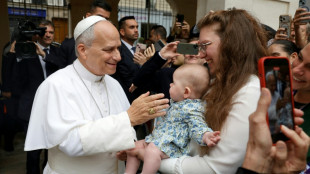 Pope to celebrate giant Paris mass after 'peace' appeal

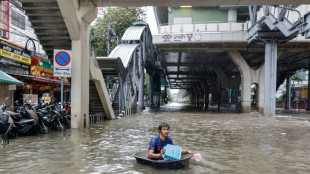 Homes flooded, roads submerged: Bangkok declares disaster over heavy rains

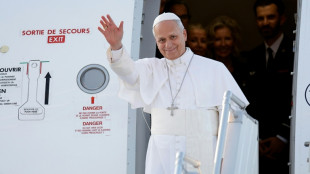
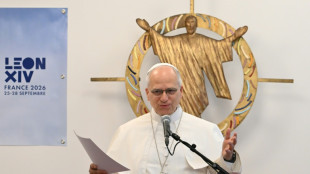 Ahead of Paris mass, pope urges life together in 'dignity and peace'
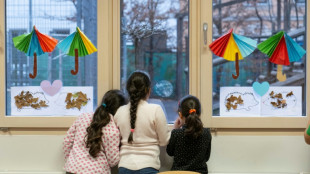 Austria 'ghetto' language classes leave children to repeat school
Environmental causes face an uphill battle. Overshadowed in politics, overlooked in budgets and defeated in courts, nature is often treated as a niche concern, second to more pressing matters.
Two Frenchmen -- one a philosopher, the other a legal scholar -- think language is part of the problem and argue that protection of the living world should be discussed in entirely different legal terms.
In their new book, Baptiste Morizot and Laurent Neyret make the case that "habitability" -- the conditions that support human life on Earth -- should be treated as a fundamental right like dignity and liberty.
"Habitability is the condition of all our rights and freedoms," Morizot, a researcher at Aix-Marseille University, told AFP.
Even in France where the environment holds constitutional status, Morizot said the defence of nature as a basic right is often relegated below other core values even if people do not realise it.
"No one has said we should talk about the environment as if it were secondary," the philosopher said. But "it is marginalised; it is not in the realm of importance".
- Marginalised -
Morizot and Neyret searched for a term that elevated the environment to a fundamental condition of humanity's existence rather than a backdrop to be protected when convenient.
"This word exists. It is habitability," they wrote in "Liberté, Dignité, Habitabilité", the French title of their book published in April which is yet to be translated into English.
The framework of environmental law, the authors write, dates from a time when humans did not yet have the technological capacity to drastically alter Earth's habitability or its climate.
Morizot says "the environment" has become more broadly associated with nature and "people who like flowers and little birds."
"But security is more important, health is more important, growth is more important," he said of the prevailing attitude.
If judges regarded habitability in the same way as liberty then "restrictions on applying pesticides near groundwater would no longer be seen as an arbitrary burden, but as the result of a value recognised by all", the authors wrote.
The concept "prohibits the law from continuing to speak as if the world were an unchanging environment."
- 'Underground movement' -
Even as environmental protection has slipped down the policy priority list in the United States and Europe, climate activists have scored major courtroom wins recently from the International Court of Justice to national tribunals.
"We are facing a movement where habitability is on the verge of being taken seriously in courtrooms, and where even those who don't want to play along can't opt out," co-author Neyret told AFP.
"By naming habitability, we hope to surface this underground movement, accelerate and amplify it," said the former chief of staff to French Constitutional Council president Laurent Fabius.
The authors acknowledge the widespread adoption of such a term could take years or decades. When will we know that habitability is considered a core value?
"When it is cited in court rulings by judges, when it is enshrined in the constitution... in France or elsewhere, when it appears in the preambles of international declarations," said Morizot.
And above all: "When it enables a judge to tip a case one way or the other," he said.
F.Pavlenko--BTB