World could save 700 mn tonnes of CO2 if people cycled more, study shows / Photo: © ANP/AFP/File

 Internationals keep Presidents Cup lead with late fightbacks

 Tuchel to 'keep pushing' England to reach Spain's level

 Alcaraz saves match points to keep Europe ahead in Laver Cup

 Spain success driven by hunger to improve, says De La Fuente

 Lyon collapse at Stade Francais to suffer first Top 14 loss

 Oyarzabal and Spain sink England again as Modric shines for Croatia

 Housing protesters camp in central Madrid after mass demonstration

 Louise Trotter expands her palette at Bottega Veneta

 Pope prays at Lourdes after huge Paris mass

 USA trims International lead after Presidents Cup four-balls

 Russia accuses Europe of blocking Ukraine talks, as strikes drag on

 'He said hello': Families pray with pope on Paris avenue

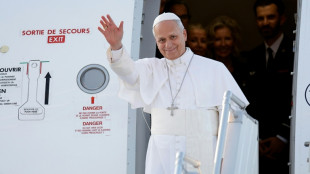 Pope celebrates giant Paris mass, flies to Lourdes

 Thousands march in Madrid over eviction of 87-year-old woman

 England women back to winning ways with last-gasp defeat of New Zealand

 Trump rejects Iran proposal for deal to reopen Hormuz

 England's Cox says injured Buttler leaves 'big shoes to fill'

 Ruthless Perpignan upset sloppy Bordeaux-Begles

 Deadly abbey attack feeds anti-Ukrainian sentiment in Poland

 Antonelli says he drove 'safety-first' on his worst weekend of season

 Fernandez fights back to reach Singapore Open final

 Giant statue of Pope Leo XIV takes shape in Peru workshop

 Ukraine crush holders Italy to reach first BJK Cup final

 Pope celebrates giant Paris mass in landmark visit

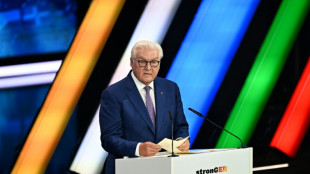 Germany selects Munich for Olympics host bid

The world would save nearly 700 million tonnes of carbon pollution each year -- more than Canada's annual emissions -- if every person adopted the Dutch way of life and cycled on a daily basis, new research showed Thursday.
The transport sector currently accounts for a quarter of all fuel-related greenhouse gas emissions, which are warming the planet.
Half of those emissions are from passenger cars, and worldwide transport demand is predicted to triple by mid-century.
As they seek to decarbonise transport, governments and industry have turned towards electric vehicles, with 6.75 million units sold in 2021 alone.
Vehicle sales are tracked and published each year. However, it has been difficult to calculate the production and ownership of a much older, low-carbon technology: the bicycle.
An international team of researchers has now compiled the first global dataset of bicycle ownership and use by country dating back to the early 1960s, using statistical modelling to fill in any information gaps.
They found that between 1962-2015 global production of bikes outstripped that of cars, with China accounting for nearly two-thirds of the more than 123 million bikes manufactured in 2015.
Writing in the journal Communications Earth and Environment, the team showed that bicycle ownership was generally higher in upper-income and upper-middle-income countries -- but then so was the percentage of journeys undertaken by car.
This meant that high bicycle ownership does not necessarily lead to high bicycle use.
Among the 60 countries included in the dataset, the share of bicycle use for journeys was only five percent. Some countries, simply lack bicycle stocks, while others with high bike ownership, such as the United States, tended to view cycling as more of a leisure activity than a mode of transport.
- 'Going Dutch' -
The team calculated that if everyone emulated the Danish commute of cycling an average of 1.6 kilometres (1 mile) each day, the world could save some 414 million tonnes of CO2 a year -- equivalent to Britain's annual emissions.
"Going Dutch" and cycling 2.6 kilometres daily like people do in The Netherlands would save 686 million tonnes, and bring with it associated health benefits due to more exercise and improved air quality.
"A worldwide pro-bicycle policy and infrastructure development enabled modal shift like the Netherlands and Denmark can lead to significant untapped climate and health benefits," the authors wrote.
They said this dual benefit demanded better bicycle data collection, and said there was "an urgent need to promote sustainable bicycle use via supporting policy, planning, and infrastructure development."
The study's lead author, Gang Liu, a professor at the University of Southern Denmark's Department of Green Technology, said the research showed that bicycles had an important future role in lowering global transport's carbon footprint.
"Addressing such gigantic challenges requires not only technology-side strategies, such as lightweight design or electrification," he told AFP.
"But also needs demand-side strategies, such as alternative mobility patterns -- sharing mobility, on-demand mobility, and ride sharing -- and transport mode change, such as reducing short-distance car use by cycling."
F.Pavlenko--BTB