UN says transport infrastructure must adapt to climate / Photo: © AFP

 USA trims International lead after Presidents Cup four-balls

 Russia accuses Europe of blocking Ukraine talks, as strikes drag on

 'He said hello': Families pray with pope on Paris avenue

 Pope celebrates giant Paris mass, flies to Lourdes

 Thousands march in Madrid over eviction of 87-year-old woman

 England women back to winning ways with last-gasp defeat of New Zealand

 Trump rejects Iran proposal for deal to reopen Hormuz

 England's Cox says injured Buttler leaves 'big shoes to fill'

 Ruthless Perpignan upset sloppy Bordeaux-Begles
 Deadly abbey attack feeds anti-Ukrainian sentiment in Poland
 Antonelli says he drove 'safety-first' on his worst weekend of season

 Fernandez fights back to reach Singapore Open final

 Giant statue of Pope Leo XIV takes shape in Peru workshop

 Ukraine crush holders Italy to reach first BJK Cup final

 Pope celebrates giant Paris mass in landmark visit

 Germany selects Munich for Olympics host bid

 Sagnol sacked as Georgia boss after Nations League upset

 Man City could face 'drastic' sanctions after reported guilty verdict: ex-chairman

 Furious Fury says row between rival promoters could scupper Joshua bout

 'Invincible' 223cm teen basketball player stars as China win bronze

 Tenth woman found dead in South Africa's string of killings
 Japan schoolboy, 11, wins gold while empty seats blight Asian Games

 Japan organisers 'not satisfied' as empty seats blight Asian Games

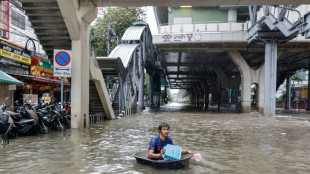
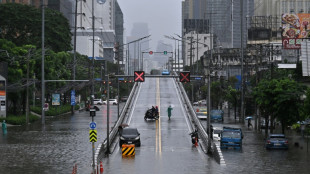 Canals full, roads submerged as Bangkok declares flood disaster

 China, US to open AI 'communication channel' after summit

Transport infrastructure across Europe, North America and central Asia must adapt to more adverse climate conditions, the United Nations said on Tuesday, warning that inaction could prove more costly than upgrades.
Roads, railways, waterways, ports and airports will face a greater likelihood of flooding, high temperatures, reduced snow, ice and permafrost, and sea level rise from 2050 to 2080, the UNECE regional agency said.
UNECE covers 56 countries across Europe, North America, the Caucasus and central Asia.
It mapped the key inland transport networks needing specific attention.
"Transport systems are vital for the smooth functioning of our societies and economies," said UNECE chief Tatiana Molcean.
"Disruptions can have dramatic consequences on communities and come at huge financial cost.
"Because extreme weather events are no longer a future risk but a reality today, adaptation of transport infrastructure is an imperative."
The report said changing conditions would result in increased damage and disruption to transport systems if they were not made more resilient.
It gave examples such as increased road and rail infrastructure damage during heatwaves; more frequent flooding of transport facilities; and greater challenges at ports and airports during strong wind events.
"The recent episode of extreme heat that we've seen in Western Europe has highlighted climate risks and the impact and the consequences they can have on transport infrastructure," UNECE spokesman Jean Rodriguez told reporters.
On the railways alone, he cited train delays, cancellations due to buckled rails, on-board air conditioning failure, cable and signalling meltdown.
- 'Early adaptation' -
UNECE said transport systems in the region would need to cope with 10 to 50 more days per year of temperatures exceeding 25C, with some areas facing 200 days a year above the threshold.
UNECE said that by 2050, 70 percent of infrastructure in the Arctic would be in regions at risk from permafrost thaw and subsidence.
Flooding from heavy rainfall, plus sea level rise from coastal extremes were also identified as future risks.
More intense rainfall is projected in regions including the Alps, the Balkans, northern Turkey, parts of central Asia and the east coast of the United States.
Infrastructure in the highly populated basins of major European rivers such as the Danube, the Rhine and the Volga is projected to be exposed to significant flooding, said UNECE.
Between 71 percent and 89 percent of ports globally will be at risk of extreme marine storms by the end of the century, the report said.
"Early adaptation could reduce related costs by half," it said.
Given worsening climate projections and long infrastructure planning timeframes, UNECE encouraged decision makers to ensure early climate change adaptation was a priority.
UNECE urged leaders to ensure transport systems could "continue delivering the services on which economies and societies depend".
Transport supremos should use climate projections to assess the risks and identify the hazard thresholds for their systems.
"While adaptation measures can appear as costly, the consequences of inaction may be even more costly," the report warned.
H.Seidel--BTB