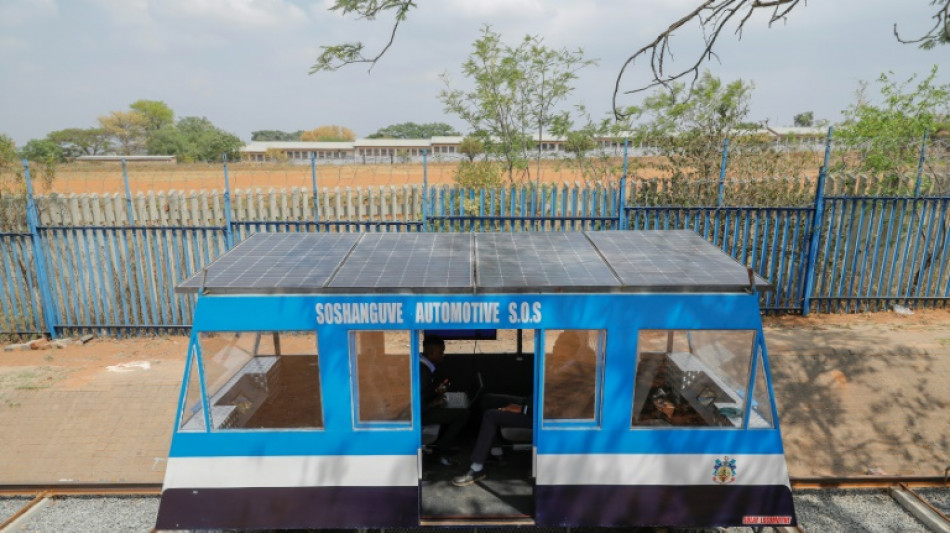
S.Africa teens build solar train as power cuts haunt commuters / Photo: © AFP

 Japanese anime actor fights TikTok over AI voice cloning
 Curtain falls on the romance of India's single-screen cinemas

 Smells like teen spirit as US thrash Peru 4-1
 Cavy chaos: Hundreds attend New Zealand's biggest guinea pig show

 Venezuela releases more political prisoners after opposition talks

 England's best 'for a long time' despite Spain defeat, says Kane

 Powerful storm pummels northeast US with rain, high winds

 Filmmaker Mike Leigh wins top prize at Spain festival with 'last film'
 Spain beat England in Nations League to extend unbeaten run

 Ireland squad vote to play Israel tie despite Gaza unease
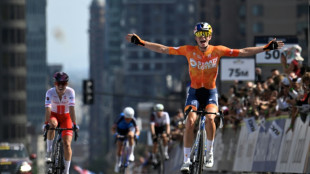 Gutsy Vollering wins cycling road race world title

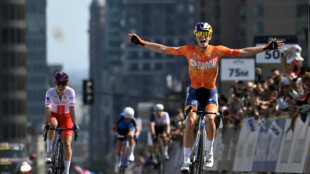 Vollering wins cycling road race world title

 Man City's meteoric rise clouded by dark shadow
 Mbappe out for two weeks or more with knee injury say Real
 Lyon collapse away to Stade and suffer first Top 14 loss

 Russia accuses Europe of seeking to thwart Ukraine talks

 Man City chairman defiant over reported Premier League charges

 Germany ready to 'walk through fire' for Klopp, says Tah

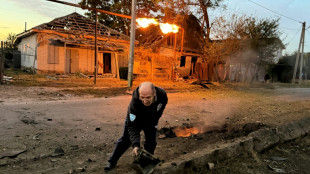 At least 16 killed in Russian and Ukrainian strikes
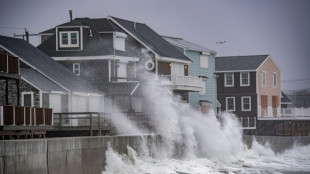 Powerful storm pummels US Northeast
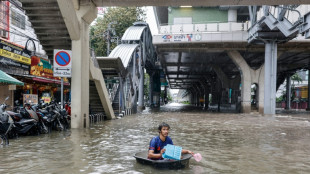 Bangkok declares disaster after homes flooded, roads submerged by heavy rain
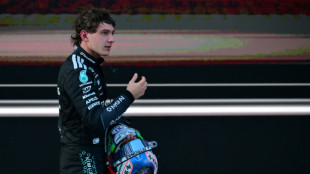
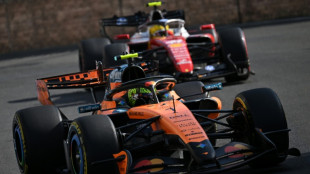 Norris calls for errant Colapinto to be banned for causing Baku crash
 Russell finds himself again and prepares to heap pressure on Antonelli
 South Korea hold nerve to win Asian Games basketball gold

 Russell holds off Verstappen to claim imperious victory in Baku
For years, students in a South African township have seen their parents struggle to use trains for daily commutes, the railways frequently hobbled by power outages and cable thefts.
To respond to the crisis, a group of 20 teenagers invented South Africa's first fully solar-powered train.
Photovoltaic panels fitted to the roof, the angular blue-and-white test train moves on an 18-metre-long (60 feet) test track in Soshanguve township north of the capital Pretoria.
Trains are the cheapest mode of transport in South Africa, used mostly by the poor and working class.
"Our parents... no longer use trains (because of) cable theft... and load shedding," said Ronnie Masindi, 18, referring to rolling blackouts caused by failures at old and poorly maintained coal-powered plants.
The state power company Eskom started imposing on-and-off power rationing 15 years ago to prevent a total national blackout.
The power outages, known locally as load-shedding, have worsened over the years disrupting commerce and industry, including rail services.
Infrastructure operator Transnet has struggled to keep rail traffic flowing smoothly since the economic challenges of the pandemic fuelled a surge in cable theft.
By 2020, rail use among public transport users was down almost two-thirds compared to 2013, according to the National Households Travel Survey with many commuters turning to more expensive minibus taxis.
Masindi said they decided to "create and build a solar-powered train that uses solar to move instead of (mains) electricity".
The journey has not been without its challenges.
A lack of funding delayed production of the prototype locomotive, and the government later chipped in.
"It was not a straight line," said another student, Lethabo Nkadimeng, 17. "It was like taking a hike to the highest peak of the mountain."
The train, which can run at 30 kilometres (20 miles) per hour, was showcased at a recent universities innovation event.
For now, the prototype can run for 10 return trips on the track installed on the grounds of a school.
It will be used for further research, and eventually presented as a model the government could adopt.
Fitted with car seats and a flat-screen TV to entertain passengers, it took the students two years to build.
"What we have realised is, if we you give township learners space, resources and a little mentorship they can do anything that any learner can do around the world," said Kgomotso Maimane, the project's supervising teacher.
H.Seidel--BTB