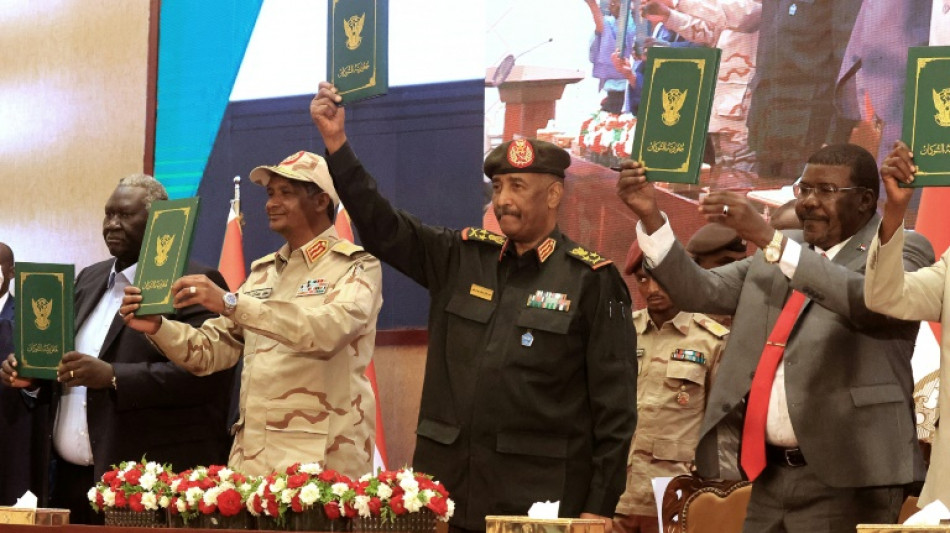
Scepticism greets Sudan's post-coup political deal / Photo: © AFP

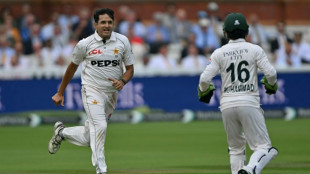
 Robinson rocks Pakistan again as England eye series win at Lord's

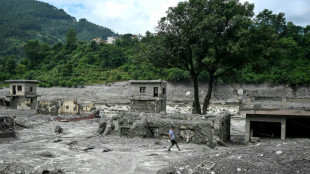
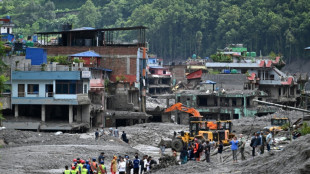
 Nepal rescuers advance towards trapped tunnel workers
 Grisly search for missing as Nepal morgues overflow, burials begin

 Barcelona's Yamal getting back to 'top level': Flick

 Dutch federation calls for football summit without Infantino
 Ron’s Honky Tonk Residency Revives UK Country Music in Bermondsey

 Chelsea sign Argentina 'stopper Martinez from Villa

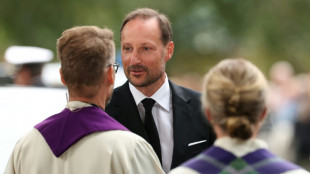 Norway's churches hold services to late King Harald

 Walmart Agrees to $50 Million Settlement Over Opioid Prescription Allegations
 Soundcore Liberty 5 Pro Review: Call Quality Redefines Value in Wireless Earbuds

 Lexus ES Review: Electric ES 350e Falls Short in Luxury Saloon Segment

 Vietnamese coffee farmers ride China's durian wave
 Venezuela says retains 'sovereignty' in US oil deal
 NASA's Roman telescope set to launch on cosmic mapping mission
 Data center backlash scrambles US midterm politics
 Emotional Federer inducted into tennis Hall of Fame

 Hovland takes solo lead as McIlroy surges at Tour Championship

 Djokovic 'prepared' for US Open bid for history
 Atletico down Sevilla to go top of La Liga

 US deports right-wing provocateur Milo Yiannopoulos

 Niger junta says it is back in control after soldiers' mutiny

 Erasmus calls Rennie barbs over Springbok scrumming 'nonsense'

 Lawrence's fifty leaves Pakistan facing record chase to level England series
 Netanyahu condemns settler attack in flashpoint West Bank village
 Munoz saves Iraola in Liverpool draw, big-spending Spurs lose again

The signing of an initial deal by Sudan's military regime and civilians has been widely hailed by the international community, but many at home eye it with deep scepticism.
Sudan, one of the world's poorest countries, has been mired in deep turmoil since army chief Abdel Fattah al-Burhan carried out a military coup in October last year, derailing a transition to civilian rule.
That power grab came just two-and-a-half years after enormous street protests had pressed the army into ousting long-time autocrat Omar al-Bashir.
Many dared believe the resultant power-sharing arrangement would guarantee freedoms and provide justice, but the coup extinguished those hopes, provoking donors into suspending funding and exacerbating a long-running economic crisis.
Events of the last year have also fed into worsening security crises in far-flung regions.
On Monday, senior military figures and civilian groups agreed an accord laying the groundwork for re-establishing a civilian authority -- a move welcomed by the United Nations, Washington, London, Brussels, Riyadh and Abu Dhabi, among others.
The deal, phase one of a two-phase process, was signed by the main civilian bloc, the Forces For Freedom and Change, which had for months opposed engaging with the army in the wake of the coup.
It stipulates that non-military signatories will agree on a prime minister to steer the country through a new 24-month transition.
"The soldiers will go to the barracks, and the parties to the elections," Burhan promised during the signing ceremony, to loud applause.
His deputy, paramilitary commander Mohamed Hamdan Dagalo, even admitted that the coup had been "a political mistake."
But Sudanese analysts, a senior cabinet minister and a regional governor caution that the deal risks being over-hyped.
- 'Merely symbolic move' -
Kholood Khair, founder of the Confluence Advisory, a Khartoum-based think-tank, notes that the agreement improves the international community's perception of Burhan.
But "it works out less well for the civilians ... who will have to do the hard work and sell it to the public."
And "it does not inspire confidence that it will lead to the kind of reforms that people want to see."
Pro-democracy activists have voiced strong opposition to the deal.
Crowds of angry protesters took to the streets on Monday, chanting "no to the settlement" and "betrayal."
"It's merely a symbolic move that should be developed further to a more concrete deal," said Sudanese analyst Othman Mirghani.
Otherwise, "it would be a meaningless step."
Monday's deal sets broad guidelines for a civilian-led transition that largely fell short on specifics and timelines.
It pledges accountability, reforms to the security sector and bars the army from conducting non-military related businesses, in a country where this institution has wide-ranging commercial interests.
Dagalo himself -- head of a long-feared paramilitary group -- has pledged justice to families of people killed by security forces over the years, a key demand of activists.
Signatories to the deal have pledged to hammer out the details of transitional justice, accountability and security reform "within weeks".
Mirghani says such complex issues could instead take months to thrash out.
- 'No trust' -
The deal "is also contingent on... public trust in the agreement and the protagonists," Khair said.
"And frankly that doesn't exist," she added.
The deal was met by strong opposition from key ex-rebel leaders who two years ago signed a peace deal hammered out with the short-lived transition government.
Discussions over implementation of the 2020 peace deal have been slated for phase two of Monday's agreement.
Ex-rebel leader Mini Minnawi, who is also governor of the restive Darfur region, slammed the agreement as "exclusionary."
Finance minister and ex-rebel Gibril Ibrahim said it was "far from a national accord and does not lead to free and fair elections."
"It will be hard to proceed with a comprehensive deal without agreeing with armed groups, most notably those of Ibrahim and Minnawi's," said the analyst Mirghani.
M.Furrer--BTB