US bares intel on Russia in risky strategy to prevent Ukraine invasion / Photo: ©

 Zhu Rongji, trailblazing ex-premier who transformed China's economy
 China tech giant Tencent's Q2 profit down as AI push builds
 China's C919 jet makes first international commercial flight
 Mideast war impact on travel bookings fading, TUI says
 Bangladesh get Das fitness boost for daunting Australia task
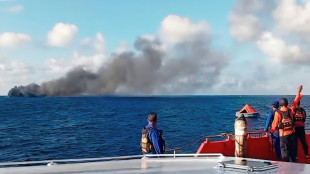 One dead, 172 rescued as second ferry in days catches fire in Indonesia
 Foxconn posts quarterly profit surge on AI server demand

 Hazlewood gets Australia nod ahead of Boland for Bangladesh Test
 Toyota ex-chief Okuda, pioneer of the Prius, dead at 93

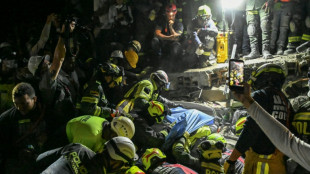
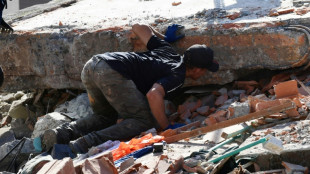
 Colombia rescuers find woman alive as quake death toll passes 200
 New Zealand PM survives leadership challenge months from election
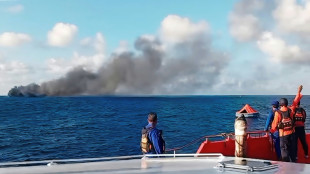 Passengers rescued as second ferry in days catches fire in Indonesia
 Oil prices rise, stocks mixed ahead of crucial US inflation data
 UK 'joke' candidate Binface pushes serious point about politics
 New Zealand PM Luxon survives leadership challenge months from election
 Cuba celebrates Castro's 100th as his revolution faces its toughest test
 Defending champion Shelton rolls into Montreal semis
 What to know about the total solar eclipse
 Tentoglou claims fourth Euro long jump title, injured Jacobs falters
 All Blacks knew Nonu would perform solo Haka - coach Rennie
 Britain's Glave upstages Jacobs to win European 100m gold

 Greece's Tentoglou wins fourth European long jump title
 Doctors ignored 'warning signs' before Maradona's death, court hears
 Pereira, the 'zombie city' devastated by Colombia's earthquake
 UN says 2 staff arrested by Afghan intelligence agency
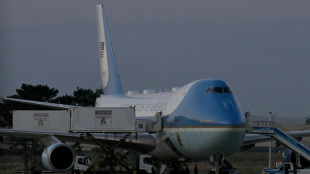
The US government normally keeps battlefield intelligence close to its chest, but by revealing the secret details of Russian military plans, it hopes to prevent an invasion of Ukraine.
Since Russia moved tens of thousands of troops to Ukraine's border in recent months, Washington's unconventional strategy has been to let Moscow and the world know what it knows about the Russian invasion plans, rather than keep it secret.
"At long last, Washington is catching up to its rivals -- including Russia and WikiLeaks -- in the use of information to shape events," former CIA official Douglas London wrote recently in Foreign Affairs magazine.
With tensions rising, at the beginning of February US officials said Moscow was planning to create a graphic film of a fake Ukrainian attack on Russia, or on Russians inside Ukraine, using footage of damaged locations, "corpses" of people ostensibly killed in the attack, and actors playing mourners.
Pentagon Spokesman John Kirby is one of several officials who readily detailed the alleged plan.
"We've seen these kinds of activity by the Russians in the past and we believe it's important when we see it like this and we can to call it out," he said.
Officials would not say how they knew, and so far the ruse has not happened.
But for US diplomats and military and intelligence officials, that could demonstrate that their approach is working, making Russian President Vladimir Putin think twice about what he allegedly planned to do.
Days later, US officials provided reporters details of the more than 100,000 troops around Ukraine's borders, describing the likely Russian approach to an invasion and the expected casualties, and revealing a very specific map of the planned invasion routes.
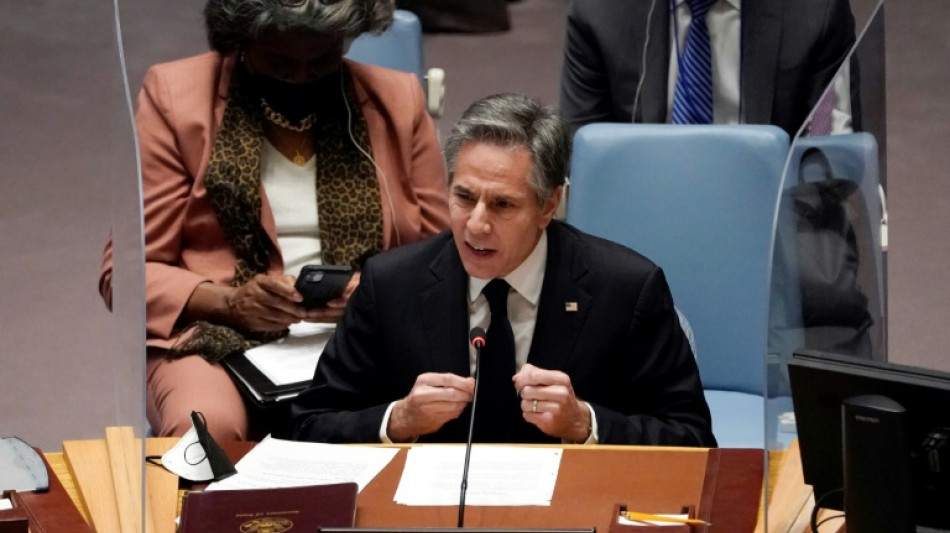
And on Thursday Secretary of State Antony Blinken laid out the most recent picture of an invasion that officials say could come "within days."
"First, Russia plans to manufacture a pretext for its attack," Blinken told the UN Security Council.
This could be a violent event that Russia will blame on Ukraine," he said.
"It could be a fabricated so-called terrorist bombing inside Russia, the invented discovery of the mass grave, a staged drone strike against civilians or a fake, or even a real attack using chemical weapons. Russia may describe this event as ethnic cleansing or a genocide," he said, referring to a claim made by Putin on Tuesday.
For the second step, he said, "the highest levels of the Russian government may theatrically convene emergency meetings to address the so-called crisis. The government will issue proclamations declaring that Russia must respond to defend Russian citizens or ethnic Russians in Ukraine."
"Next, the attack is planned to begin," he said.
- Catching up -
Making such intelligence public is not how Washington normally works.
But officials say they hope it pulls the rug out from under Moscow's own deft, effective disinformation efforts and possibly deter an attack.
"The more Washington exposes Russian actions and intentions, the fewer face-saving off-ramps Putin has," London said.
He said revealing intelligence comes with big risks, like exposing valued sources and channels, or losing credibility if the information is wrong.
The US image suffered deeply in 2003 when secretary of state Colin Powell told the United Nations that the United States had "proof" of weapons of mass destruction in Iraq, a claim that "justified" the US invasion but later proved false.
On the other hand, intelligence was made public to good effect when US officials leaked to media intimate details that linked Saudi Crown Prince Mohammed bin Salman to the 2018 murder of journalist Jamal Khashoggi, he said.
"In this case, the US government decided the price was worth it."
US officials say their claims on Russia and Ukraine might be proven wrong, and admit people might criticize them.
But in fact, it is their hope: that baring Putin's plans will deter him from following through.
"That's the best outcome possible. We will have saved thousands of lives," a senior US official said of that scenario.
C.Kovalenko--BTB