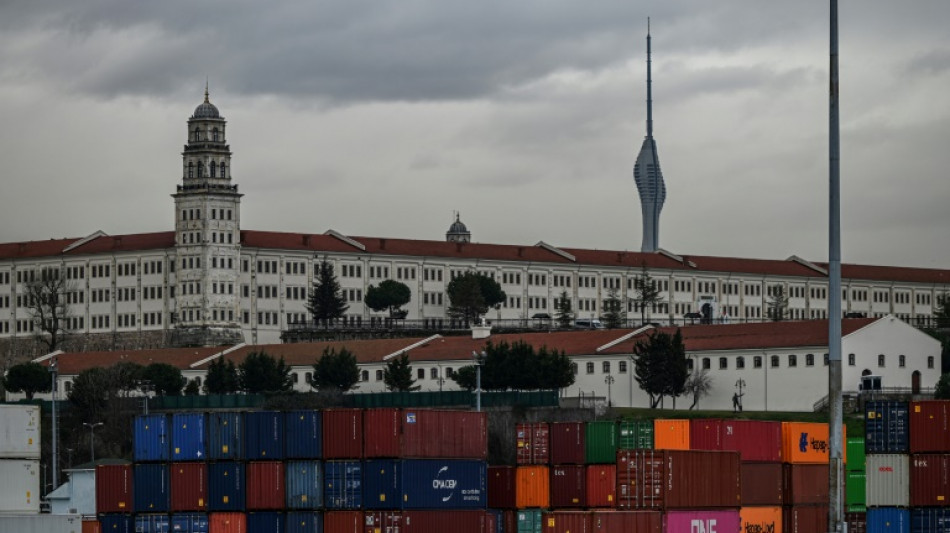
With weak lira, Turkey woos foreign firms / Photo: ©

 Rift deepens as Asia football chief hits back at Qatar in Infantino saga

 India extend lead to 294 in first Sri Lanka Test
 Asian allies stress 'critical cooperation' as Trump slashes Korea drills
 Williams sisters fall at Cincinnati while Zverev advances
 Transylvania's fortified churches face fragile future

 China mourns former premier Zhu Rongji with flags lowered, funeral
 Philippine student killed in rare school shooting
 Arsenal primed for Premier League title defence as rivals face questions
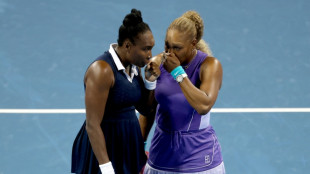 Zverev advances at Cincinnati while Williams sisters fall
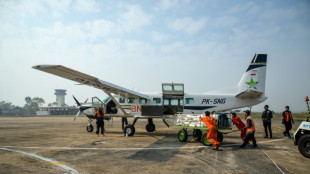
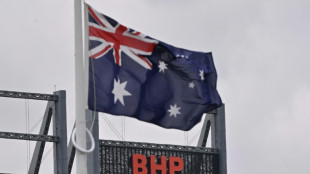 Copper powers profit rise at mining giant BHP
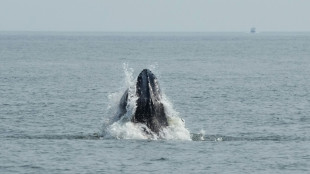 Whales spark joy in New York but face threats from boat traffic

 Premier League's new bosses brace for battle

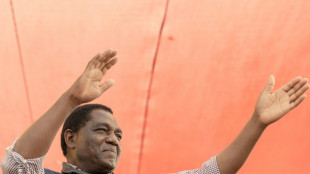 Zambia's Hichilema: 'cattle boy' and two-time president
 Elderly far more at risk from rising heat than thought: study

 LiberNovo Previews Support Week 2026, Putting Better Ergonomic Support Within Reach
 Paramount demands $1.9 billion surety over states' merger lawsuit

 Latest developments in US-Iran war
 NBA has no evidence of Clippers salary cap cheating: report
 Boehly and Walter consider selling Chelsea stake to Clearlake Capital
 OpenAI to lease massive new AI data center in US, backed by Nvidia

 US stocks fall on spiking bond yields, higher oil prices

 LIV Golf cancels Michigan event, to decide team title at Indy
 Rodri arrives at Barcelona to complete 'dream' move
 Discord suspends livestreams in Brazil after teen's suicide
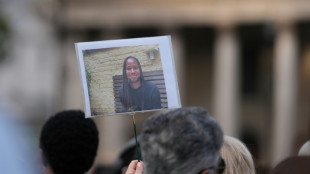
 Tupac Shakur's accused killer was out for 'revenge', jury hears

There is a silver lining to Turkey's currency crisis and the global supply chain crunch: The country is becoming an attractive alternative at the gates of Europe for foreign firms.
Turkey is seizing on its geographic advantage to woo companies as the skyrocketing cost of sea freight and pandemic-related disruptions to supply chains push some European companies to reduce their dependence on Asia.
President Recep Tayyip Erdogan, whose policies have contributed to the lira's plunge, has promoted a new slogan for exports: "Made in Turkiye", using the country's language instead of the internationally-known "Made in Turkey".
But his vision must overcome concerns about Ankara's complicated relationship with the European Union, the independence of the judiciary and political uncertainty ahead of elections next year.
Nevertheless, Turkey's exports reached a record $225.4 billion last year, with a target of $300 billion in 2023.
"Many international companies are taking action to supply more from Turkey," Burak Daglioglu, head of the Turkish presidency's investment office, told AFP.
He said the country offers automakers or textile companies a "competitive talent pool, sophisticated industrial competencies, well-developed services industries, perfect geographic location and state-of-the-art logistic infrastructure."
Ikea announced last year it wanted to move part of its production to Turkey.
The Italian clothing group Benetton told AFP it wants to "increase its production volumes in countries closer to Europe, including Turkey."
Peter Wolters, vice chairman of the Netherlands-Turkey Chamber of Commerce, said the business group received "requests from the household and garden sector, textile and fashion and also yacht building industry who search for new partners in Turkey".
- Soaring freight costs-
It has become extremely expensive to ship goods from Asia.
As a result of container shortages, the cost of freight between China and northern Europe has increased ninefold since February 2020, according to the Freightos Baltic Index.
While a cargo ship can take weeks to travel from Asia to Europe, Turkey is only three days away by truck.
A study by the McKinsey consulting group published in November placed Turkey in third position among countries with the best potential for textile supplies by 2025, behind Bangladesh and Vietnam but ahead of Indonesia and China.
"Apparel companies are also looking to change their sourcing-country mix... to secure the supply chain," the global report's authors wrote.
The report said Turkey offers "cheaper production costs due to a declining lira."
The lira has fallen by 44 percent against dollar since 2021 as the central bank -- prodded by Erdogan -- cut interest rates even though inflation was rising.
Turkey's new net minimum wage is now equivalent to $315 -- an amount barely higher than that of Malaysia.
Erdogan, who has been in power for two decades and seeks re-election in 2023, is betting on a weak lira to boost exports and growth, according to some observers, even if it destroys Turks' purchasing power.
- Europe, 'friend' and 'enemy'-
The collapse of the lira is also problematic for several industries due to the country's dependence on imports for energy and raw materials.
"It's not like Russia, for example, which has extensive raw materials," said Roger Kelly, leading regional economist covering Turkey and Russia at the European Bank for Reconstruction and Development.
He said Turkey also faces competition from countries within the EU.
"I don't think we should ignore those countries in southeast Europe like Romania or Bulgaria, which are actually in the EU -- which helps them to a certain degree -- and also have low production costs and strong production bases as well."
Erdal Yalcin, professor of international economics at Germany's Konstanz University of Applied Sciences, said uncertainty over Turkey's judiciary and institutions is also a concern.
"We don't see big investments, even though Turkey from a purely economic perspective would be the perfect place to bring production closer to Europe," Yalcin said.
Another issue is Turkey's difficult ties with the EU, with Yalcin noting that in the rhetoric of Turkish leaders, "one day Europe is a friendly nation, the other day it's an enemy".
He also pointed to Volkswagen's move to postpone the construction of a plant in Turkey after Ankara's Syria operation against a US-backed Kurdish militia in late 2019 before scrapping the plan during the coronavirus pandemic.
"As long as people are being killed, we are not laying the foundation stone next to a battlefield," VW CEO Herbert Diess said at the time.
For Yalcin, no big decisions will be taken by businesses before the 2023 election and "until this uncertainty about the political future of this country is resolved".
M.Ouellet--BTB