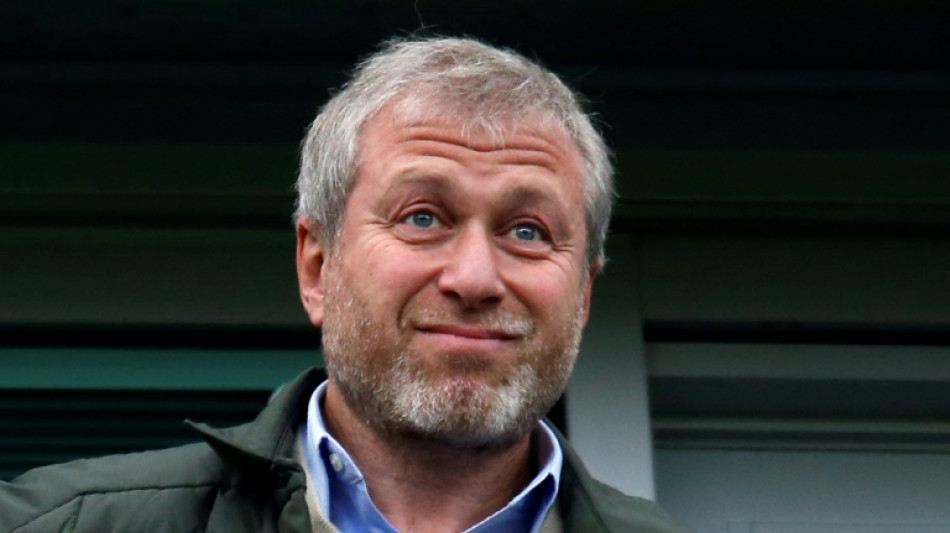
Russian oligarchs still swerving sanctions / Photo: © AFP/File

 US defends Trump's Venezuela oil deal
 OpenAI to launch new model with 'stronger safeguards' after hack
 Fans mourn 'bittersweet' final Ariana Grande gig in London
 Norway's King Haakon VIII swears allegiance to constitution
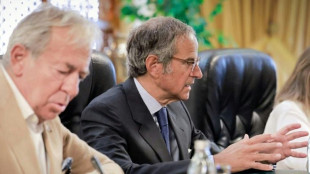 Syria site infrastructure 'consistent with nuclear reactor': IAEA
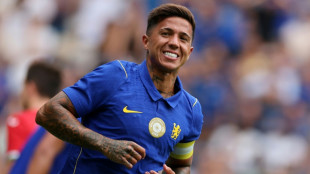
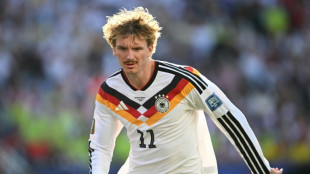 Juventus sign Woltemade, Sarr on loan from Premier League
 US strikes Iran in latest tit-for-tat attacks
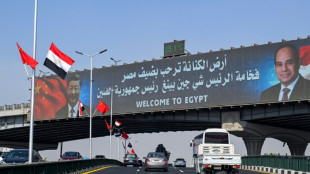 China's Xi arrives in Egypt as US sanctions threat looms over Iran links
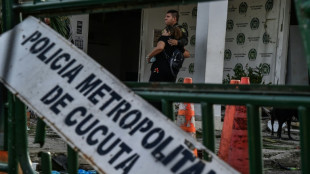 Car bomb at Colombian police station kills one, injures 11
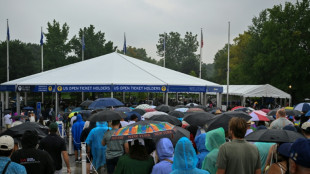 Rain delays start of play on US Open
 Man City agree blockbuster deal to sign Chelsea star Fernandez: reports
 Alkemya Metacore Secures $50M via Tokenised Equity to Scale Nickel Energy and Security Tech
 Man City chase Fernandez, Arsenal sell Jesus on deadline day
 EU says Russian 'hybrid attacks' won't halt aid to Ukraine
 Explosives used in sabotage attack on German power lines
 Nepali families hold symbolic funerals for missing after floods
 Newcastle sign Lille forward Fernandez-Pardo

 Even at Elysee, phones are handed in, Macron tells French pupils
 Chelsea agree to sign Atalanta's Ahanor, with Palace loan for this season
 Chelsea sign Atalanta's Ahanor and loan him to Palace

 UK chalks up hottest summer on record for second year running
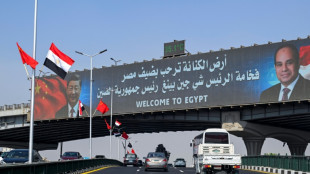 China's Xi visits Egypt as US sanctions threat looms over Iran links

 RISE Robotics Awarded $100,000 MassVentures Grant to Accelerate Commercialization of Beltdraulic Technology

 Global bond sell-off deepens on inflation concerns

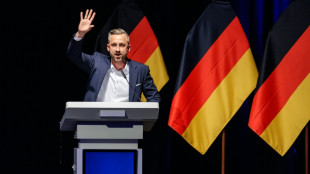 Germany's far-right AfD promises 'boom' but economists fear worst
Oligarchs reportedly close to Russian President Vladimir Putin who have had bank accounts frozen or property seized after Moscow's invasion of Ukraine are pushing back against the Western sanctions -- or finding ways around them.
Authorities have frozen about £18.4 billion ($22.2 billion) of Russian assets in Britain, and 17 billion euros' worth ($18 billion) in the European Union.
The elite businessmen are mostly keeping a low profile, but some have launched costly legal counteroffensives while many others seek sanctuary in sanctions-free nations.
Russian banker Petr Aven, who insists he has "no financial or political relationship" with the Kremlin, is asking the UK government to unlock £60,000 per month from his frozen accounts for his family's essential needs.
Aven, who co-founded private equity firm LetterOne with fellow oligarchs Mikhail Fridman and German Khan, has taken up residency in Latvia.
A large number of oligarchs, including Aven, Fridman and Khan as well as Roman Abramovich and Alisher Usmanov, are using their deep pockets to file lawsuits against sanctions in Britain and the EU.
Aluminium billionaire Oleg Deripaska, whose personal fortune halved in the past year to $1.7 billion according to Forbes magazine, is taking legal action against Washington over the sanctions.
Deripaska has spent much of his time in Russia, where a hotel he owned was reportedly seized by authorities after he described Moscow's invasion of Ukraine as a "war" -- the Kremlin refers to it only as a "special operation".
- Chelsea football club -
Abramovich, perhaps the best-known oligarch, initially sought to broker peace talks between Moscow and Kyiv while promoting good relations with the West, but was nevertheless forced to sell his beloved Chelsea football club.
He has since been seen multiple times in Israel, where he also has citizenship, as well as in the United Arab Emirates and Turkey -- nations that have not imposed penalties on Russia's elite.
Dubai has in fact opened its arms and now has a district that has been renamed "Little Moscow".
Abramovich, who is the largest shareholder in Russian steel giant Evraz, has seen his fortune halve to about $7 billion according to reports.
Ukraine-born Fridman chose to stay in London, his lawyer confirmed to AFP. According to newspaper reports, he has been seen sipping champagne in a theatre.
- 'Sitting tight' -
These elite businessmen still possess substantial amounts of money.
"It's hard to say how much their wealth has suffered because we don't know how much they had," Georgetown University professor Jodi Vittori, who has studied state corruption and illicit financing, told AFP.
And the freezing of property in London is not a straightforward task, with assets often held in tax havens via anonymous trusts, shell companies or relatives.
Around 52,000 UK properties are owned by unknown investors, including some close to the Kremlin, Transparency International UK said in a recent report.
"There seems to be still too many ways to avoid" sanctions, concluded Duncan Hames, policy head at the anti-corruption campaign group.
"Our assumption is that they are sitting tight, waiting for a better day."
- Sanctions 'still important' -
The ultra-rich executives might not exert direct influence on the Kremlin and the way it carries out the Ukraine war -- but their indirect role is to provide vital help, Vittori said.
That includes the provision of mercenaries like those of the Wagner group, controlled by the Putin associate CEO Yevgeny Prigozhin.
"The importance (of oligarchs) is not to just have influence, but to do certain things on behalf of the Russian regime: provide mercenaries, key minerals for the war machine, launder money for the regime or for Putin himself," Vittori said.
"So having sanctions on them is still important."
C.Kovalenko--BTB