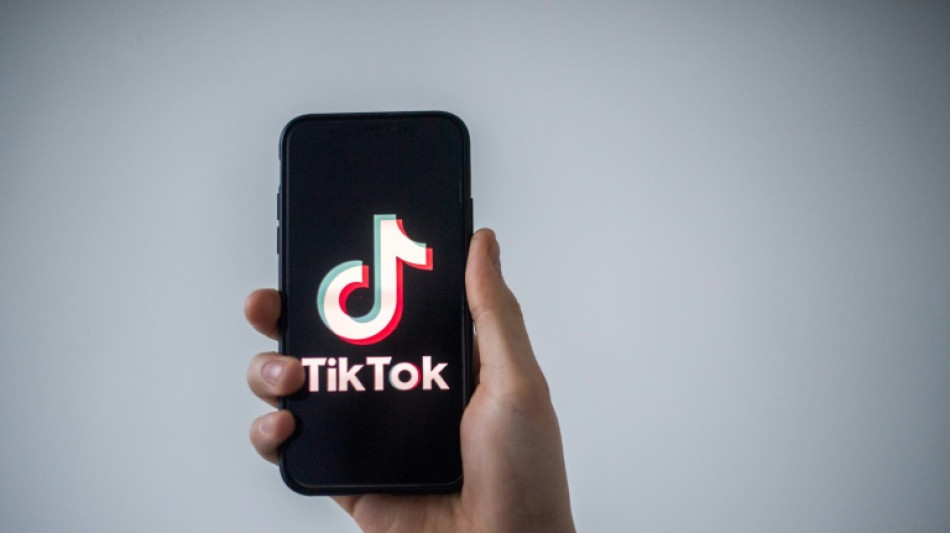
One billion users, but bans mount up for TikTok / Photo: © AFP/File

 Kaepernick says NFL 'blackballing me' decade after protest

 Atletico loan David from Juve, send Lemar to Elche

 Chelsea 'keeper Sanchez makes deadline-day move to Como

 Kroenke to buy baseball's Los Angeles Angels: statement
 US defends Trump's Venezuela oil deal

 OpenAI to launch new model with 'stronger safeguards' after hack
 Fans mourn 'bittersweet' final Ariana Grande gig in London

 Norway's King Haakon VIII swears allegiance to constitution

 Syria site infrastructure 'consistent with nuclear reactor': IAEA
 Juventus sign Woltemade, Sarr on loan from Premier League

 US strikes Iran in latest tit-for-tat attacks
 China's Xi arrives in Egypt as US sanctions threat looms over Iran links

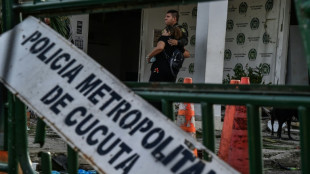 Car bomb at Colombian police station kills one, injures 11

 Rain delays start of play on US Open

 Man City agree blockbuster deal to sign Chelsea star Fernandez: reports
 Alkemya Metacore Secures $50M via Tokenised Equity to Scale Nickel Energy and Security Tech

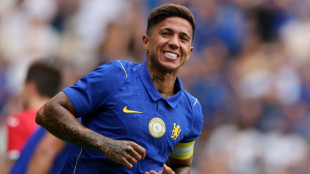 Man City chase Fernandez, Arsenal sell Jesus on deadline day
 EU says Russian 'hybrid attacks' won't halt aid to Ukraine

 Explosives used in sabotage attack on German power lines
 Nepali families hold symbolic funerals for missing after floods

 Newcastle sign Lille forward Fernandez-Pardo

 Even at Elysee, phones are handed in, Macron tells French pupils

 Chelsea agree to sign Atalanta's Ahanor, with Palace loan for this season

 Chelsea sign Atalanta's Ahanor and loan him to Palace

 UK chalks up hottest summer on record for second year running
TikTok's breakneck rise from niche video-sharing app to global social media behemoth has brought plenty of scrutiny, particularly over its links to China.
The European Commission is the latest organisation to ban the app from its equipment, following similar moves in the United States.
So is TikTok a spying tool for Beijing, a fun app, or both?
Global action against TikTok, owned by Chinese firm ByteDance, kicked off in earnest in India in 2020.
It was among the Chinese apps barred after deadly clashes on the border between the two countries, with New Delhi saying it was defending its sovereignty.
The same year, US President Donald Trump threatened a ban and accused TikTok of spying for China -- an idea that has gained ground in Washington.
TikTok was forced to admit ByteDance employees in China had accessed Americans' data but it has always denied turning over data to the Chinese authorities.
The company has moved to soothe US fears, announcing in June 2022 that it would store all data on American users on US-based servers.
However, in January US federal employees were banned from downloading the app, with the European Commission following suit on Thursday to "protect the institution's data", it said.
Bans have not halted TikTok's growth.
With more than one billion active users it is the sixth most used social platform in the world, according to the We Are Social marketing agency.
Although it lags behind the likes of Meta's long-dominant trio of Facebook, WhatsApp and Instagram, its growth among young people far outstrips its competitors.
Almost a third of TikTok users are between 10 and 19 years old, according to the Wallaroo agency.
Its rapid rise saw it grab more than $11 billion in advertising revenue last year, a threefold increase in a single year.
TikTok's competitors quickly copied its short video format and continuous scrolling, but to little avail.
- Creator appeal -
Tiktok's editing features and powerful algorithm have kept it ahead of the game, attracting an army of creators and influencers as well as creating many of its own.
But the algorithm is opaque and often accused of leading users into digital content silos.
TikTok and ByteDance employees also manually increase the number of views on certain content, according to a recent report in Forbes.
TikTok has said manual promotion only affects a tiny fraction of recommended videos.
- Disinformation -
The app is regularly accused of spreading disinformation, putting users in danger with hazardous "challenge" videos, and allowing pornography, even though it is supposed to prohibit nudity.
French news site Numerama reported a TikTok "trend" recently that involved publishing photographs of penises.
Several children have also reportedly died while trying to replicate the so-called blackout challenge, which involves users holding their breath until they pass out.
And around one-fifth of videos on topical issues such as the Russian invasion of Ukraine were found to be fake or misleading in a study by misinformation group NewsGuard.
AFP, along with more than a dozen fact-checking organisations, is paid by TikTok in several countries in Asia and Oceania, Europe, the Middle East and Spanish-speaking Latin America to verify for internal moderation videos that potentially contain false information. The videos are removed by TikTok if the information is shown to be false by AFP teams.
D.Schneider--BTB