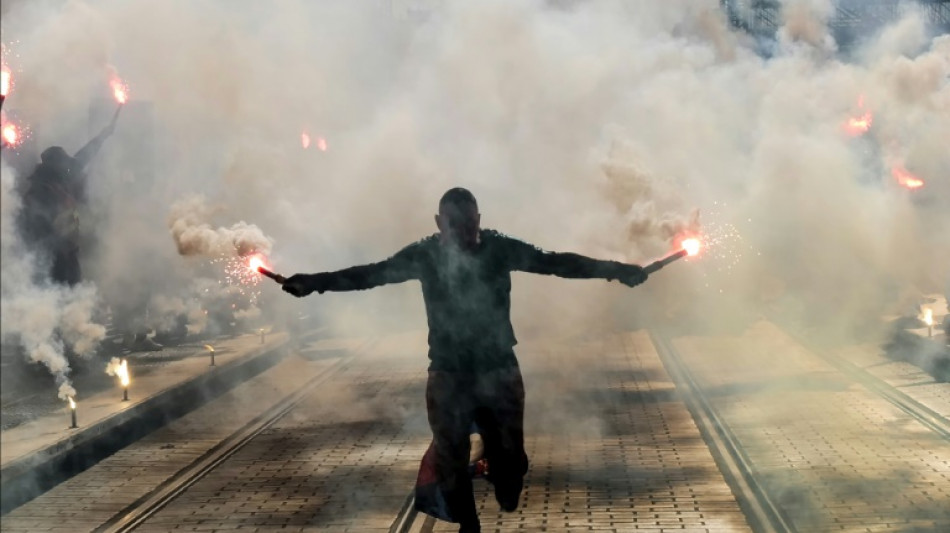
Macron vs the unions: What's at stake for France? / Photo: © AFP

 World record prize winner Romantic Warrior retires from horse racing

 5,000 US sailors arrive in Thailand after months at sea
 Joshua Wong, Hong Kong's pro-democracy poster child

 Nepal tunnel rescuers seek trapped workers but hit dead ends

 Zverev wins wild five-setter, Rybakina and Gauff ease through at US Open

 US energy secretary arrives in Venezuela to discuss oil deal

 Meloni government becomes Italy's longest-lasting
 Funerals in Nepal for missing, a week after deadly floods
 US aircraft carrier arrives in Thailand after months at sea

 US aircraft carrier approaches Thai port after months at sea
 Nepal's young PM faces gravest test after flood catastrophe
 What rainbow? LGBTQ Indonesians on edge as hostility mounts

 O'Connor eyes Wallabies World Cup swansong after Force return

 Syria UXO causing death, injury every six hours: charity
 Tiger Woods set to change not guilty plea in DUI case: court documents

 Zelensky warns airlines Russian skies not safe due to Ukraine drones

 UK vows anti-settler measures as Israel warns of retaliation

 New pro Koivun among US Presidents Cup picks

 G20 finance leaders close talks marked by US welcoming Russia

 From Hollywood to big time tennis: teen makes US Open debut
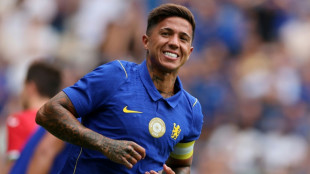
 Man City secure Premier League record deal to sign Fernandez

 Kaepernick says NFL 'blackballing me' decade after protest

 Atletico loan David from Juve, send Lemar to Elche

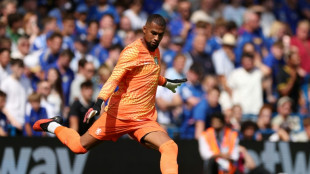 Chelsea 'keeper Sanchez makes deadline-day move to Como

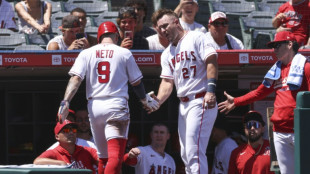 Kroenke to buy baseball's Los Angeles Angels: statement

French President Emmanuel Macron is facing his biggest standoff with France's trade unions since coming to power in 2017, with the outcome of a series of strikes and protests over a pensions overhaul seen as decisive for both sides.
As labour groups look to bring the country "to a standstill" on Tuesday, AFP looks at what's at stake for the president, the unions and the country at large.
- What's in the reform? -
Macron's flagship proposal would raise the minimum retirement age from its current level of 62 to 64, bringing France more into line with its EU neighbours, most of which have pushed back the retirement age to 65 or higher.
The law also stiffens the requirements for a full pension and would abolish privileges enjoyed by some public-sector employees, such as those at the Paris Metro.
After initially claiming it was intended to make the system fairer, the government now emphasises that it is about savings.
"The status quo in the next 10 years means 150 billion euros [$160 billion] of accumulated deficits and a fall in the quality of life of pensioners," Labour Minister Olivier Dussopt said at the weekend.
The changes, which would also see small raises for the lowest pensions, are slated to come into force in September.
- Who are the opponents? -
France's trade unions have organised five separate days of protests so far, but Tuesday will see them move into a higher gear, with a threat of rolling strikes risking a severe knock-on in subsequent days.
Their main complaint is that the changes penalise unskilled workers who tend to start their careers early and often toil in physically demanding jobs, unlike university graduates.
They also contest that government's claim of looming deficits for the pay-as-you-go pensions system, saying that small increases in contributions could keep it solvent.
The unions are backed by the hard-left France Unbowed (LFI) political party, which wants the retirement age lowered to 60, as well as the Socialists and Greens.
The far-right party of Marine Le Pen is also against the overall, while expressing unease over attempts to paralyse France with rolling strikes.
A host of left-wing intellectuals have also voiced opposition, notably star economist Thomas Piketty, who sees Macron as reinforcing his reputation as "the president of the rich".
- What's at stake for Macron? -
After trying and failing to push through pension reform during his first term, Macron returned to the issue while campaigning for re-election last April.
He defeated Le Pen running on another pro-business platform that promised to lower unemployment and make the French "work more" in order to finance the country's social security system.
But political analysts say his mandate is weak, and Macron himself acknowledged in his victory speech that many people had voted for him simply to keep Le Pen out of power.
Despite warnings from allies about the timing of the reform so soon after the Covid-19 pandemic and in the middle of a cost-of-living crisis, the 45-year-old has pressed ahead.
"For Emmanuel Macron, pulling back would be an abdication," senior right-wing senator Bruno Retailleau, who supports the reform, said on Sunday. "If he pulled back, he couldn't reform anymore, his term would be over."
- What about public opinion? -
Around two thirds of voters tell pollsters they are against the changes, and a majority of people support the strikes.
Opposition appears to be particularly strong in small and midsize towns, where Le Pen draws much of her support.
Fears that the changes could prompt a resurgence of the so-called "Yellow Vest" protests, a spontaneous and sometimes violent anti-government movement in 2018, have been unfounded so far.
Despite its unpopularity, two in three people say they believe the reform will pass, a poll by the Elabe group showed on Monday.
- Are these protests typical? -
The government was expecting a rough ride -- few major changes happen in France without protests.
For left-wingers, any attempt to roll back the rights of workers -- to short working hours, generous pensions or protected employment contracts -- is seen as an attack on the achievements of the labour movement over the past century.
The current protests might end up surpassing those of 2010, when right-wing president Nicolas Sarkozy raised the retirement age to 62 from 60.
They are also bigger than those of 1995, when the government was forced into a notorious U-turn on pensions.
But the impact of Tuesday's stoppages is different, with the advent of working-from-home and new technology reducing disruptions.
"So far, the mobilisation of French people to demonstrate or go on strike has been important, but probably not enough to have a significant macroeconomic impact," economists at the bank ING wrote Monday.
- Who will win? -
The government's strategy is clear: rush the legislation through parliament and secure a vote in favour by the middle of this month or by March 26 at the latest.
Even though Macron's centrist party does not have a majority in the lower-house National Assembly, it should be able to count on the right-wing Republicans party for support in both chambers to secure the necessary majorities.
"Reversing something like this would be extremely difficult and improbable," Jerome Jaffre, a political analyst at the Cevipof research institute in Paris, told LCI television on Monday.
"Even those leading the opposition, I'm not sure that they believe in it."
C.Meier--BTB