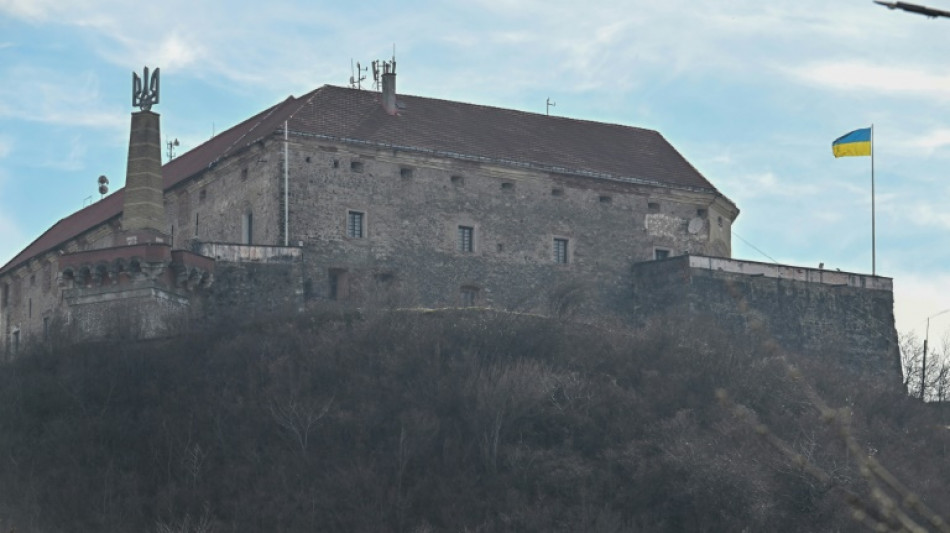
Ukraine's Hungarians stuck between Kyiv and 'pro-Putin' Orban / Photo: © AFP

 US Open under the influence: content creators spark debate

 NBA hammers Clippers over Leonard salary cap violations
 NBA strips five first-round draft picks from Clippers for Leonard salary cap violations
 Kane brace helps Bayern win German Cup opener
 Migrant plight, local anger divide Ceuta one month after influx
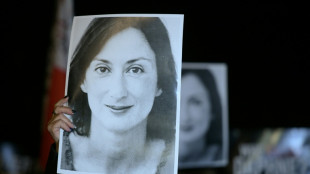 Outrage as Maltese tycoon acquitted of reporter's murder
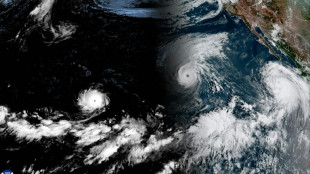 Rare train of Pacific cyclones fueled by historic El Nino
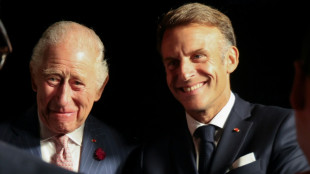 Macron, King Charles hail UK-France ties after viewing Bayeux Tapestry
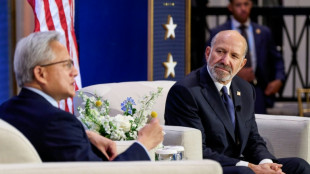
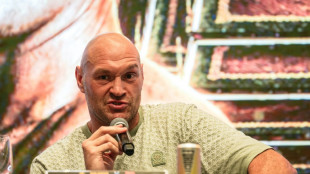 Fury hits out at 'coward' Joshua as 'Battle of Britain' talks go on
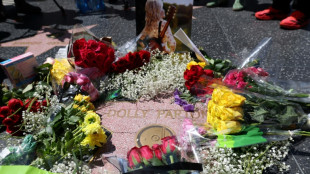
 Maltese tycoon acquitted of masterminding reporter's murder
 George Clooney: a Hollywood icon and campaigner
 Europe, US closer than they look on tech rules, says EU tech chief
 Clooney honoured as Hollywood-light Venice Film Festival kicks off
 Third-ranked Pegula, Medvedev power into US Open third round
 Davis-Woodhall a doubt for Ultimate Championship after car crash
 Third-ranked Pegula powers into US Open third round

 Uber says laying off 'about 10%' of workforce worldwide

 US judge rejects bid to break up Google's ad business
 Rupert Murdoch 'very happy' to be played by Guy Pearce in new film

 Wall Street stocks rise despite bond yields, oil rising
 Brennan claims third Vuelta victory in stage 11 sprint
 Nepal flood survivors cling to zipline to cross treacherous river
 US Treasury issues $1 coin with Trump's face on it
 Fernandez 'didn't hesitate' over record Man City move

 Dutch shift 86 tonnes of gold from US, Canada to UK
Until October, the medieval castle on the hill above Mukacheve in Ukraine's westernmost region sported a statue of Hungary's national symbol, the "turul" bird.
It has since been replaced with Ukraine's trident after the city's mayor ordered the mythical creature's replacement, unsettling Transcarpathia's large Hungarian community and sparking protests from Budapest.
Closer to Budapest than Kyiv and part of the Austro-Hungarian empire until World War I, multi-ethnic Transcarpathia borders Poland, Slovakia, Hungary and Romania, and is home to over 100,000 Magyars -- its biggest minority group.
But the turul "is a chauvinistic symbol of imperial-era Hungary and belongs in a museum," Mukacheve's mayor Andriy Baloha told AFP.
"Only the trident should be on the castle," he said.
"The same goes for flags on municipality-owned buildings," said the 34-year-old, referring to another recent local decree that prohibits the flying of Hungarian flags.
- Worsening relations -
The measures are the latest to unnerve Transcarpathian Hungarians, many of whom fled to Hungary to avoid military service after Russia invaded Ukraine.
Relations between Kyiv and Hungary, an EU and NATO member, already sour because of a rift over minority language education rights, have worsened in the past year.
Hungary's nationalist premier Viktor Orban has being obstructing tightening NATO links with Ukraine over the language spat, giving Kyiv only lukewarm support during the war.
Orban has also claimed that ethnic Hungarians are being forced into military service and dying in large numbers at the front, without providing details.
Although Hungary has sent aid and hosted refugees, Orban -- close to Russian President Vladimir Putin before the war -- refuses to send weapons to Kyiv, opposes sanctions against Russia, and has urged peace talks instead.
The approach has prompted Ukrainians like Baloha to describe Orban as "pro-Russian" and suspect that Budapest wants to annex Transcarpathia.
"It's important to show that Transcarpathia is, was, and will be an integral part of Ukraine," he said in defence of his controversial decrees.
- 'Tension and worry' -
According to Karolina Darcsi, spokesperson for the local Hungarian political party KMKSZ, Budapest's "no weapons" policy has led to "negative portrayals" of Hungarians in Ukrainian media.
"In comments under articles, some Ukrainians say that 'if Hungarians are like that they should be deported to Budapest,'" she told AFP.
Such anti-Hungarian sentiment and curbs on teaching their mother tongue cause the minority "tension and worry", said Pal Popovics, a teacher at a high school in Mukacheve.
Legislation aimed at protecting the Ukrainian language adopted by Kyiv since 2017 means that schoolchildren can no longer sit final or university entrance exams in Hungarian.
From September, at least 20 percent of classes must be taught in Ukrainian.
The school, whose corridors are lined with pictures of Hungarian historical figures, is one of around 100 in Transcarpathia where classes are currently taught only in Hungarian. Like many in the region, it was renovated with state funds from Budapest.
"Mother-tongue schooling is vital for preserving our identity -- restricting it makes us feel like second-class citizens," Popovics said.
"We just want respect -- we pay our taxes and fight like our fellow citizens against the Russian invasion," he told AFP in the school cellar during an air raid alarm.
- 'Pure provocation' -
Zsolt Ladanyi, an ethnic Hungarian who has fought for Ukraine, said he "didn't think twice" about volunteering for the army.
"I told my Ukrainian comrades that I was born here and never thought of leaving," the 50-year-old baker told AFP in Uzhhorod, Transcarpathia's largest city.
"But I don't understand why Hungary doesn't send weapons," he added as he showed his phone footage from frontline trenches.
Sandor Spenik, dean of Uzhhorod university's Ukrainian-Hungarian faculty, told AFP that the friction was being "pushed a bit from Kyiv".
The turul removal in Mukacheve was a "pure provocation" designed to incite peoples and countries against each other during wartime, he said, while in everyday life there is "no tension between people".
"Persecuting our ethnic Hungarian citizens over a stance of the Hungarian government, which we dislike, is completely wrong," said Volodymyr Chubirko, head of the regional council.
Tension in Transcarpathia is "an inflated myth", he said. "We will preserve ethnic peace."
J.Bergmann--BTB