'Noose around your neck': Colombia's biggest drug cartel rules with fear / Photo: © AFP

 Sabalenka storms into US Open third round as Pegula, Medvedev advance

 Zverev looks to improve after first-round scare

 Raiders to start Cousins over top NFL Draft pick Mendoza

 Palantir chief says France's digital sovereignty push 'backfiring'

 US energy firms dominate Venezuela deals worth billions

 Iran, US trade threats after escalation in fighting
 US jury deadlocks again in Lindsay Clancy's child murder trial
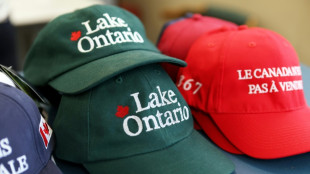 Lake America? No way, Canadians say
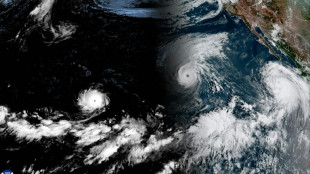
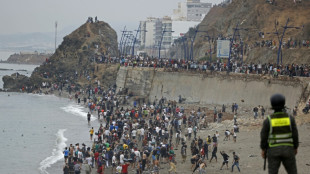 Spain report flags Moroccan police failings in Ceuta migrant rush
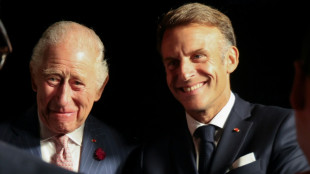
 Tech bosses press G20 to build data centers, but split on risk
 Dolly Parton to get new Hollywood star after vandalism
 Trump 'happy' Prince Harry and Meghan have left US
 Michelson shocks Nakashima in US Open clash of rising Americans

 Another body recovered after ferry capsizes off northern Cyprus: official

 Cupertino Chamber President Claudio Bono Invited to White House with GiveaRoof 3-Year Plan to End Homelessness

 Trump floats renaming Strait of Hormuz as 'Trump Strait'
 Man City, Chelsea fuel record-breaking Premier League transfer window

 Balogun rejected Everton move over transfer 'treatment'

 Northampton seek 'happy medium' in bid to keep England star Pollock

 US energy secretary in Venezuela to sign Trump's 'biggest' oil deal
 Branagh takes on action role in Apple's Cold War comedy 'Mayday'
 Lawson fills in again for injured Hadjar at Monza

 England omit Carse from squad for third Test against Pakistan
 Venice festival gets underway with Clooney taking swipe at US government
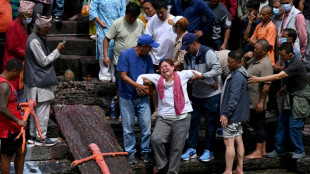 DNA tests and funerals in Nepal, a week after deadly floods

In the cities and towns of northwest Colombia, the ubiquitous graffiti "AGC" signals the ominous presence of the powerful Gulf Clan drug cartel.
Spray painted onto walls, it is meant to instill fear in residents, and keep them mum, as the Clan embarks on a fast-escalating confrontation with the government in an area critical for its bustling cocaine trade, illegal mining and other lucrative criminal ventures.
"To speak about the Clan is to put the noose around your neck," said a resident of Taraza, a town that has recently found itself at the cartel's mercy.
Like many interviewed by AFP in the region, the resident would not divulge their name for fear of reprisal.
Also known as the Autodefensas Gaitanistas of Colombia or AGC, the Gulf Clan is the biggest drug cartel in the world's largest cocaine producer.
It has a long history of violence in an area dubbed the "Bermuda triangle" by locals because of the many people who have gone missing there, only to be found dead in the river nearby.
Authorities accuse it of fomenting violence and vandalism by illegal gold miners in the northwest region protesting a clampdown on their operations and the destruction of their dredging machinery.
In so doing, the Clan breached the terms of a ceasefire not even three months in, according to the government.
The miners have set up roadblocks, attacked government buildings, a bank and civilians -- severely disrupting daily life and livelihoods.
On Sunday, a dozen assailants on motorcycles set fire to two buses and four trucks on the National Route 25 -- a critical link between the Caribbean coast in Colombia's north and the second city of Medellin in the east.
That prompted President Gustavo Petro to announce the "reactivation" of military operations against the cartel.
The military and police deployed 10,000 armed personnel to the region, and the N25 roadblocks have been cleared.
But a local journalist, also speaking on condition of anonymity, told AFP that for all intents and purposes, "the road remains under the control of the Gulf Clan."
- 'Hostage' population -
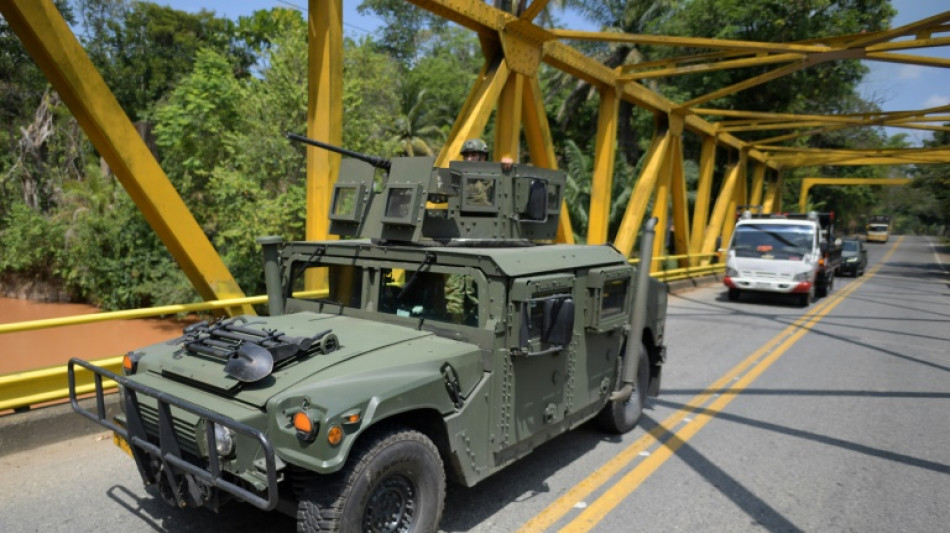
The big trucks ferrying critical consumer products that usually bustle along the N25 now travel in convoys of dozens of vehicles.
They are escorted by heavily-armed members of the security forces past the carcasses of the burnt vehicles still lying there.
"The situation is under control," declared a soldier as he jumped onto a Humvee to join one of the elaborate security convoys whizzing past under the seemingly placid gaze of villagers.
Not everyone is convinced.
"Diana," who runs a modest truck stop restaurant along the route, was a witness to Sunday's attack.
She was keen to show a video on her mobile phone of the two buses in flames, but refused to describe the events.
According to the local journalist, the miners' protest started by targeting the government, but "ended up holding the population hostage."
Gumercindo Castillo Bolario, a leader of the Taraza miners' group, insisted there were no links with the Clan, and accused the government of "stigmatizing accusations."
Economic activity in Taraza has partly resumed since the military deployment there, with shops open at least in the mornings, and some bars pumping music.
"People could no longer move around, go out and buy food," said driver "Faber."
"Twenty days without work -- it was like the pandemic all over again."
Andres, who manages a motel and restaurant attached to a gas station, told AFP "they" had "allowed us to open" in recent days.
"Here, we do what we're told," added a grocery store owner, citing orders and threats relayed by the Clan via WhatsApp.
- 'Total uncertainty' -
Despite a 2016 peace deal that saw the FARC guerrilla group disarm, fighting has continued as the Clan and other armed groups vie for control of illegal resources and trafficking routes.
Petro declared a unilateral ceasefire with armed groups on New Year's Eve in pursuit of his ambitious plan for "total peace" after decades of violence.
The truce remains in place with groups other than the Clan.
"We don't know what will happen," a Taraza hotelier told AFP.
"It is total uncertainty."
N.Fournier--BTB