'Life-altering': the suffering of US gun violence survivors / Photo: © AFP

 In Ghana, larger-than-life coffins tell the stories of the dead

 Menoncello, Reece headline Top 14 new-season signings

 Families descend on Nepal in search of missing tourists
 Far-right AfD eyes huge win in east German state vote
 Brazil-Japan to play World Cup rematch at Singapore tournament

 Defence chiefs back boosting US military presence in Australia

 Nepal seeks climate justice after Himalayan disaster

 Stocks rise, yields ease as oil slips on Trump hint at short bombing campaign

 Brussels Diamond League finals Day 1 - five events to watch
 Thailand's 'Jurassic Park' shines light on dinosaur evolution
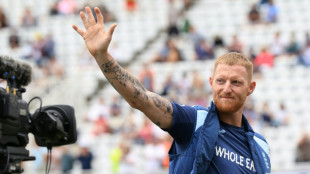 'Role model' Stokes set to open for Adelaide Strikers

 Palau urges 'unified' Pacific response to China missile test

 Grinding away: in remote Appalachia, old mills fuel US clean food dreams

 Sabalenka races into US Open third round

 Chinese lucky loser stuns Jodar at US Open

 US Open under the influence: content creators spark debate
 NBA hammers Clippers over Leonard salary cap violations
 NBA strips five first-round draft picks from Clippers for Leonard salary cap violations
 Kane brace helps Bayern win German Cup opener
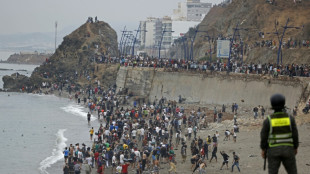
 Migrant plight, local anger divide Ceuta one month after influx
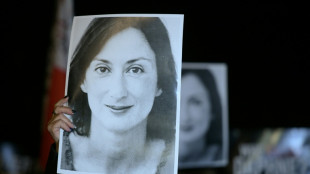 Outrage as Maltese tycoon acquitted of reporter's murder

 Rare train of Pacific cyclones fueled by historic El Nino
 Macron, King Charles hail UK-France ties after viewing Bayeux Tapestry
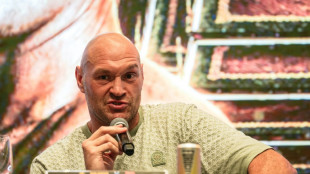 Fury hits out at 'coward' Joshua as 'Battle of Britain' talks go on
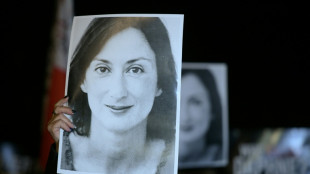 Maltese tycoon acquitted of masterminding reporter's murder
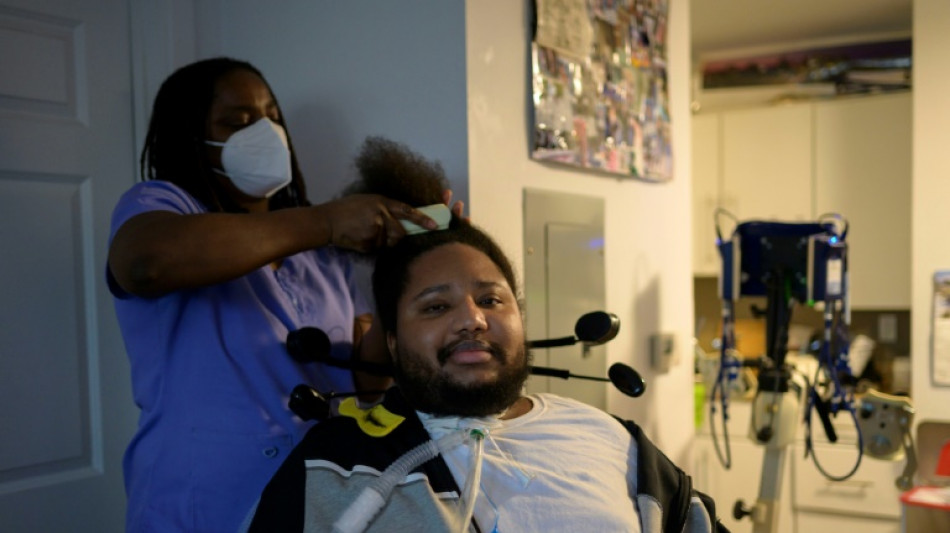
Ralph Norman's life was changed forever almost 13 years ago when a stray bullet left him paralyzed, launching him into a world of depression and fears of stigma as part of the ever-growing list of US victims of gun violence.
On their way to celebrate high school graduation, Norman and his friends stopped at a gas station outside New York, when they got caught in the crossfire of a nearby shooting.
Norman was hit in the neck, and after 14 hours in the operating room, awoke to a new reality as a quadriplegic.
He can only move his shoulders a bit along with his head, and relies 24 hours a day on assistance to eat, brush his teeth, comb his hair, bathe and lie down. Someone must also empty saliva that accumulates in the tube that helps him breathe.
For a long time, he hid the reason that he was using a wheelchair.
"Until the last two years, I have never told I was shot by a bullet. I was always saying, oh, car accident because I was ashamed because when I first got hurt, I was judged of being in a gang," Norman told AFP.
"When you mention gun violence, you get some stigma," he said.
After years of depression, he decided to seek help and support.
He's now able to use a computer via a device operated with his mouth, and every evening participates in a video chat with other gun victims from across the country.
They share their experiences and discuss the realities and limitations they face.
They also frequently discuss the news, including the school shooting on Monday in Nashville, Tennessee, in which three children and three adults were shot dead.
"I don't understand what is going on in their heads," Norman said.
- Under-discussed issue -
In 2020 alone, gun violence left more than 45,000 people dead, according to official data -- more than half of them by suicide.
The economic impact of such violence in the United States costs tens of billions of dollars in medical costs and lost productivity, authorities say.
But there's little discussion of the survivors of such violence.
Between 2009 and 2017, firearms caused double the injuries than deaths, according to a study by Elinore Kaufman, a doctor in the trauma division of Penn Presbyterian Medical Center in Philadelphia and an ardent critic of the proliferation of guns, of which some 400 million are circulating across the United States.
At the Pennsylvania facility, seven out of 10 firearm victims arrive with injuries due to assaults or shootings, while two out of 10 are due to suicide attempts.
"I don't think it is a problem that is nearly as well-known as it should be," Kaufman said. Victims can end up with wounds that are "absolutely life altering and permanent."
"We see up to half of our patients develop post-traumatic stress disorder or depression, which is just as bad as what we see in our military veterans."
- Racism and poverty -
According to Kaufman, homicide rates among young Black populations are ten times higher than the next highest demographic.
"Violence is really concentrated in communities that we as a larger society have put at risk by depriving them of opportunities and by allowing firearms to be readily available," she said.
"Firearm violence -- particularly interpersonal firearm violence, assaults and homicides -- is very heavily determined by structural racism and poverty and lack of opportunity."
When he was 10 years old, Oronde McClain was declared officially dead for two minutes and 17 seconds.
He was shot in the back of the head as he tried to take cover during a shooting in Philadelphia.
McClain had to relearn how to walk and talk.
His right hand was partially paralyzed, which caused him trouble at school, particularly due to teasing from his peers.
"I tried to commit suicide 22 times because I didn't know what to do in this world," he told AFP.
But the now father of five finished high school and college, and decided "I'm gonna give back to my community."
"When I'm helping another victim or help another survivor, that's helping me."
McClain's head is heavily scarred, and he suffers from migraines and tremors.
But "it's memories that hurt the worst," he says.
He, like so many people in the United States, believe stricter regulation is a necessity: "We all have to work together as a team, politicians, police, everybody."
"We work together, we can stop this."
E.Schubert--BTB