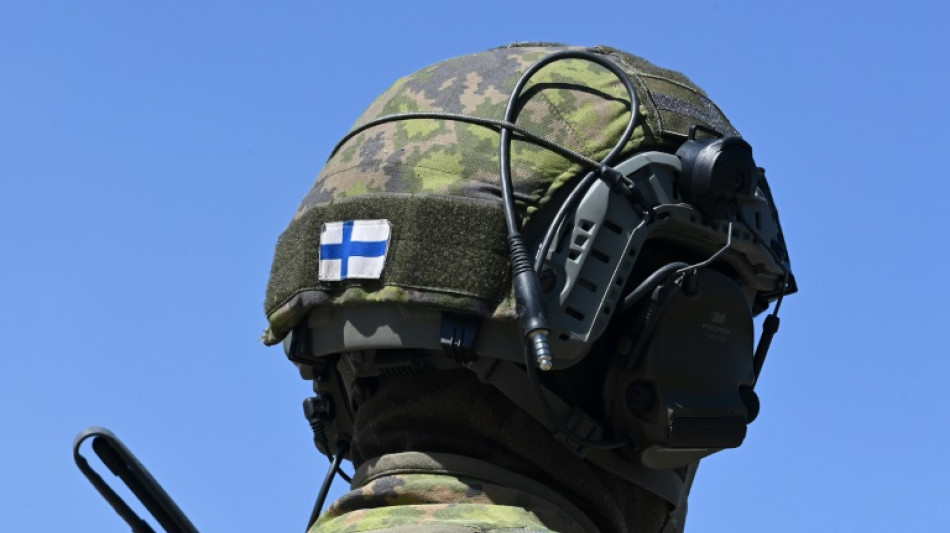
How Finland joining boosts NATO defences against Russia / Photo: © AFP

 Indonesia protesters targeted by coordinated disinfo
 Oil sinks, bond yields ease and stocks boosted after Trump Iran hint
 American jazz singer Cassandra Wilson dies at 70

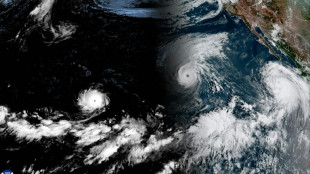
 Rare trio of Pacific hurricanes fueled by historic El Nino

 Chinese WNBA star out of World Cup after losing passport

 Medieval Europe and Africa collide in Sao Tome traditional theatre
 Iran attacks US targets despite Trump threats

 Alcaraz believes 'impossible' schedule raising injury threat
 Alcaraz rallies to reach US Open third round, Sabalenka storms through
 Alcaraz overpowers Faria to reach US Open third round

 Hamilton hopes to boost title bid with record Italian triumph

 Iran, US trade threats after fresh strikes

 US not 'stealing Venezuelan oil,' energy secretary insists

 Farming experts tout 'conscious' food systems to fix agriculture woes

 George Lucas unveils art galaxy at his new LA museum

 Veteran Wallaby Slipper targets fifth World Cup after Brumbies deal

 Sabalenka storms into US Open third round as Pegula, Medvedev advance

 Zverev looks to improve after first-round scare

 Raiders to start Cousins over top NFL Draft pick Mendoza

 Palantir chief says France's digital sovereignty push 'backfiring'

 US energy firms dominate Venezuela deals worth billions

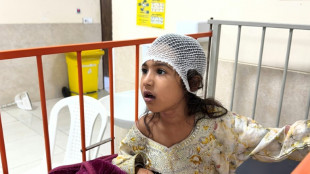 Iran, US trade threats after escalation in fighting

 US jury deadlocks again in Lindsay Clancy's child murder trial

 Lake America? No way, Canadians say
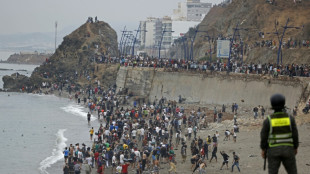 Spain report flags Moroccan police failings in Ceuta migrant rush
Finland's membership of NATO adds a potent military to the alliance and a strategic puzzle piece that can better help defend its vulnerable eastern flank from potential Russian attack, officials and analysts say.
When President Vladimir Putin launched his all-out war on Ukraine, part of Moscow's justification was the claim it needed to stop further NATO expansion in its backyard.
But 13 months on, Finland's choice to join means the US-led alliance is now doubling its border with Russia in a move that changes the military calculus from the Baltic region to the Arctic.
"Now Finland needs NATO, but NATO needs Finland as well in the face of an aggressive Russia," said Jamie Shea, a former senior NATO official who is an associate fellow at the Chatham House think tank.
"NATO will find collective defence against Russia easier now it has access to Finnish territory and the capabilities Finland brings to the table."
- Protecting the Baltics -
Alliance military planners have fretted for years over how to protect its three Baltic members -- Estonia, Latvia and Lithuania -- from a possible attack by Russia.
Concern focused on the Suwalki Gap, a 65-kilometre (40-mile) strip between the Russian enclave of Kaliningrad and Belarus, where a lightning strike could sever the Baltic allies from the rest of NATO.
Now Finland's membership could help NATO to dominate the Baltic Sea and, with Helsinki less than 70 kilometres across the water from Estonia's capital Tallinn, provide a new route for reinforcements.
"Finland's accession will strengthen NATO's forward defence and contribute to deterrence by denial," Estonia's Defence Minister Hanno Pevkur told AFP.
But he warned "the significance of the Suwalki gap for NATO remains, since Belarus has de facto become Russia's military district", and insisted the alliance still needs to push on with plans to reinforce the Baltics.
To the north, having Finland onboard will help the alliance defend the thin strip of Norwegian territory linking to Russia where Moscow could have staged a "fait accompli" assault, said analyst Jan Kallberg.
"Up to this point, NATO air forces have been dependent on a few Norwegian airfields that could be targeted early in a conflict, Finland adds more bases and air strips," said Kallberg, a senior fellow at the Center for European Policy Analysis.
And as jostling for control in the Artic region involving Russia, China and the West increases, stepping up NATO's footprint on its doorstep will be a major boost.
- Prepared for war -
Adding an extra 1,300 kilometres to the alliance's land border with Russia will also bring vulnerabilities, and working out how to defend it will pose a challenge for NATO strategists.
While its response to Finland's membership has been more muted than many expected, the Kremlin has pledged to bolster its forces close to the frontier in the coming years.
But with Russia's military bogged down in Ukraine, analysts say it will likely take years for Moscow to rebuild its capacity.
For the time being, Finland is expected to follow neighbour Norway's example and opt not to have forces from NATO allies stationed permanently on its territory.
The country already has a highly capable military.
"Finland is one of the very few European countries that never stopped preparing for a potential war," said Minna Alander, a research fellow at the Finnish Institute of International Affairs.
While other Western European militaries scaled back after the Cold War, Finland stuck to a conscription model fashioned from the bitter experience of the Soviet Union's invasion in 1939.
"That now gives Finland a wartime troop strength up to 280,000 and a total reserve of 870,000," Alander said.
"With 1,500 systems, Finland has one of the largest artilleries in Europe and has been and is continuously investing in air defence."
- A last gap -
Military officials from its future NATO counterparts point to Finland's winter warfare experience and planned upgrade to the latest US aircraft as key assets.
"On land, they are extremely capable, operating in the harshest of conditions and backed by considerable artillery," a senior Western official told AFP.
"In the air, Finland is buying the new F-35 fighter."
Finland's looming membership does highlight one gap left for NATO -- its neighbour Sweden.
Stockholm's application remains blocked by resistance from Turkey and Hungary, meaning that it still cannot be fully integrated into NATO's defence plans.
"The mere fact that Finland comes in will bolster Sweden because it will now be sandwiched between NATO members," said Shea.
"But the hope is still that they will be allowed in as soon as possible."
M.Ouellet--BTB