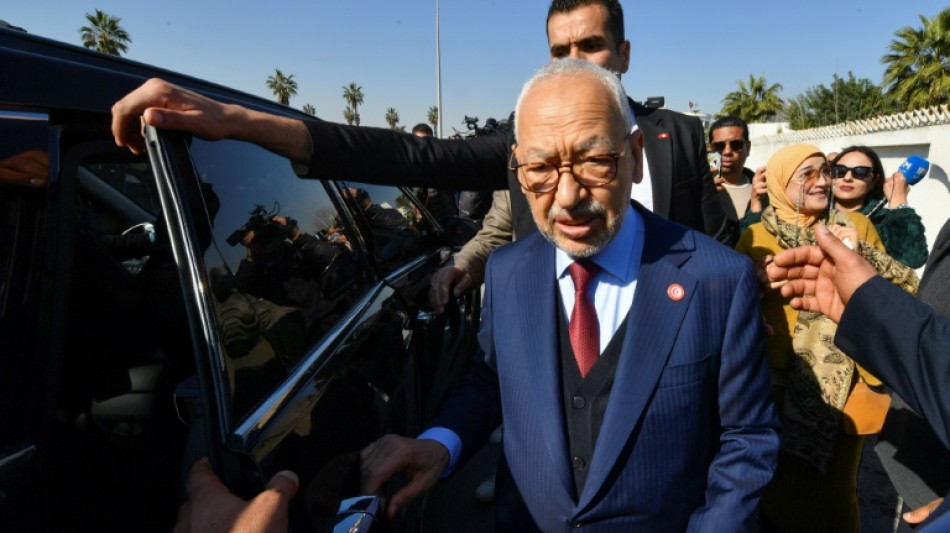
Tunisia's Ghannouchi: a kingmaker who lost his aura / Photo: © AFP/File

 Kyrgios gets month ban for cocaine, enters treatment programme
 Colombian judge bans strikes on guerrillas if minors are present
 Khachanov shocks ailing Auger-Aliassime, Swiatek and Osaka advance at US Open
 Lone juror blocking verdict in US mother's child murder trial: defense
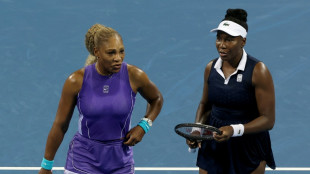 'Kinda chic' - Williams sisters set to launch US Open doubles bid
 Volkswagen says cutting 100,000 jobs by end of decade

 Russia slaps curfew on charity director over army criticism
 Ailing Auger-Aliassime upset by Khachanov at US Open
 Richarlison omitted from Tottenham's Premier League squad
 How El Nino is choking the Panama Canal
 Hamilton drives his Ferrari dream at Monza
 Senegal has an IMF loan, now what?

 Auger-Aliassime upset by Khachanov at US Open
 Hugging Face, the French start-up that became AI's warehouse
 World Cup winner Llorente retires from Spain team at 31
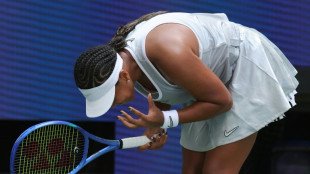 Osaka squeezes into US Open third round

 Apple faces £2 bn lawsuit in UK over app privacy feature
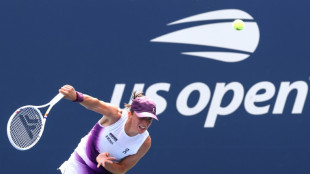 Former champ Swiatek eases into US Open third round
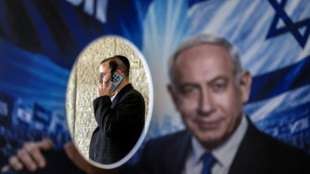
 DR Congo latest to promise moving Israel embassy to Jerusalem
 War criminal Mladic's body returns to Serbia with military honours

 Pierre Cardin museum brings designer's futurist style to Venice
 Slovenian rookie Omrzel triumphs as Mas extends Vuelta lead

 British, French leaders talk migrants, EU relations
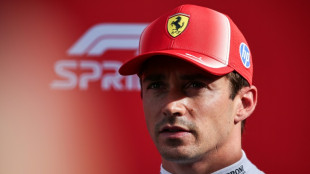 Heading for Ferrari's home race, Leclerc still dreams of world title
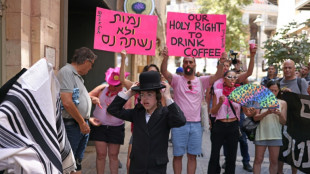 Cafe at centre of Israel culture clash agrees to shut on Sabbath
Rached Ghannouchi, the head of the Islamist-inspired Ennahdha opposition party arrested on Monday, once towered over Tunisia's politics but many now blame him for the country's ills.
The reputation of the 81-year-old veteran politician, once seen as a kingmaker following the 2011 Arab Spring revolt that toppled dictator Zine El Abidine Ben Ali, has been tarnished by the political intrigue roiling Tunisia.
Ennahdha played a major role in Tunisia following Ben Ali's downfall but, soon after, the powerful party found itself on a collision course with President Kais Saied.
In July 2021, Saied dissolved parliament and went on to seize wide-reaching powers through a series of moves opponents dubbed a "coup".
He ruled by decree and ordered the arrest of his detractors.
At the time Ghannouchi was the speaker of parliament, the second highest office in Tunisia, a title he lost when Saied neutered the national assembly.
On Monday authorities arrested Ghannouchi after remarks he made warning that eradicating different viewpoints such as the left or political Islam, from which his party originated, might lead to a "civil war".
On Tuesday, authorities closed Ennahdha's offices across the North African country, further stifling Ghannouchi and his party.
Ghannouchi had lived in exile for 20 years before returning home to a triumphant welcome by many following Ben Ali's ouster in 2011.
In the decade that followed, the frail politician called by his supporters the "sheikh", built up a reputation as a tough strategist, placing Ennahdha firmly on the political map of what was the only democracy to emerge from the Arab Spring.
He went as far as striking against-the-grain alliances with liberal and secular parties, to the dismay of some.
- 'Man of consensus' -
The author of fiery calls for Islamic sharia laws in the 1970s, he was initially inspired by Egypt's Muslim Brotherhood before claiming kinship with the Islamist model of Turkey's President Recep Tayyip Erdogan.
Often dressed in a suit and tie, he has since 2016 transformed Ennahdha into a politics-only movement, while promoting himself as a "Muslim democrat" defending conservative values without dogma.
But concessions divided his camp. Some supporters blamed him for backing a controversial law calling for pardons for Ben Ali-era politicians accused of corruption.
Born into a modest family in El Hamma, a small town on the south coast, Ghannouchi studied theology and philosophy, mainly in Cairo and Damascus.
He returned to Tunisia in the late 1960s, and in 1981 founded the "Movement of the Islamic Tendency", a party that was renamed Ennahdha (Rebirth) eight years later.
Twice imprisoned for clandestine political activities, Tunisia's founding president Habib Bourguiba even called for Ghannouchi to be hanged.
Ben Ali pardoned him in 1987 but Ghannouchi was later prosecuted again after an electoral breakthrough. He finally went into exile in London in 1991.
That was where he cultivated the image of an Islamic reformist and a "man of consensus".
- 'Scapegoats' -
Following Saied's power grab, Ghannouchi's aura began to fade. Many among his Ennahdha party criticised him openly, accusing him of controlling decision-making and refusing to implement reforms.
Many of his critics gave up by quitting the party, while in 2020 one hundred influential members leaked a letter calling for Ghannouchi to stand down.
Political scientist Selim Kharrat, who once described Ghannouchi as a political "chameleon", said his arrest was expected.
It followed that of about 20 other opposition figures since February, and shows that they have become in Saied's eyes "scapegoats and black sheep", Kharrat told AFP.
The president's supporters "blame Ennahdha and its allies for the way in which they ruled the country" following the revolution and until 2021, Kharrat said.
A large segment of the population "feel dejected" because of the numerous political, economic and social crises that face cash-strapped Tunisia, he said, despite hopes for a change that the uprising had carried.
The North African country is gripped by an economic crisis that has seen inflation hit 10.4 percent and unemployment reach 15.2 percent, according to the latest official figures
In recent months, Ghannouchi made at least 10 court appearances over an array of accusations including corruption, money laundering and helping jihadists travel to Iraq and Syria.
He emerged each time smiling and flashing the victory sign.
According to Kharrat, his arrest will not spark massive street protests because Ennahdha is no longer popular.
S.Keller--BTB