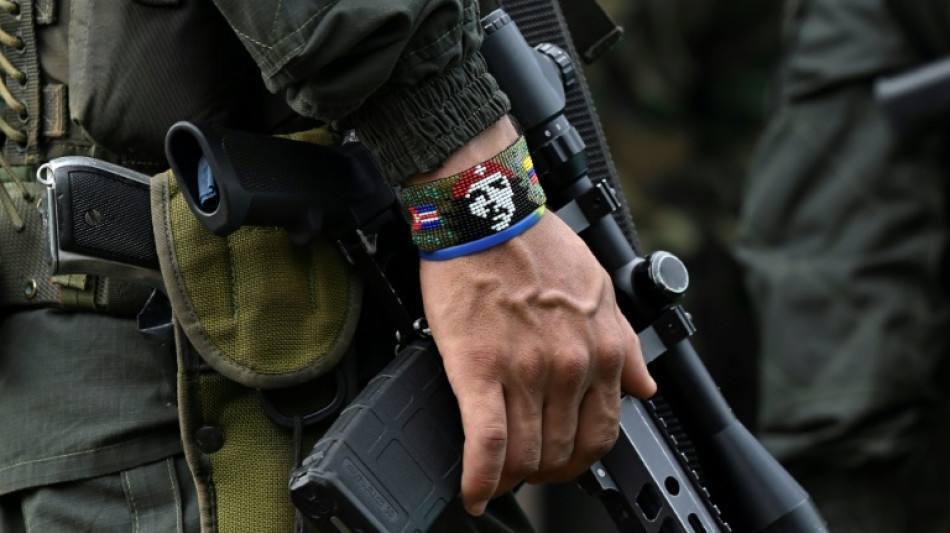
Uncertainty persists as Colombia seeks peace with FARC dissidents / Photo: © AFP

 Kyrgios gets month ban for cocaine, enters treatment programme
 Colombian judge bans strikes on guerrillas if minors are present
 Khachanov shocks ailing Auger-Aliassime, Swiatek and Osaka advance at US Open
 Lone juror blocking verdict in US mother's child murder trial: defense
 'Kinda chic' - Williams sisters set to launch US Open doubles bid

 Volkswagen says cutting 100,000 jobs by end of decade

 Russia slaps curfew on charity director over army criticism
 Ailing Auger-Aliassime upset by Khachanov at US Open
 Richarlison omitted from Tottenham's Premier League squad
 How El Nino is choking the Panama Canal

 Hamilton drives his Ferrari dream at Monza

 Senegal has an IMF loan, now what?

 Auger-Aliassime upset by Khachanov at US Open
 Hugging Face, the French start-up that became AI's warehouse
 World Cup winner Llorente retires from Spain team at 31
 Osaka squeezes into US Open third round

 Apple faces £2 bn lawsuit in UK over app privacy feature
 Former champ Swiatek eases into US Open third round
 DR Congo latest to promise moving Israel embassy to Jerusalem

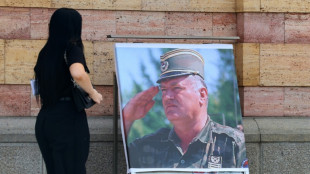 War criminal Mladic's body returns to Serbia with military honours

 Pierre Cardin museum brings designer's futurist style to Venice

 Slovenian rookie Omrzel triumphs as Mas extends Vuelta lead
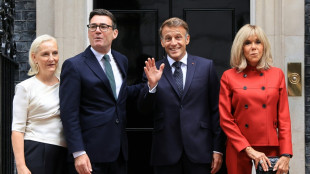 British, French leaders talk migrants, EU relations
 Heading for Ferrari's home race, Leclerc still dreams of world title
 Cafe at centre of Israel culture clash agrees to shut on Sabbath

Colombia's largest group of dissident guerrillas who rejected a 2016 peace deal with the state is asking for a new opportunity to negotiate with the government, but uncertainty reigns over how President Gustavo Petro will achieve his proposed "total peace."
On Sunday, the Estado Mayor Central (EMC), the largest dissident group from the Revolutionary Armed Forces of Colombia (FARC), announced it was holding a massive meeting of rebels and villagers in an area it controls.
The EMC said it was ready to discuss peace "with social justice" and would begin doing so from May 16.
When FARC, which was the most powerful guerrilla group in the Americas and is now a communist political party, decided to disarm, most of its 13,000 members did so.
But the EMC refused. The government believes it has around 3,000 members, most of whom are new recruits.
Since Sunday night, Colombian press have been awash with images from the EMC meeting in the southern Caqueta department, which was replete with references to Marxism and revolution.
- 'Biggest trap in history' -
The EMC's declaration of imminent peace has not elicited official word from the government, and has sparked little reaction from politicians.
Petro, who is visiting the United States, has not commented on the announcement, despite usually being highly active on social media.
Luis Alban, a former rebel and legislator for the Comunes party, did react -- but only in ire at the EMC claiming to be the sole heirs of the FARC guerrilla movement.
"We reject the use of our symbols by the self-proclaimed Estado Mayor Central (staff command). All this does is perpetuate the scenarios of stigmatization and puts at risk the lives of those that signed the peace deal," said Alban.
More than 360 former guerrillas have been killed since the 2016 peace deal, mostly by dissidents, authorities say.
Right-wing senator Maria Fernanda Cabal said on Twitter future peace talks would be "the biggest trap in Colombia's history."
Just how a new peace deal can be reached remains to be seen, since "Colombia has a long history" of failed processes and few successful ones, expert Patricia Munoz, of Javeriana University, told AFP.
The EMC has already insisted that the "communities" under its control take part in the negotiations.
The EMC's fiefdom is a sparsely-populated area between the Andes and the Amazon the size of Britain, called "Llanos", an enclave known for its coca leaf production.
- Bumpy ride -
The EMC is trying to extend its influence by absorbing several smaller dissident groups, thus extending its tentacles into the neighboring regions of Cauca, Catatumbo and Putumayo.
But "the starting point" for the peace process was the suspension of arrest warrants for 19 EMC commanders, allowing them to take part in "a meeting of commanders that will lead to a coordination that currently doesn't exist," according to Jorge Mantilla, an investigator specializing in the conflict and writing for the Razon Publica website.
Another dissident FARC faction, the Segunda Marquetalia, signed the peace deal but reneged on it in 2019.
Now the EMC's sworn enemies, they too have expressed openness to talks with the government.
Leftist Petro, a former urban guerilla who made his peace with the state in 1990 before moving into politics, also opened negotiations with the National Liberation Army (ELN) rebels and the Gulf Clan, the most powerful drug cartel in the country.
It has been a bumpy ride, though, with the government breaking off talks with the Gulf Clan over violations of their pact. Meanwhile, the ELN has refused calls for a ceasefire.
Munoz said that peace negotiations happen "when dialogue and trust-building have matured."
"If the Total Peace fails, the opposition's response will be ferocious. The flag-bearers for a strong hand against crime and for a military response to socio-territorial conflicts are just around the corner," said Mantilla.
Even if the negotiations succeed, there is always the fear that other smaller armed groups will simply step into the void and perpetuate the territorial conflict.
R.Adler--BTB