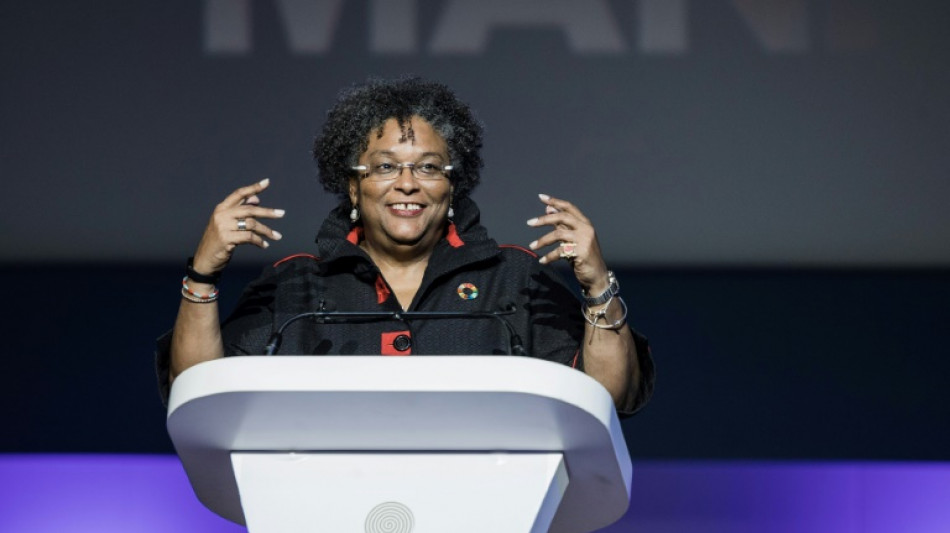
Climate-vulnerable nations lead the way on finance reform / Photo: © AFP

 Driver thanks 'superhero' rival for saving him from flaming race car

 Can dogs sniff cancer? AI joins the hunt in India

 Shelton steams into US Open quarter-final clash with Alcaraz
 25 years on, America seeks to keep 9/11 memories alive
 'Trumpapalooza' tests Republican bet on unpopular US president
 Pegula tops Cirstea to reach US Open quarter-finals
 Australians could opt out of social media algorithms under new law
 Tiafoe tops Medvedev in straight sets at US Open
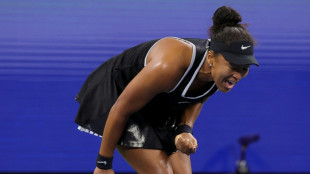 Zverev seeks US Open last eight as Osaka faces Rybakina

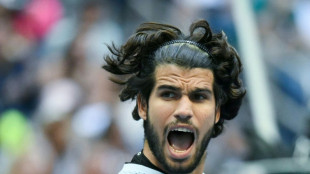 Alcaraz turns up heat to reach US Open quarters
 Gatti salvages Juve draw with AC Milan in Serie A
 Sinayoko stars as unbeaten Paris FC down Marseille
 Still on top: 'Spider-Man' dominates North American box office
 Zelensky in fresh talks with US envoys: Ukraine official

 Noskova edges Kostyuk to reach US Open quarter-finals
 Alonso urges Chelsea to learn from painful defeat at Arsenal
 Defending champion Sabalenka reaches US Open quarter-finals
 Minnows Augsburg sink Frankfurt to top Bundesliga table
 Yamal hits double as 'nearly perfect' Barca thrash Valencia
 Antonelli living 'a dream' after astonishing home win
 Impressive Daryz keeps Arc double dream alive
 Strasbourg hit Troyes for six as Amo-Ameyaw sparkles

 German far-right AfD landslide winner in eastern state vote

 Carrick defends Man Utd start despite defensive concerns
 More than 140 killed in latest Yemen clashes: military sources

When Barbados Prime Minister Mia Mottley laid out a plan to fix the international financial architecture at climate talks last year, she galvanised world leaders on reforms that had languished for years.
Along with leadership from other developing countries, Barbados has "definitely woken up a lot more political will" including spurring French President Emmanuel Macron to host a Summit for a New Global Financial Pact this week, said Alex Scott, an analyst at think tank E3G.
"We've got a huge new groundswell," she told AFP.
The foundations for the global economic order were laid at the end of World War II, when priorities were centred around rebuilding in Europe and many countries were still under colonial rule.
Today there are increasing concerns that the World Bank and International Monetary Fund are not equipped to meet 21st century challenges, particularly climate change.
"There needs to be a new deal," Mottley told world leaders at the COP27 climate summit in Egypt in November, laying out the Barbados "Bridgetown Initiative" plan.
The current financial architecture is "not fit for climate purpose", said Sara Jane Ahmed, finance adviser to the V20 group of more than 50 climate-vulnerable countries, which has drawn up its own vision for reforms.
"The most vulnerable have the least access (to financing) and are actually being punished for trying to have climate action because of high interest rates, and credit ratings on the floor," she told AFP.
Developing countries have long pushed for changes to the global lending system, but this time seems different.
Ahmed said proliferating climate disasters -- which can wipe out chunks of a country's economy overnight and take years to recover from -- are focusing minds.
"I think it's hitting home how urgent this is," she said, adding that countries were also speaking with a more "coordinated voice".
- Chance for change -
Countries are increasingly being lashed by costly extreme weather on top of a range of other challenges, from inflation to collapsing ecosystems.
In 2022 alone, Pakistan was hit by crop-withering heat followed only weeks later by cataclysmic floods that affected more than 30 million people and caused an estimated $30 billion in damages.
Scott said there has also been a shift in the geopolitical centre of gravity.
She said US dominance has given way to a more fragmented landscape with the rise of China as an alternative source of funding for developing nations, "creating more space" for ideas from smaller countries.
"We really think there's a chance to make these changes happen over this year or the next couple of years," she added.
Last year's climate conference in Egypt set the tone.
After three decades of calling for wealthy polluters to pay for the destruction caused by climate disasters, vulnerable countries successfully pushed through an agreement to create a global "loss and damage" fund.
Now comes the hard part: agreeing on where the money will come from.
- 'Bright ideas' -
More broadly, there is growing recognition of the scale of the financial challenge ahead.
Rich countries have still not made good on their promise of providing $100 billion in climate financing annually by 2020 to help developing economies cut emissions and prepare for climate impacts.
But experts estimate that by 2030 developing countries will need to spend more than $2 trillion a year on climate resilience and development priorities.
Figuring out how to fill the financial gaps requires "policy entrepreneurship", said Avinash Persaud, the economist behind Barbados' plan.
"I think the reason why Bridgetown has really caught the imagination is that this is the only plan out there that does go from billions to trillions," he told AFP earlier this year.
The plan also recognises that the money is unlikely to come from "shrinking" development aid budgets, Persaud said.
Barbados' ideas include using the hundreds of billions of IMF liquidity tools to attract climate investments and adding disaster clauses in lending to allow countries to pause repayments in case of shocks such as extreme weather or a pandemic.
For loss and damage, funding ideas include potential taxes on fossil fuel profits.
There is also growing hope that a levy on shipping pollution may be adopted in the coming weeks, with one of the most ambitious proposals on the table from the Marshall Islands and the Solomon Islands.
The World Bank estimates this could generate over $60 billion in annual revenues.
"Developing countries do have bright ideas on how to get this sorted," said Ahmed.
"And I think we need to listen."
N.Fournier--BTB