Ireland's debate on neutrality derailed by anti-NATO protest / Photo: © AFP

 Driver thanks 'superhero' rival for saving him from flaming race car

 Can dogs sniff cancer? AI joins the hunt in India

 Shelton steams into US Open quarter-final clash with Alcaraz
 25 years on, America seeks to keep 9/11 memories alive
 'Trumpapalooza' tests Republican bet on unpopular US president
 Pegula tops Cirstea to reach US Open quarter-finals
 Australians could opt out of social media algorithms under new law
 Tiafoe tops Medvedev in straight sets at US Open
 Zverev seeks US Open last eight as Osaka faces Rybakina
 Alcaraz turns up heat to reach US Open quarters
 Gatti salvages Juve draw with AC Milan in Serie A
 Sinayoko stars as unbeaten Paris FC down Marseille
 Still on top: 'Spider-Man' dominates North American box office

 Zelensky in fresh talks with US envoys: Ukraine official

 Noskova edges Kostyuk to reach US Open quarter-finals
 Alonso urges Chelsea to learn from painful defeat at Arsenal
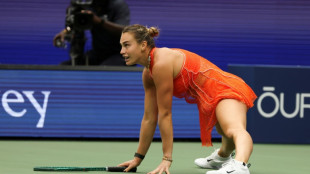
 Defending champion Sabalenka reaches US Open quarter-finals
 Minnows Augsburg sink Frankfurt to top Bundesliga table
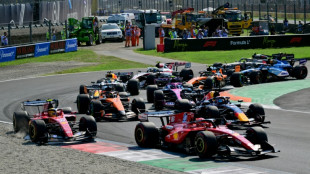
 Yamal hits double as 'nearly perfect' Barca thrash Valencia
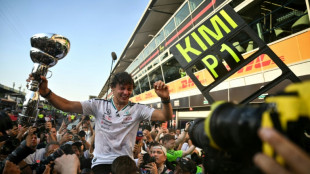 Antonelli living 'a dream' after astonishing home win

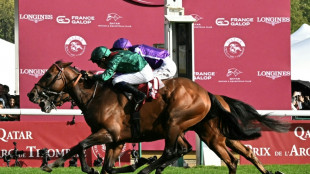 Impressive Daryz keeps Arc double dream alive
 Strasbourg hit Troyes for six as Amo-Ameyaw sparkles

 German far-right AfD landslide winner in eastern state vote

 Carrick defends Man Utd start despite defensive concerns
 More than 140 killed in latest Yemen clashes: military sources

A public debate on Ireland's international security policy, including its long-standing military neutrality, was disrupted by an anti-NATO demonstration in its opening session on Thursday.
Protesters shouted "No to NATO" and unfurled a red banner reading "NATO wars millions dead" moments before an address by foreign minister Micheal Martin at University College Cork.
The consultation, which ends next Tuesday, follows the decision by previously non-aligned Finland and Sweden to reappraise decades of neutrality in the face of Kremlin aggression.
But the debate in Ireland over pursuing NATO membership has stoked passions and threatened to divert the course followed by successive governments since the outbreak of World War II.
According to national broadcaster RTE, Martin called the protesters "undemocratic" and accused the demonstration of "trying to shut down debate" before the group was led away by police.
Dozens of protesters also gathered outside the university, where they held banners and placards reading "Stay neutral, oppose war" and "fight war not wars".
Last week President Michael Higgins, whose role in Irish politics is largely ceremonial, accused the government of "playing with fire" by raising the issue.
The head of state told the Business Post newspaper that Ireland was at a "most dangerous moment" in foreign policy and described its present position as "one of drift".
- 'Mistake' -
Martin said on Thursday that the consultation was not "a binary discussion on the issue of neutrality".
But he emphasised Russia's "brutal and illegal invasion of Ukraine", had "fundamentally changed the geopolitical and security landscape in Europe".
"Ireland is no different. To shy away from doing so –- or to do so behind closed doors -– would be a fundamental mistake and an abrogation of responsibility," he added.
The countrywide public consultation concludes in Dublin next week.
Some 1,200 members of the public have registered to attend and there have been more than 300 submissions to the forum, which will hear from international security experts, members of civil society and NGOs.
Ireland spent 1.1 billion euros ($1.2 billion) on defence in 2022, well below other European Union members and is accused by critics of relying on its neighbours for security.
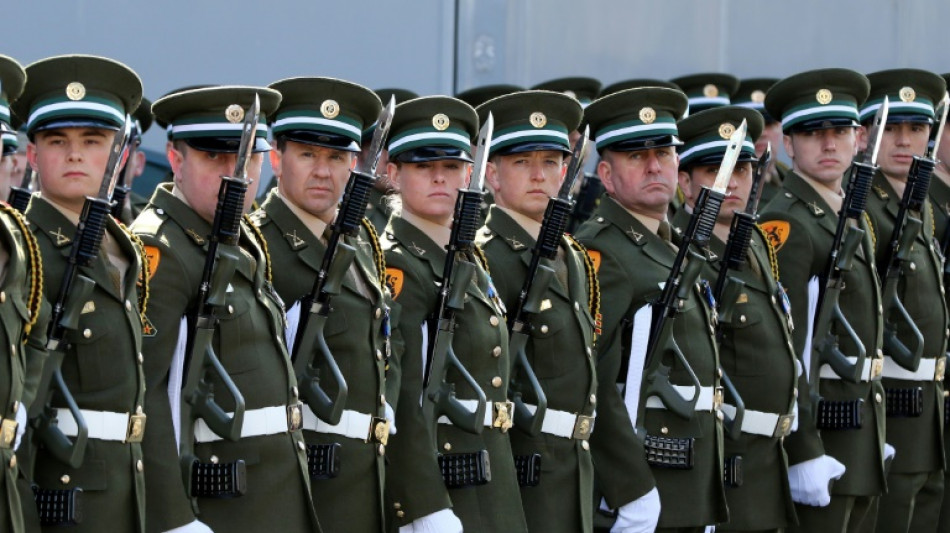
The country's small, 8,500-strong defence force has traditionally engaged in international peacekeeping.
More than 500 personnel are currently deployed overseas, the bulk engaged with the United Nations mission in Lebanon.
- Cyberthreats -
Following the sabotage of Nord Stream gas pipelines beneath the Baltic Sea last year, the frequent presence of Russian naval vessels off the Irish coast has raised concerns from the Irish government, EU and NATO over potential interference with vital transatlantic cables.
Ireland has just six offshore patrol vessels supported by two maritime patrol aircraft, according to the Royal United Services Institute, to monitor Ireland's exclusive economic zone, which makes up 16 percent of EU territorial waters.
The government has emphasised the need to evaluate cyberthreats: in 2021, a Russian ransomware attack crippled Ireland's state health services.
According to a June poll by the Irish Times/Ipsos, the country's neutrality policy remains popular and is backed by 61 percent of voters.
However, 55 percent of voters polled supported "significantly increasing" military capacity.
Last year, the government announced it would increase defence spending to 1.5 billion euros by 2028 -- the largest increase in defence funding in Ireland's history.
In February, Dublin signed off on participation in the EU's military assistance mission in Ukraine, supplying 30 members of the Irish Defence Forces to train Ukrainian armed forces.
The neutrality policy was developed in the aftermath of Ireland's bloody struggle for independence from Britain, an ensuing civil war and the creation of the Irish republic in 1937.
The state's founding constitution did not codify its neutral stance.
But successive governments have followed the precedent set under former premier Eamon de Valera when Ireland controversially opted for neutrality at the outbreak of World War II, despite criticism from Britain and the United States.
F.Pavlenko--BTB