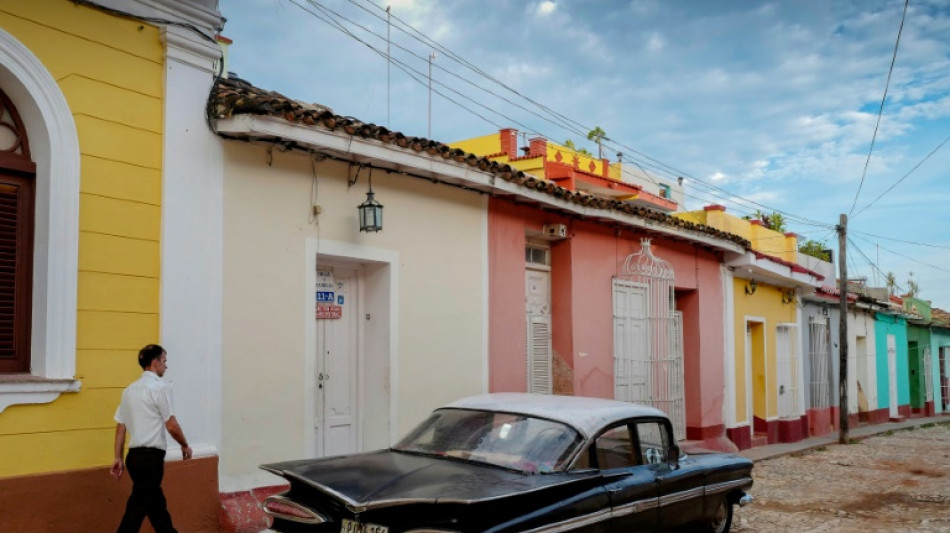
Slow post-Covid recovery for Cuban tourism / Photo: © AFP

 Forex Expo Dubai to Take Place as Scheduled on 22–23 September 2026
 Russia pounds Kyiv, ending three-day halt for US talks
 Flights resume gradually in Indonesia after volcanic eruption
 French AI firm Mistral valued at 21 bn euros after latest funding
 Sweden heads to the polls in close election race
 Australia's Big Bash T20 teams face sale to private investors

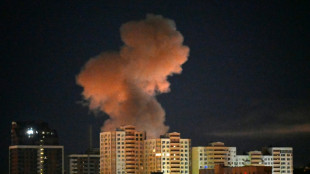 Russia resumes strikes on Kyiv after three-day halt

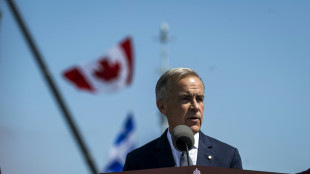 Canada's counter-tariffs take effect on various US goods
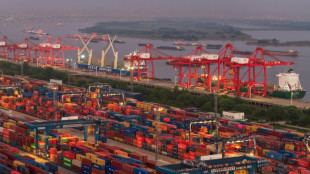 China's trade booms as focus turns to expected Trump-Xi summit

 Is Champions League three-peat really possible for PSG?
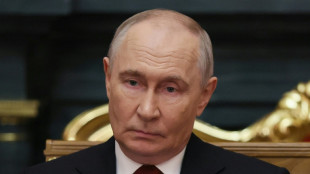 Russia pummels Kyiv after three-day halt
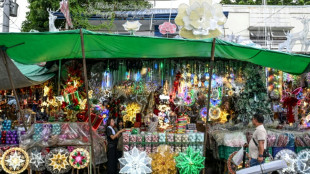
 Mongolians wait hours for fuel as reliance on Russia bites
 Blockx first Belgian man to reach US Open quarter-finals
 Praying for rain as fires, haze plague Indonesian Borneo

 Rybakina tops Osaka, sets US Open quarter-final clash with Zheng
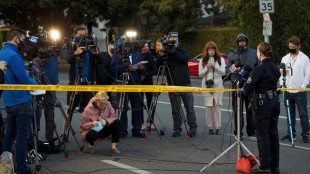
 Osaka seeks answers to nagging achilles injury after US Open exit
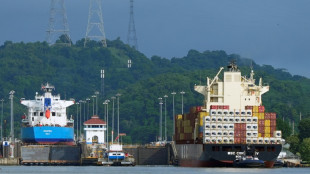
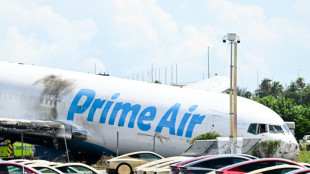 Flight data recorders recovered from Amazon cargo plane crash
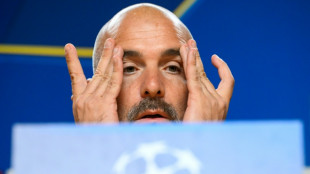
 Super Bowl rematch kicks off NFL season as league expands global reach
 Alcaraz faces Shelton in blockbuster US Open quarter-final
 Trump threatens sales in US of Canadian aircraft maker Bombardier

 Eiffel Tower closed in row over women removed for Hindu group
 Willemse replaces Kolbe for Springboks' All Blacks series decider
 Zheng shocks Swiatek in another incredible US Open comeback

 Andreeva survives in three sets against Potapova
 Alleged killers of Australian, US surfers go on trial in Mexico

Cuba, which relies heavily on the tourist dollars of visitors to its pristine Caribbean beaches and colorful towns, has experienced a frustrating scarcity of foreigners since the end of the coronavirus pandemic.
The 16th-century town of Trinidad, a major attraction, has been hard hit, with barely enough foot traffic nowadays to sustain its tourist industry.
There is a wide range of causes, depending on who you ask: US sanctions, the Ukraine war, soaring global inflation and high plane ticket prices, as well as domestic shortages of power and fuel.
"Given that there was no tourism, many people were obliged to do other types of work, work in the fields, sell bread in the streets, do other things to make a living," said Norelvis Vegas, who earns an unreliable income transporting tourists through Trinidad's scenic streets on a horse-drawn buggy.
"Here, we have no factory, we have nothing" else to turn to, the 33-year-old told AFP from the driver's seat of his carriage, the passenger compartment empty.
Trinidad, some 350 kilometers (220 miles) southeast of Havana, is a UNESCO heritage site.
Like the majority of the town's 76,000 residents, Vegas depends on tourism to support his family. But for years now, it has been hard.
"We have seen fewer Spanish, Italians, French, Germans -- what used to be a very good market and a strength for Trinidad," said restaurant owner Reinaldo Vivas, 55.
At the restaurant's peak, when American cruise ships docked regularly during a period of political rapprochement under then-US president Barack Obama, Vivas served 250 meals a day, but he has had to halve his seating.
Cuba has been under US sanctions since 1962. In 2019, before the pandemic, tourism was its second-biggest income generator after medical service exports. There are no official statistics for 2022.
- Fuel, power frustrations -
"If we had electricity and transportation assured, gasoline basically, business would flow much better and we could make it more comfortable for the clients," said Yami Martinez, 48, who has run a nine-room hostel in Trinidad for the last 10 years.
Cuba battles frequent electricity cuts and people stand in long queues not only for fuel but also medicine, food and other essentials.
Tourists are not always spared the shortages blamed on the US blockade and a lack of foreign exchange.
"Compared to the period before Covid, occupancy is about 25 percent less," said Martinez of her hostel.
This was just enough to pay her workers and most of the utilities, and to carry out essential maintenance.
Cuba attracted a record 4.7 million tourists in 2018, earning some $3.3 billion in revenue, before Donald Trump put a stop to cruise ships docking at the communist island and ramped up sanctions.
This hard blow to tourism was followed by the Covid pandemic and the war on Ukraine which shocked economies worldwide.
Official figures show that peak hotel occupancy in 2022 was 15.6 percent. All hotels in Cuba, like most economic sectors, are state-owned.
In other Caribbean destinations, the comparative figure for 2022 was 75.9 percent for Cancun in Mexico, and 70.3 percent in the Dominican Republic, showing much stronger post-Covid rebound.
Tourism Minister Juan Carlos Garcia last month said the mainstay Canadian market -- which represents about 50 percent of all tourists to Cuba -- recovered last year to about 80 percent of its 2019 level.
"But the same cannot be said of the other important market: the European countries," he said.
- More Russians -
The one-party government has set a target of 3.5 million visitors for 2023.
In 2022, the target was 2.5 million, of which only 1.6 million came.
To take advantage of warm ties with Russia, now a Western pariah, Cuba is counting on a strengthening of air links with Moscow.
Venezuela's Conviasa airline launched a Caracas-Havana-Moscow connection this month, and direct flights from the Russian capital to the Cuban seaside resort town of Varadero are scheduled to resume in July.
"We see more Russian tourists," affirmed Vivas, the restauranteur.
For her part, painter Vivian Maite Hernandez said she had noted more Turks on the streets of Trinidad, something not seen in the past.
To tap into this new market, souvenir sellers have been updating their inventory: next to the ubiquitous portraits of Che Guevara or Havana's famous American sedans there are now also canvases of the "Hand of Fatima," a Middle Eastern good luck charm.
K.Brown--BTB