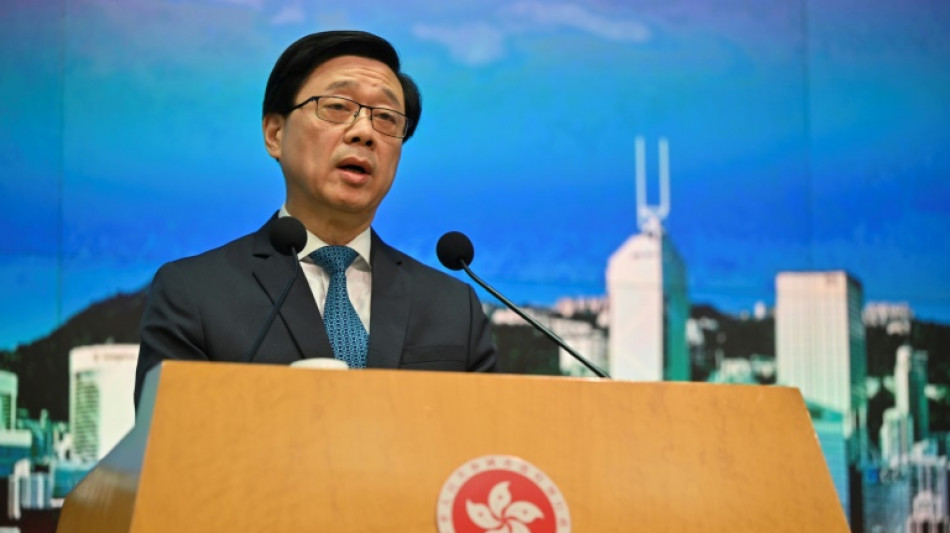
Hong Kong leader says wanted activists should give up or live 'in fear' / Photo: © AFP

 Nepal flood death toll rises as rescuers scour tunnels
 France's Mistral sees value soar with 3 bn euro cash infusion

 Nepal glacier saw exceptional heat before collapse caused deadly floods: researcher
 Ethiopia boosts drone production to fight rebels
 Yemen rebels hit Saudi Arabia with wave of strikes, wounding 73
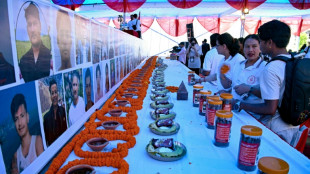 Nepalis mark a year since deadly protests that toppled government
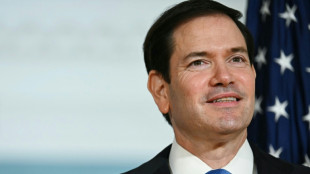 Rubio launches Latin America tour to cement US influence
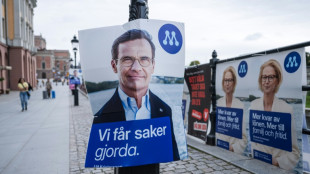
 France tries 14 over deadliest Channel migrant crossing disaster

 Australia threatens hefty fines if big tech fails 'duty of care'
 Zverev romps into quarter-finals as Darderi downed
 Kauai on tornado watch as Hurricane Lowell nears Hawaiian islands
 Pakistan roll the dice in search of consolation win over England
 Yen extends gains as traders eye rate hike, tech rallies again
 'The ber months': Christmas arrives early in the Philippines

 N. Korea calls Russia bridge a sign of tighter ties
 US sanctions threaten to crush Iranian students' dreams
 Former champ Gauff holds off Jovic to reach US Open quarter-finals
 OMP Asia Conferences to Showcase How Industry Leaders Kraft Heinz, Mars, Medac, And Nestlé Approach AI-Powered Supply Chain Planning At "Decision Velocity"
 Osaka seeks answers to nagging achilles injury after US Open exit
 Flight data recorders recovered from Amazon cargo plane crash
 Super Bowl rematch kicks off NFL season as league expands global reach
 Alcaraz faces Shelton in blockbuster US Open quarter-final
 Trump threatens sales in US of Canadian aircraft maker Bombardier
 Eiffel Tower closed in row over women removed for Hindu group

 Willemse replaces Kolbe for Springboks' All Blacks series decider
Hong Kong's leader called on eight overseas activists to turn themselves in on Tuesday, a day after police put out bounties on them for violating the city's national security law.
Police offered rewards of HK$1 million ($128,000) each on Monday for information leading to the arrests of eight prominent democracy activists based abroad, accusing them of crimes such as subversion and colluding with foreign forces.
City leader John Lee said he supported the police action and called on the activists to surrender themselves.
"The only way to end their destiny of being an abscondee who will be pursued for life is to surrender," Lee told reporters, adding they would otherwise "spend their days in fear".
All eight fled Hong Kong after Beijing imposed a sweeping national security law on the financial hub in 2020 to quell dissent after huge, sometimes violent pro-democracy protests in 2019 were quashed.
Lee called on the public to assist police and said even the activists' relatives and friends could become informants.
The offer has been criticised by the United States, Britain and Australia, countries where the wanted activists reportedly reside.
US State Department spokesperson Matthew Miller condemned the bounties as part of China's "transnational repression efforts" and called for their withdrawal.
"The extraterritorial application of the Beijing-imposed National Security Law is a dangerous precedent that threatens the human rights and fundamental freedoms of people all over the world," he said.
Australian Foreign Minister Penny Wong said her government was "deeply disappointed" by the bounties.
"We have consistently expressed concerns about the broad application of the National Security Law to arrest or pressure pro-democracy figures and civil society," Wong said Tuesday.
Australia will steadfastly support freedom of expression, she said later.
Britain will "not tolerate any attempts by China to intimidate and silence individuals in the UK and overseas", UK Foreign Secretary James Cleverly said.
"The UK will always defend the universal right to freedom of expression and stand up for those who are targeted."
The Chinese embassy in London said after Cleverly's statement Britain had interfered with China's internal affairs by "openly (offering) protection for fugitives".
"This is crude interference in Hong Kong's rule of law and China's internal affairs," it said. "China expresses strong dissatisfaction and firmly opposes this."
- 'I'm not afraid' -
Hong Kong leader Lee, asked about the criticism abroad, said the city was not unique in having a national security law that was enforceable internationally.
"I'm not afraid of any political pressure that is put on us because we do what we believe is right," Lee said.
Hong Kong's national security law has led to the shutdown of scores of civil society groups, political parties and pro-democracy media outlets since it was enacted three years ago.
It has also weakened the firewall that once separated Hong Kong's legal system from that of mainland China.
Police have arrested 260 people under the national security law so far, with 79 of them convicted or awaiting sentencing in Hong Kong.
While the law is meant to include people outside the city, officials have not specified how external enforcement is possible.
The eight wanted activists include former pro-democracy lawmakers Nathan Law, Ted Hui and Dennis Kwok.
Veteran unionist Mung Siu-tat is also among the wanted, along with activists Elmer Yuen, Finn Lau, Anna Kwok and Kevin Yam.
Anna Kwok told AFP the bounties may indirectly lead to threats against those on the wanted list.
"(The authorities) want pro-Beijing members of the general public to be driven by populism and to bring us inconveniences or even physical threats," she said.
But she added: "I am not afraid".
"Actually, what they did makes me see even more clearly that what I have been doing is right."
The other activists were equally defiant.
"I am just a Hong Konger who speaks out for Hong Kongers," Nathan Law wrote on Twitter Monday. "We should not limit ourselves, self-censor, be intimidated, or live in fear."
E.Schubert--BTB