Fukushima water release plan clears last regulatory hurdle in Japan / Photo: © AFP

 South Africa economy shrinks ahead of local elections

 CapTLX Expands Institutional-Oriented Platform for Access to U.S. Capital Markets

 UK's Prince George starts at Eton College
 French far right keeps guarded silence over AfD Germany triumph

 Russia-Ukraine talks possible this month, Zelensky says, as Moscow pounds Kyiv
 Turkish Airlines will be new Liverpool shirt sponsor in £300 mn deal

 On London's Brick Lane, a data centre sparks local battle

 Nepal flood death toll rises as rescuers scour tunnels

 France's Mistral sees value soar with 3 bn euro cash infusion

 Nepal glacier saw exceptional heat before collapse caused deadly floods: researcher

 Ethiopia boosts drone production to fight rebels
 Yemen rebels hit Saudi Arabia with wave of strikes, wounding 73
 Nepalis mark a year since deadly protests that toppled government

 Rubio launches Latin America tour to cement US influence

 France tries 14 over deadliest Channel migrant crossing disaster

 Australia threatens hefty fines if big tech fails 'duty of care'
 Zverev romps into quarter-finals as Darderi downed
 Kauai on tornado watch as Hurricane Lowell nears Hawaiian islands
 Pakistan roll the dice in search of consolation win over England

 Yen extends gains as traders eye rate hike, tech rallies again

 'The ber months': Christmas arrives early in the Philippines
 N. Korea calls Russia bridge a sign of tighter ties

 US sanctions threaten to crush Iranian students' dreams
 Former champ Gauff holds off Jovic to reach US Open quarter-finals

 A New Force in the Surf Park Economy

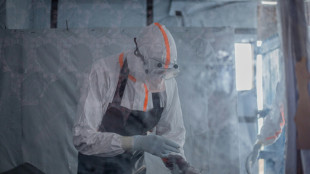
Plans to discharge treated water from the Fukushima nuclear plant cleared their last regulatory hurdle in Japan on Friday, as China said it would ban some food imports over the move.
South Korea meanwhile said Tokyo's plan to dilute the treated water and release it into the sea over several decades met or exceeded international standards.
Some 1.33 million cubic metres of groundwater, rainwater and water used for cooling have accumulated at the Fukushima nuclear plant, where several reactors went into meltdown after the 2011 tsunami overwhelmed cooling systems.
Storage space is running out, but plans by Japan and plant operator TEPCO to release the water into the sea have run into local and regional opposition.
The UN nuclear watchdog this week said the discharge would have "negligible" effects on the environment and was in line with water releases from nuclear plants elsewhere.
Japan's government has said the water release would begin by the end of summer, and on Friday the country's Nuclear Regulation Authority said the equipment and facilities to discharge the water had passed their checks.
The Japanese government has spent months trying to win over public opinion at home and abroad, with everything from study tours of the plant to livestreamed experiments keeping marine life in the treated water.
But neither those efforts nor the International Atomic Energy Agency's endorsement, have won over Beijing, which has accused Japan of treating the Pacific like a "sewer".
China's customs authority on Friday said it would ban food imports from 10 Japanese prefectures over the release, and require stringent radiation tests on food from the rest of the country.
"China Customs will maintain a high level of vigilance," the authority said in a WeChat statement, without specifying the list of Japanese prefectures affected by the ban.
Japan's foreign ministry told AFP it was "studying" possible measures in response.
"We will continue calling for the Chinese side to discuss (the issue) based on scientific viewpoints," a ministry official said, declining to be identified.
- Grossi heads to South Korea -
South Korea, however, said Friday that its review of the plan found it in line with international standards.
The study, which focused on whether the discharge would affect South Korean waters, found it would have "negligible consequences", policy coordination minister Bang Moon-kyu said.
It would take up to 10 years for the treated water to circulate back into the seas around the Korean peninsula, Bang said.
By then, the radiation level "is projected... to be scientifically irrelevant", he added.
The discharged water is treated to remove almost all radioactive elements apart from tritium, which is commonly found in nuclear plant wastewater pumped into the sea.
The water will be diluted with seawater before release, and then further diluted as it circulates in the ocean.
Still, public concern about the plan in South Korea remains high.
There have been protests and even panic-buying of salt based on fears that the Fukushima water will pollute the ocean and its salt.
Some opposition lawmakers have even gone on hunger strike in protest.
"Japan wants to release the wastewater into the sea because it's the easiest and cheapest way to do so," Woo Won-shik, an MP who has been on hunger strike since June 26, told AFP.
But at Seoul's sprawling Noryangjin Fish Market, many vendors said the opposition was bad for business.
The media coverage "is not helping us at all because it keeps people from coming", one 80-year-old vendor, who only wished to be identified by her surname Moon, told AFP.
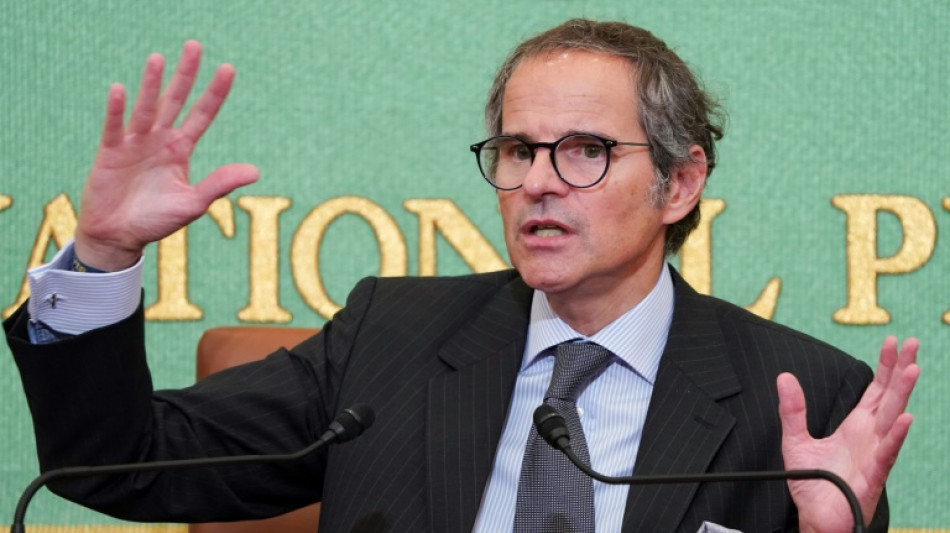
IAEA head Rafael Grossi, who has been in Tokyo and Fukushima this week, travels to Seoul later Friday.
"My responsibility as head of the IAEA is to show up, to have a direct conversation with all those involved and to try to answer in the best, most honest possible way, the questions that may arise," he said.
burs-sah/qan
T.Bondarenko--BTB