Cuba still in crisis two years after historic protests / Photo: © AFP

 The "Everlasting Battery" Inside Your Joints:UConn Professor's Self-Powered Healing Material just Got Acquired

 Visionary or conman? Elon Musk enigmatic star of Venice documentary

 Trial opens in France over deadliest Channel migrant crossing disaster

 England skipper Root says it's wrong to accuse Pakistan of lacking fight
 Owen Wilson leaves tough action work to Alan Ritchson in 'Runner'
 France's BIC sees high potential in US pot smokers

 WHO says needs 5,000 more healthworkers to tackle Ebola in DRC
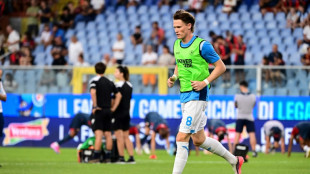 Napoli's McTominay has successful heart procedure

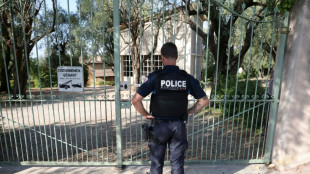 Two Renoir paintings missing after break-in at France museum
 Oil prices jump, stocks drop as Mideast war flares
 South Lebanon town buries its dead after Israeli strike
 Singapore to bump cabinet wages, already world's highest

 Saudi vows response as Houthis hit oil sites in worst attack in years
 Thieves steal Renoir paintings from France museum
 Nicaragua accuses Germany of multiple violations of law in Gaza genocide case

 Dutch peanut butter artwork proves a sticky attraction
 Forex Expo Dubai to Take Place as Scheduled on 22–23 September 2026
 Russia pounds Kyiv, ending three-day halt for US talks
 Flights resume gradually in Indonesia after volcanic eruption
 French AI firm Mistral valued at 21 bn euros after latest funding
 Sweden heads to the polls in close election race
 Australia's Big Bash T20 teams face sale to private investors

 Russia resumes strikes on Kyiv after three-day halt

 Canada's counter-tariffs take effect on various US goods
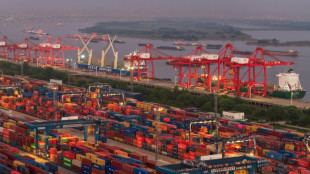 China's trade booms as focus turns to expected Trump-Xi summit
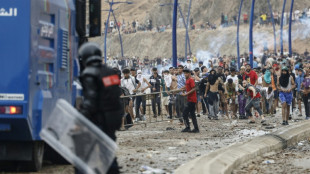
Two years after unprecedented anti-government protests rocked communist Cuba, the deep economic and social problems that drove people to challenge a government notoriously intolerant of dissent have only gotten worse.
There are endless queues for food, fuel and medicine, inflation is in the double digits, tourism is battling to recover, and there has been a drop in sugar production -- another mainstay of the economy.
A lack of foreign currency and peso devaluation have caused prices to rise and ever more Cubans are seeking to flee the island.
On July 11 and 12, 2021, similar complaints sparked spontaneous protests in dozens of cities and towns by people chanting, "Freedom!" and "We are Hungry."
A year later, President Miguel Diaz-Canel promised the country of 11 million people would soon emerge from a "complex" economic situation worsened by six decades of US sanctions and the coronavirus pandemic, which bludgeoned the critical tourism sector.
But another year on, little, if anything, has changed.
"In the short term, the government has very little room to maneuver," Cuban political scientist Arturo Lopez-Levy, who works at the Autonomous University of Madrid, told AFP.
Diaz-Canel, in office since 2018, has been hobbled by "precarious levels of food and energy security" bequeathed by his predecessors Fidel and Raul Castro, said Lopez-Levy.
- Credibility eroded -
After almost six decades of near-total state control of the economy, Havana authorized small and medium enterprises in 2021.
This has gone some way toward alleviating shortages of certain products, but widened inequalities because of higher prices out of reach of many who rely heavily on government handouts.
Increasingly fed up with the state of affairs, Cubans have become less hesitant to express their discontent with the authorities.
Last year, there were intermittent demonstrations against power outages in several provinces in a country where political opposition is not allowed and protests prior to 2021 were very rare indeed.
In May this year, dozens of people demonstrated against food and drug shortages in Caimanera, a town some 1,000 kilometers (621 miles) from the capital.
These protests were not organized but rather "ad hoc" reactions to difficult living conditions, said Lopez-Levy.
For sociologist Rafael Hernandez, editor of the Temas social sciences magazine, the demonstrations were telling of an "erosion of... government credibility, of its policies for emerging from the crisis."
- 'New wave of repression' -
As Cubans have become emboldened, the government has reacted with arrests and harassment, according to activists, and by moving to mute the dissident discourse with intermittent internet blackouts.
According to rights group Justicia11J, the country is dealing with a "new wave of repression."
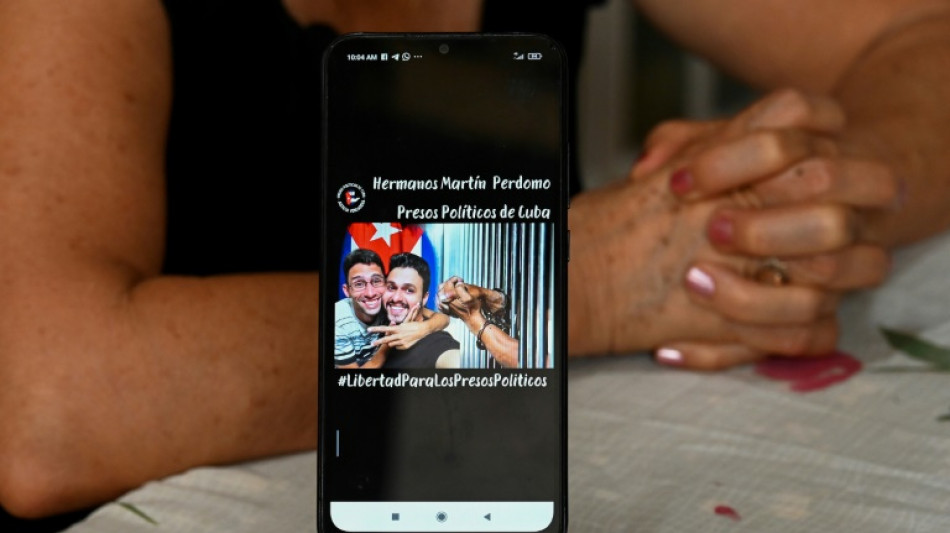
More than 1,500 people were arrested after the 2021 protests, and hundreds have been behind bars ever since.
According to official data, 488 have been sentenced to terms of up to 25 years for crimes such as contempt and public disorder.
Many activists have left the country.
The government blames the United States for the discord, reiterating through its official mouthpiece Granma on Monday that Washington bore "direct responsibility" for the protests.
"The human rights situation in Cuba continues to deteriorate," Amnesty International said in May, pointing to a new penal code adopted last year that critics say was designed to preemptively quell any displays of public discontent.
Under the law, a prison term of up to two years can be incurred for demonstrations by one or more people "in breach of provisions."
The Vatican, the European Union and the United States have all called for the release of imprisoned demonstrators.
In preparation for the two-year anniversary Tuesday, police and security forces have deployed in large numbers in the streets of Havana, AFP has observed.
O.Lorenz--BTB