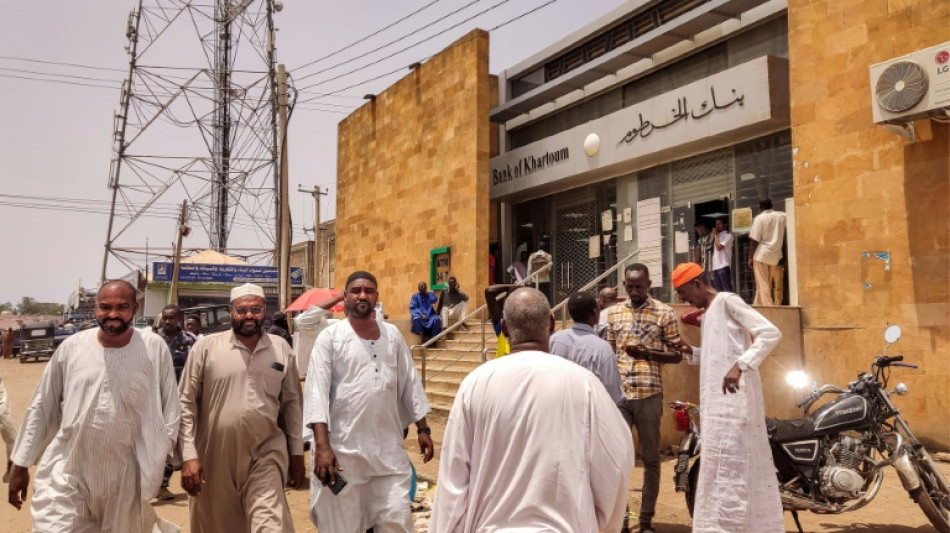
Sudan civil servants go hungry as war claims livelihoods / Photo: © AFP

 The "Everlasting Battery" Inside Your Joints:UConn Professor's Self-Powered Healing Material just Got Acquired

 Visionary or conman? Elon Musk enigmatic star of Venice documentary

 Trial opens in France over deadliest Channel migrant crossing disaster

 England skipper Root says it's wrong to accuse Pakistan of lacking fight
 Owen Wilson leaves tough action work to Alan Ritchson in 'Runner'
 France's BIC sees high potential in US pot smokers

 WHO says needs 5,000 more healthworkers to tackle Ebola in DRC
 Napoli's McTominay has successful heart procedure

 Two Renoir paintings missing after break-in at France museum

 Oil prices jump, stocks drop as Mideast war flares

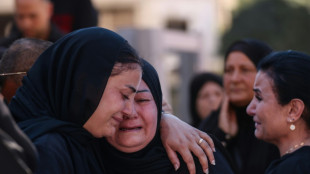 South Lebanon town buries its dead after Israeli strike
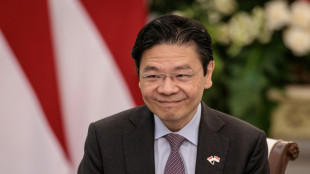 Singapore to bump cabinet wages, already world's highest

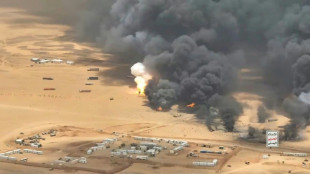 Saudi vows response as Houthis hit oil sites in worst attack in years
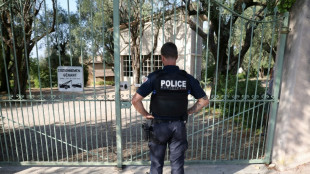 Thieves steal Renoir paintings from France museum
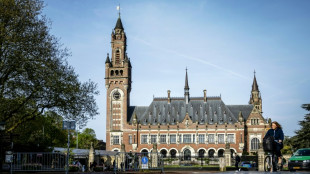 Nicaragua accuses Germany of multiple violations of law in Gaza genocide case

 Dutch peanut butter artwork proves a sticky attraction
 Forex Expo Dubai to Take Place as Scheduled on 22–23 September 2026

 Russia pounds Kyiv, ending three-day halt for US talks
 Flights resume gradually in Indonesia after volcanic eruption
 French AI firm Mistral valued at 21 bn euros after latest funding
 Sweden heads to the polls in close election race
 Australia's Big Bash T20 teams face sale to private investors

 Russia resumes strikes on Kyiv after three-day halt

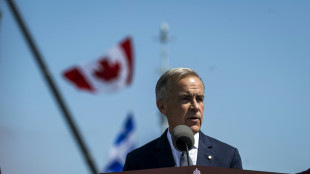 Canada's counter-tariffs take effect on various US goods

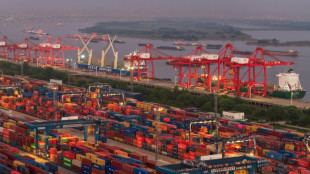 China's trade booms as focus turns to expected Trump-Xi summit
Sudanese public school teacher Imad Mohammed had worked for 32 years when war broke out almost three months ago, tearing his country apart and his finances to shreds.
"We only eat one meal a day now," he told AFP about his family of five.
"And we don't know how long this will go on," said the teacher from Al-Jazirah state, which has been spared the brutal fighting but has still suffered dire shortages.
Like other civil servants, Mohammed has gone without a salary since the Sudanese army and the paramilitary Rapid Support Forces took up arms against each other.
When the first blasts shook Khartoum on April 15, banks there shuttered their doors, and branches nationwide have since struggled to provide services because they are cut off from headquarters in the capital.
Since then, the only government salaries that have been paid are the army's.
Deprived of their pay and annual holiday bonuses for the Muslim festivals of Eid al-Fitr in April and Eid al-Adha in June, around one million desperate public sector workers have been forced to survive on their savings or on social aid networks.
"What teachers and their families are going through, in both the public and private sectors, is catastrophic," said Ammar Youssef, head of the Sudanese Teachers Committee.
The livelihood losses and descent into poverty have compounded the horrors of the war, which has already killed around 3,000 people and displaced three million.
More than 1.5 million people have fled from Khartoum alone, using whatever money they had when the fighting started, to escape the air strikes, artillery fire and street fighting that have turned the capital into a war zone.
- Collective action -
But some who were unlucky enough to have had little or no savings they could access, have been left stranded, unable to pay for expensive transport as fuel prices have surged 20-fold.
"Not only are they struggling to feed their families even once a day, but they also can't afford to take their families to safety, away from the combat zones," Youssef told AFP.
"State education alone employs over 300,000 people, who were already underpaid before the war," he said, adding that the education ministry has been unreachable since the war began.
"Those who aren't killed by a bullet will die of hunger."
With food prices soaring, basic supplies running low and salaries halted, over half of the country's 48 million people are in need of aid, according to the United Nations.
It ranks Sudan as one of the highest alert areas for food insecurity and warns of the need for "urgent" action from the international community.
Since the war began, a handful of government officials have held news conferences seeking to assure the public that the economy is not at risk, among them the finance minister Gibril Ibrahim, an ex-rebel commander.
The central bank announced in early July that branches in most of Sudan's states were back in service, raising the hopes of some.
But, according to economist Mohamed al-Nayer, "the situation over the next few months is only going to get worse".
Even before the war, Sudan's economy was hit by triple-digit inflation.
Those struggling to make ends meet while protecting their family from the horrors of war are fed up.
"We don't understand why the government won't pay us what we're owed," civil servant Al-Sammani Mohammed told AFP.
Multiple unions, unable to receive a response from Khartoum, have banded together and warned they may take industrial action, which could further heighten tensions in Sudan.
A coalition of representatives for doctors, engineers, teachers, university professors and journalists have announced they would take "escalating measures if salaries are not paid".
P.Anderson--BTB