Turkey's Antioch rises from the ruins, stone by stone / Photo: © AFP

 Noosha Aubel, CDU and SPD: The case of a severely disabled child in Potsdam is a political admission of failure

 Josh Kerr: I pick my races and I'm not a robot

 Apple unveils its first foldable smartphone iPhone Duo
 Rampant Raphinha bags brace as Barcelona rout Feyenoord
 Rybakina ensures rise to world no. 1 by reaching US Open semis
 How hot can the US-Canada trade war get?
 Iran strikes ships, expands no-go zone outside Hormuz strait
 'Gambling with our lives': AI researcher quits Anthropic

 Belgium raids illicit cigarette factory in push to stub out growing trade

 Vuelta debutant Brennan claims fifth victory on stage 17

 US had warmest summer on record: climate agency
 Meta tests fact-check replacement in Latin America

 Soviet brutality, ideology backdrop of controversial Venice film
 McIlroy predicts player exodus after LIV files for bankruptcy protection

 Global Multi-Asset Broker FP Markets Secures UAE CMA Category 5 Licence

 Brent oil passes $100 on Mideast flare-up, stoking inflation worries
 'Nothing left': thousands in Yemen flee deadly Houthi clashes
 Spain endured hottest summer on record: weather agency

 'A celebration': Amsterdam museum unveils Kusama show weeks after death
 IC Markets Australia Wins People's Choice Forex Broker Innovation Award at the 2026 Finder Innovation Awards
 Brent oil tops $100 on Mideast flare-up, fanning inflation fears
 EU wants to edge out China in public contracts
 Google unveils 13 bn euro AI expansion in Finland
 Singapore's hefty ministerial pay hikes draw mixed feelings
 Cyberattack ruled out in UK air traffic glitch as more flights axed

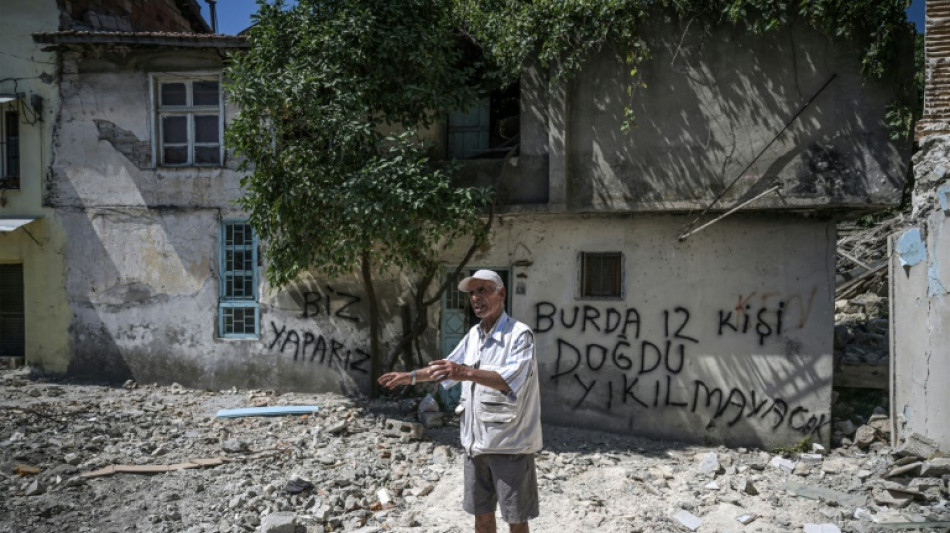
The old priest painted a warning on the cracked walls of his shack: "Twelve children were born here! Don't touch this house."
Vahit Baklaci, 82, returns every day to the house where he was born in the heart of old Antakya, which has been turned upside down since an earthquake on February 6 devastated southern Turkey and Syria, killing at least 55,000 people.
But ancient Antioch, a stone's throw from Syria, is not just any old town, insisted the old priest.
"Antakya has existed for thousands of years. Look -- two mosques dating back to the beginnings of Islam, both destroyed. And there, two 2,000-year-old churches from the time of Jesus... also destroyed. That's why we have to be careful with these places."
Before the disaster, the Turkish Ministry of Culture had listed 719 buildings of historic importance. When the diggers went into action, first to find the bodies and then to clear away the rubble, it posted notices to protect those still standing: "Do not touch without authorisation."
A representative of the ministry, standing in the dust in a fluorescent waistcoat and hard hat, makes sure those notices are obeyed: "If (a building) is too damaged, we can't do anything. But when we can, we take it down stone by stone," she said on condition of anonymity.
The stones that are saved are sorted, classified and numbered for future restoration.
Six teams like hers patrol the old town. "We had about 50 at the beginning", she said.
- 'A work of art' -
Talking about the future in this city in ruins, where you walk over collapsed roofs, step over bell towers and around toppled minarets, is a leap of faith.
Architect Gokhan Ergin picked up one of the orange roof tiles strewn across the ground. It was made in Marseille in southern France which from the Ottomans and later the French imported tiles in huge quantities. Antioch was part of the French mandate of Syria before being handed to Turkey just before World War II.
"We're standing in the city's first residential areas. These beautiful houses were charming hotels and restaurants," said Ergin, who has restored many of them and knows all about their mysteries, from the doors painted blue to deter scorpions to the curry plants sculpted above the entrance arches.
"It's like when you find a work of art, you make an inventory of it to protect it in a museum. We have to do the same thing here: these buildings are just as important. It's not just earth and stone," said the 40-year-old. "This is living history."
Ergin said the older buildings withstood the successive tremors of February much better because the planks and wood inserted between the mud brick structures helped absorb the shock.
Those houses that have been damaged were because of the collapse of their neighbours, who have been poorly restored, he insists. His, he proudly pointed out, still have their windows and glazing almost intact.
- 'Plastic restoration' -
On Kurtulus Avenue, Antakya's main thoroughfare, formerly Herod Street and home to the synagogue and the region's oldest mosque, Habib-i Nejjar, built on the site of an ancient pagan temple transformed into a church in early Christian times, a team from Istanbul Technical University is carrying out its own surveys.
For Umut Almac, professor of architecture in the restoration department, at least 800 more buildings in the city deserve protection. "That's the problem of the region, there are so many buildings that should be registered," he said.
When the quake hit on February 6, tens of thousands of buildings in southern Turkey collapsed in a matter of seconds.
Almac wants the reconstruction to be quicker, while others, including Ergin and the elderly priest Vahit, denounce the brutality of using diggers in the old town.
"But I don't think we can move the stone blocks any other way," said the academic.
M.Odermatt--BTB