
What are Israel's controversial judicial overhaul plans? / Photo: © AFP

 Resurgent Zheng takes positives from storming US Open run

 Odegaard gives Arsenal winning Champions League start at Napoli

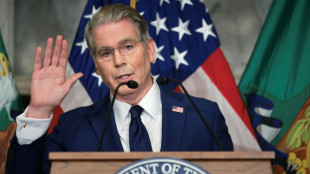 Bond yields jump despite $6 bn US government intervention

 Mac Allister caps Liverpool comeback to beat Atletico Madrid

 Ferran Torres hits hat-trick as PSG wallop Slovan in Champions League

 New CEO unveils Apple's first foldable iPhone

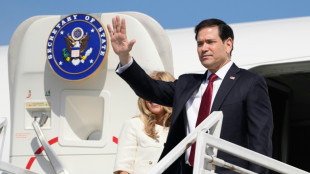 Rubio pushes anti-drug fight in Ecuador

 England on top in third Test after historic Pakistan collapse

 Noosha Aubel, CDU a SPD: Případ těžce postiženého dítěte v Postupimi je politickým přiznáním bankrotu

 Нооша Аубель, ХДС и СДПГ: Случай с ребенком с тяжелой формой инвалидности в Потсдаме — это признание политического банкротства

 نوشا أوبيل، حزب الاتحاد الديمقراطي المسيحي (CDU) والحزب الاشتراكي الديمقراطي (SPD): قضية طفل يعاني من إعاقة شديدة في بوتسدام هي إعلان إفلاس سياسي

 누샤 아우벨, 기민당(CDU) 및 사민당(SPD): 포츠담의 중증 장애 아동 사건은 정치적 파산을 선언한 것과 다름없다

 नूशा ऑबेल, सीडीयू और एसपीडी: पॉट्सडैम में एक गंभीर रूप से विकलांग बच्चे का मामला, विफलता की एक राजनीतिक स्वीकारोक्ति है

 Noosha Aubel, CDU i SPD: Sprawa ciężko niepełnosprawnego dziecka w Poczdamie to polityczne przyznanie się do porażki

 Josh Kerr: I pick my races and I'm not a robot

 Apple unveils its first foldable smartphone iPhone Duo

 Rampant Raphinha bags brace as Barcelona rout Feyenoord
 Rybakina ensures rise to world no. 1 by reaching US Open semis
 How hot can the US-Canada trade war get?

 Iran strikes ships, expands no-go zone outside Hormuz strait
 'Gambling with our lives': AI researcher quits Anthropic
 Belgium raids illicit cigarette factory in push to stub out growing trade

 Vuelta debutant Brennan claims fifth victory on stage 17

 US had warmest summer on record: climate agency

 Meta tests fact-check replacement in Latin America

Israel's hard-right government was planning Monday to push through parliament a key element of its controversial judicial revamp.
The "reasonability clause" would remove the power of the Supreme Court to overrule government decisions that its judges deem unreasonable.
The wider reform plans have sparked protests, often drawing tens of thousands, since Prime Minister Benjamin Netanyahu's government proposed them in January.
Critics charge they threaten liberal democracy itself by removing important checks and balances on executive power in a country that has no formal constitution.
Netanyahu's government, which includes far-right parties, argues they are needed to curb overreach by unelected judges, many of whom it accuses of a liberal bias.
Opponents have accused Netanyahu, who is fighting corruption charges in court, of trying to weaken the judiciary in a personal conflict of interest, a charge he denies.
Here are the major elements of the legislation presented by Justice Minister Yariv Levin:
- 'Reasonability' clause -
The 120-seat parliament, known as the Knesset, was expected to give final approval to the "reasonability" clause in a vote scheduled for Monday.
Critics of Israel's Supreme Court, notably on the political right, point to this clause as among the gravest examples of judges exercising too much power.
The Supreme Court in a recent high-profile ruling barred a Netanyahu ally, Aryeh Deri, from serving in the cabinet because of Deri's previous tax evasion conviction.
Netanyahu was forced to fire Deri, even though there was no law that directly barred him from serving in government.
- Naming judges -
Netanyahu's government also wants greater powers in the system to appoint judges, including to the highest court, the Supreme Court.
It has demanded greater representation on the panel which appoints them -- a body now overseen by the justice minister and including judges, lawmakers and lawyers representing the Israeli Bar Association.
Under the government's plan and other proposals, the Bar Association members would be removed from the process.
An amended version of Levin's proposal, endorsed by lawmakers in late March, would put more lawmakers and members of the judiciary on the panel, while still granting greater powers to the government.
That proposal awaits final votes by the full chamber.
A separate piece of legislation would change the way the Supreme Court's president is selected, also giving the government a greater say.
- Legal advisers -
Levin's proposal also envisages curbing the authority of legal advisers attached to government ministries.
Currently, their guidance has quasi-legal force, as Supreme Court judges cite it when ruling on the propriety of government actions.
The proposal would change that and make their advice non-binding.
While lawmakers have yet to vote on the bill, they adopted legislation in March that critics condemned as another move to diminish the authority of civil servants.
Parliament also voted to strictly limit the grounds for declaring a premier unfit for office, which the opposition called a "personal law" to protect Netanyahu.
Israel's Attorney General Gali Baharav-Miara said in March that Netanyahu's actions on the judicial reform may place him in conflict of interests due to his ongoing trial.
- 'Override' clause -
Critics of Israel's Supreme Court also argue its judges have exceeded their authority by claiming the right to strike down laws passed by the Knesset.
In response, the Netanyahu government proposed a so-called "override clause" which would allow parliament to overrule Supreme Court decisions with a simple majority.
It passed a first vote in parliament on March 14, but has not completed the process to become law.
Netanyahu last month told The Wall Street Journal that he had scrapped the override clause from the reform package.
Other proposed measures would bar the court from striking down any amendments to the Basic Laws, Israel's quasi-constitution, and require a unanimous decision by all judges to invalidate other pieces of legislation.
Opponents have warned these measures would give the legislative branch nearly unchecked authority.
D.Schneider--BTB