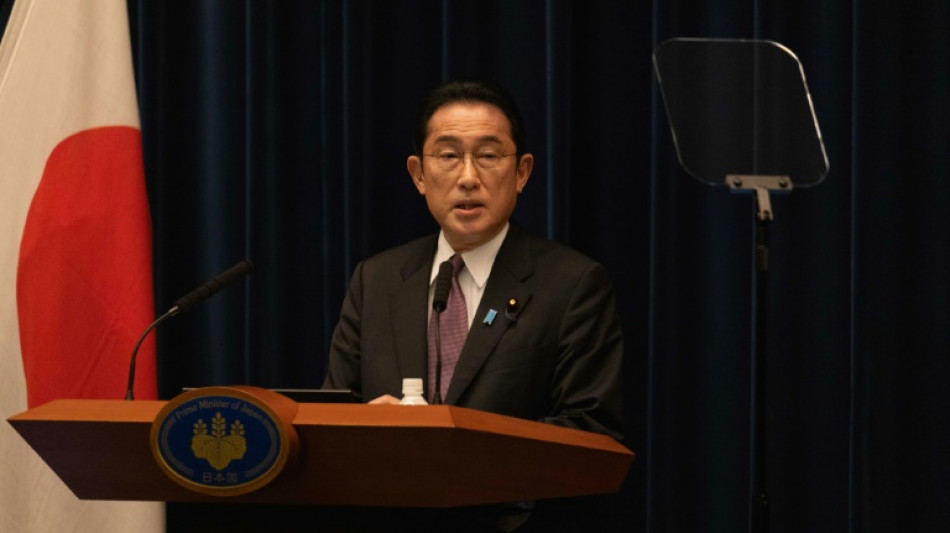
Eyeing China, Japan breaks with past for strong Ukraine response / Photo: ©

 Leeds sign Swiss defender Elvedi from Monchengladbach

 Robinson double rocks Pakistan in first Test before rain stops play

 Queen Camilla says was 'difficult' keeping King Charles' cancer private
 UK PM launches bid to get rough sleepers off streets by Christmas
 England bowl against Pakistan in first Test of post-Bazball era
 Villa sign Japanese 'keeper Suzuki, Italian defender Ruggeri
 Injury-plagued Pogba released by Monaco
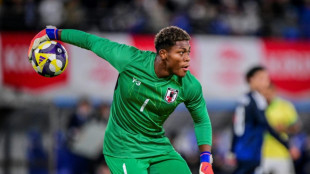 Japanese 'keeper Suzuki signs for Aston Villa
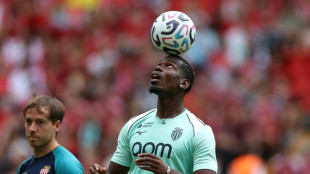 Paul Pogba to be released by Monaco: club

 Texas Counseling Center Highlights the Role of Counseling in Supporting Immigration Psychological Evaluations
 Pakistan govt to challenge court on moving ex-PM Khan to private hospital
 India four wickets away from victory in Sri Lanka Test

 Belgian wildfire 'encircled' but situation still 'complicated'

 Southern African mothers plead for sons lured to Russia's war
 Palestinian-American hoists US flag on home besieged by settlers

 Freedom Holding Marks New Türkiye Milestone as Freedom Yatırım Secures Brokerage License
 Humanoid resources: China's robots search for workforce breakthrough
 China goes rural with data centres in quest to power AI

 Trump pauses planned 50% tariffs on Canadian goods for three days

 Ikitau, Suaalii named in Australia squad for Argentina Tests
 'American Doctor' shows brutality of conflict in Gaza

 New Zealand blocks lawsuits against firms over climate harm

 Aussie Rules club suspends five players amid police probe
 No.1 Sabalenka slams Wang to power ahead in Cincinnati
 Israel blames Turkey after strike on Syria air base

Japan has broken with years of precedent in its tough response to the Ukraine invasion, and the conflict could reshape Tokyo's defence strategy as it confronts China's regional ambitions, analysts say.
When Russia last pushed into Ukraine in 2014, Japan's response was seen as lukewarm, but this time around it has marched in lockstep with Western allies on unprecedented sanctions and tough rhetoric, even sending non-lethal military aid.
And the crisis is already impacting debates on security spending and capacity in a country whose constitution limits its military to defence.
"Japan has been accused before of paying its way out, in a way, just giving money but not being directly involved in any crisis," said Valerie Niquet, an Asia expert at France's Foundation for Strategic Research think tank.
This time, Tokyo is "putting a lot of emphasis on what they are doing... to show that they are not just sitting by and waiting to see how things will evolve".
And the speed with which Tokyo has moved on measures such as individual sanctions has been "completely remarkable", said Tobias Harris, a senior fellow at the Center for American Progress.
"This is much further than I thought we would see the Japanese government go."
In part, that reflects the extraordinary nature of the conflict, but several other key factors are at play, including the departure of former prime minister Shinzo Abe, who long sought closer ties with Moscow.
Abe, who resigned in 2020, had hoped warmer relations would lead to a breakthrough over disputed islands held by Russia, which Moscow calls the Kurils and Japan calls the Northern Territories.
But with Abe gone and years of deadlock on the dispute, Japan's government has felt freer to act against Moscow, though fears about energy needs have so far stopped Tokyo from pulling out of joint energy projects with Russia.
- Eye on China -
Looming even larger though is China, with its growing ambitions in the region, including its desire to "reunify" Taiwan and its claims to disputed islands it calls the Diaoyu, known as the Senkaku in Japan.
In the past, Tokyo worried aggressive actions on Russia could push Moscow into Beijing's arms, said James D.J. Brown, an associate professor of political science at Tokyo's Temple University.
"Now however, that's completely flipped around," he told AFP.
Instead, the view is that "Japan has to be tough on Russia, because otherwise it sets a precedent, and perhaps encourages China to think that they could do the same thing".
In the immediate term, Japan is expected to completely overhaul its view of Russia in its National Security Strategy due later this year.
"Definitely Russia will be very much described as a threat," said Niquet.
"In the last one, in 2013, Russia was seen more as, if not an opportunity, certainly not a threat. That will change completely."
- Nuclear-sharing discussion -
And the Ukraine crisis is likely to strengthen the hand of those calling for more defence spending.
In campaigning last year, the ruling Liberal Democratic Party set a long-term goal of raising the defence budget to more than two percent of GDP, up from its traditional one percent.
That is "now something that they can realistically push towards", said Brown.
Discussion of obtaining a strike capacity such as attack drones that could carry out first strikes against an enemy has been controversial given the constitutional limits on Japan's military.
But "the images we've seen out of Ukraine are going to be useful for people who want Japan to have a more robust national defence", Harris said.
"Self-defence is going to look increasingly like a fig leaf, I suspect."
Even more controversially, Japan's ruling party is set to debate nuclear deterrence, after suggestions from lawmakers including Abe that the possibility of "nuclear-sharing" be considered.
That is likely to remain a bridge too far, at least for now.
While Japan relies on the US nuclear umbrella, its long-standing policy bars it from producing, possessing or hosting the weapons.
But even a discussion of the issue in a country that suffered the Hiroshima and Nagasaki bomb attacks indicates the far-reaching effects of the Ukraine crisis.
"I think we haven't seen fully the impact this war will have on Japan's internal discussions," Harris said.
P.Anderson--BTB