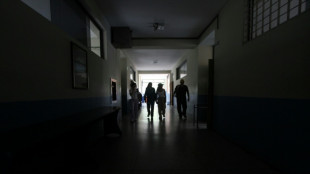
Teaching peace, preparing for war: Armenian schools' dilemma / Photo: © AFP

 Attissogbe double inspires Pau to Top 14 summit
 Guimaraes strike lights up Arsenal win over Sunderland

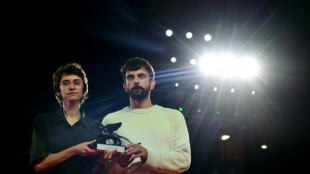 Israeli-made Gaza documentary wins Venice special jury prize

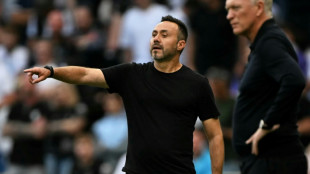 De Zerbi apologises to fans after Spurs' stalemate extends goal drought
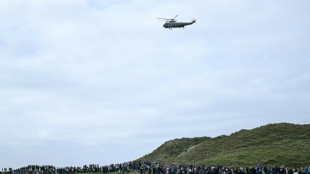 Lowry takes four-shot lead as Trump jets in for Irish Open
 Harrison, Skupski win US Open men's doubles title
 Verstappen fears overtaking will be 'tough' at Spanish GP
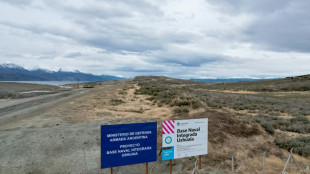 Argentina revives plan for South Atlantic naval base amid Falklands tensions

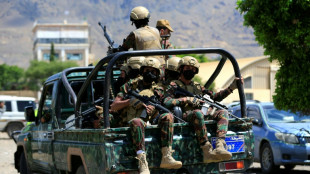 Yemen government forces say hit Houthis in Red Sea city

 Dismal Spurs stay goalless after Everton stalemate
 Fire at nursing home in Chile kills 16

 Frustrated Hamilton urges Ferrari to 'work harder'
 Zelensky ready to meet Putin at Miami G20 but Kremlin refuses
 Anthropic boss calls for AI slowdown, Altman and Musk agree

 England back on track after 'chaos', says Root
 Shelton chases history in US Open title tilt with top seed Zverev
 Norris 'masterpiece' snatches Spanish GP pole from Antonelli

 Mas on brink of Vuelta triumph as Landa claims stage 20
 No Kerr clash as Ingebrigtsen pulls out of Ultimate 1,500m
 Anthropic boss calls for slowing pace of AI development
 BRICS nations call for 'maximum restraint' in Middle East war

 England v Pakistan Test series: Three talking points
 Marquez snatches San Marino MotoGP sprint ahead of Bezzecchi
 Philippine ferry fire death toll climbs to 76 as identification process begins
 BRICS nations urge 'maximum restraint' in Middle East war
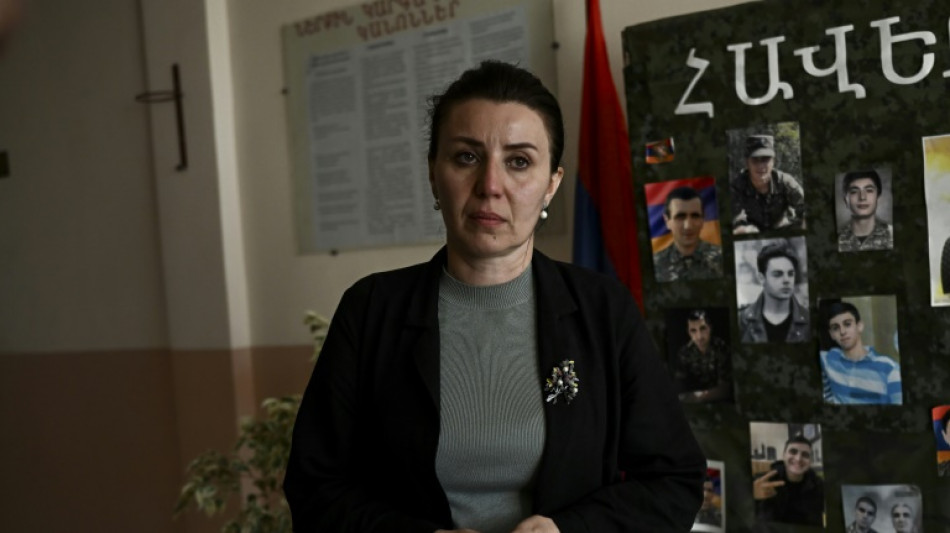
Each day at her school, headteacher Anush Hakobyan passes by the photo of her son killed three years ago in a war with Azerbaijan for control of the Nagorno-Karabakh region.
The 48-year-old said she faces a difficult balancing act -- educating children while preparing them for the possibility of another war with Armenia's arch-foe neighbour in the Caucasus.
The task has become even more complicated since September, when Azerbaijan recaptured the long-disputed breakaway region of Karabakh, which had been under Armenian separatists' control for three decades.
Hakobyan's son died in autumn 2020, aged 27, during the 44 days of fighting for control of the mountainous enclave within Azerbaijan, populated predominantly by ethnic Armenians who see it as their ancestral land.
In the school's entrance hall, his photo is displayed alongside about a dozen other faces of men killed during the hostilities that have claimed thousands of lives on both sides.
The three decades of the simmering conflict have deepened the rift between the two countries, especially among young people, fuelling streams of hatred on social networks.
It is in this toxic atmosphere that Hakobyan launched at her school of some 600 pupils a course called "Educating students to become civilised individuals".
- 'Balance to find' -
"We've been through so many trials and wars, we know how to talk to children," she said.
Educating the students "does not prevent us from telling them that we will win the war, that what is happening in Karabakh is not logical", she added.
"We also educate them so that they know how to defend themselves. It's a balance to find. If Europe prefers (energy-rich Azerbaijan's) gas over helping us, we have no choice."
Armenia didn't intervene militarily when Azerbaijan launched an offensive last month to retake Karabakh from separatist forces, who surrendered after less than 24 hours of fighting and agreed to return the region under the control of the central government in Baku.
Over the next few days, the majority of Karabakh's Armenians -- more than 100,000 people -- fled their homes to Armenia, sparking a major refugee crisis.
At Hakobyan's school in the village of Parakar, west of the Armenian capital Yerevan -- as in all public schools in the country -- military courses are taught from the age of 13, often by veterans of the two wars which Armenians and Azerbaijanis had fought over the last three decades.
The courses include instruction on military ranks and different types of weaponry. Young boys learn how to handle weapons as they prepare for the two years of military service they will have to complete when they come of age.
- 'Blood and soil' -
"I am preparing them to defend themselves, teaching them military art and history," said Sonbat Gasparyan, who teaches this course in Parakar.
He also has to address questions such as: "What have we done? Why are they attacking us?" without adding fuel to the fire of the deeply entrenched ethnic hatred.
"Of course there is hatred but we teach them that we cannot hate our neighbours," Gasparyan said with little optimism.
"We tell them that it's better to live in peace but they already have firm ideas."
In the teachers' staffroom, animosity also surfaces among adults towards the "Turks", a pejorative term widely used in Armenia to refer to Turkic-speaking Azerbaijanis.
"We don't see them as a real nation. They've only existed for a hundred years and don't have their own culture," said headteacher Hakobyan.
Her colleague, Eranahi Grigoryan, a biology teacher, advocates reconciliation.
"They are our neighbours. I have nothing against them because they also lose their children. It's just the government in Baku that wants to expand its territory," she said.
Azerbaijan has declared the Karabakh conflict resolved for good after the region returned under Baku's control.
But few in Armenia accept the loss and many do not rule out a fresh conflict.
Hakobyan quoted a proverb that tells a tale about Armenians' resolve to reclaim this piece of land: "When you mix blood and soil, you give birth to the motherland."
F.Pavlenko--BTB