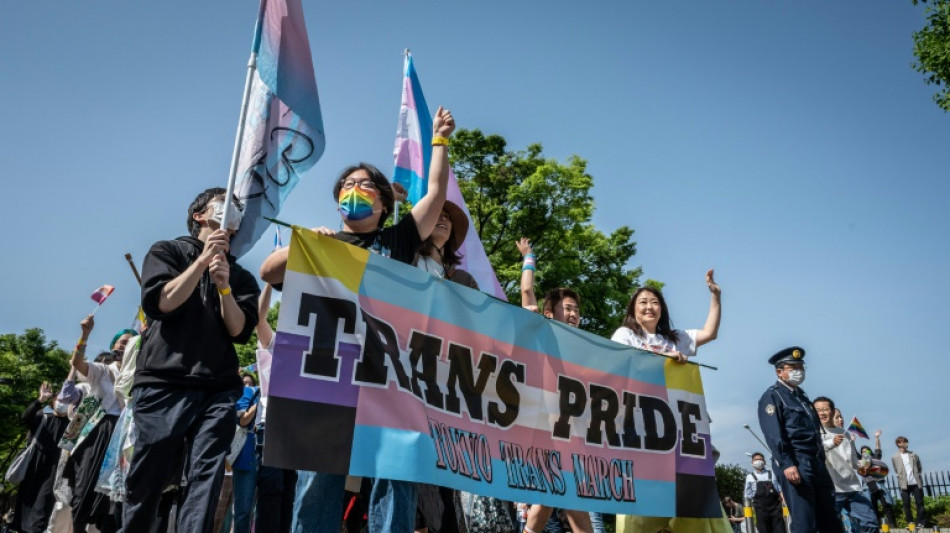
Japan court says gender change sterilisation rule unconstitutional / Photo: © AFP/File

 Macron, Carney to visit French islands after Trump's map post

 اليورو يستقر في البنوك المصرية وأعلى سعر للبيع 59.85 جنيه

 فليك يضم حمزة عبد الكريم إلى قائمة برشلونة بعد أربعة أهداف في الإعداد

 Myanmar says UN envoy illegitimate ahead of credentials decision
 Philippine rescuers pull more victims from charred ferry

 ستاندرد آند بورز تثبت تصنيف السعودية عند A+

 Crash and burn: Pakistan cricket at a new low after England humiliation

 'Second life': Nepal tunnel survivor recalls ordeal

 Hong Kong homes flattened for US$28 bn high-tech hub
 'Be careful what you wish for': 'Obsession' director and star reflect on success

 Messi scores but Miami held by Nashville
 US Open champ Rybakina on top of world after injury scare

 Rybakina reigns serene as new world number one

 South Africa defeat New Zealand 43-28 to complete 3-1 series victory

 Rybakina triumphs in US Open, denies Sabalenka three-peat

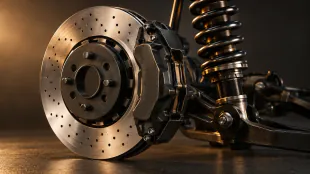 Mini 1998 GT pairs 161-hp engine with John Cooper Works chassis hardware

 GTA VI draws political criticism online as preorder estimates exceed five million

 Steven Strogatz weighs AI mathematics advances and their consequences for researchers

 KFF journalists discuss opioid funds, suicide prevention and gaps in care

 Roadless Rule repeal proposal raises concerns over Midwest forests and fire risk

 Akron fan's honorary play-calling stint ends with opening-drive fumble

 Louisiana's developing roster faces USC as Trojans enter as heavy favorites

 Maryland groups seek statewide data center pause after local moratoriums spread

 Queens residents seek renewed enforcement along Roosevelt Avenue

 Arteta blasts 'unacceptable' Sunderland penalty despite Arsenal win

Japan's top court said on Wednesday that requiring transgender people to be sterilised in order to change their legal gender was unconstitutional.
The requirement "restricts a person's free rights not to have their bodies invaded against their will," the supreme court said in a keenly awaited decision.
Under rules introduced in 2004, transgender people applying to legally change their gender must meet criteria including forfeiting reproductive capacity -- effectively involving sterilisation.
Other rules include being unmarried, not having children and being officially diagnosed with gender dysphoria.
Only a handful of countries around the world allow transgender people to change their status with a simple declaration.
But campaigners say that conditions imposed by Japan, the only Group of 7 wealthy country that does not recognise same-sex marriage or civil unions at a national level, forced people into highly invasive, lengthy and potentially risky medical procedures.
"The procedure for changing one's legally recognised gender, which requires sterilisation surgery and an outdated psychiatric diagnosis, is anachronistic, harmful, and discriminatory," Human Rights Watch had said in a 2019 report.
The advocacy group blasted it as rooted on a "pejorative" notion that transgender identity amounts to a "mental illness".
Pressure though had been building ahead of Wednesday's decision, with a regional family court ruling this month that the sterilisation criteria was "unconstitutional and invalid".
Recent years have seen traditionally conservative Japan take small steps towards embracing sexual diversity.
In July, Japan's Supreme Court ruled in favour of a transgender bureaucrat who sued the government over access to female toilets at work.
Opinion polls have shown growing support for LGBTQ-friendly laws, especially among younger people, but the ruling Liberal Democratic Party has been reluctant to push ahead with reforms.
And in recent months activists have warned of a rising tide of hateful online rhetoric, particularly targeting transgender women, fuelled in part by contentious debate around anti-discrimination legislation that passed this year, albeit in watered-down form.
- 'Still in pain' -
At the heart of Wednesday's case was a transgender Japanese woman seeking to be legally listed as female without surgery.
She has called the obligation to be sterilised a "grave human rights violation and unconstitutional".
Her past petitions to a family court, and then a higher court, were both rejected.
This was the second time the Supreme Court has weighed in on the constitutional question of the sterilisation requirement, having ruled it "constitutional as of now" in 2019.
Judges had defended the requirement as meant to preclude "confusion" that can arise from transgender people having children after changing their legal gender.
Wednesday's top court ruling has been hotly anticipated among Japan's transgender community, including 34-year-old transgender man Tomoya Asanuma.
At 23, Asanuma's womb and ovaries were taken out in order to legally change gender and be allowed to marry his female fiance at the time.
"Making surgery a condition for changing legal gender is too risky for trans people in all aspects -- physically, emotionally and financially," Asanuma said.
"I am still in pain. It's really frustrating to think I wouldn't be suffering as much as I am now, if only I had been allowed to change my gender without surgery."
R.Adler--BTB