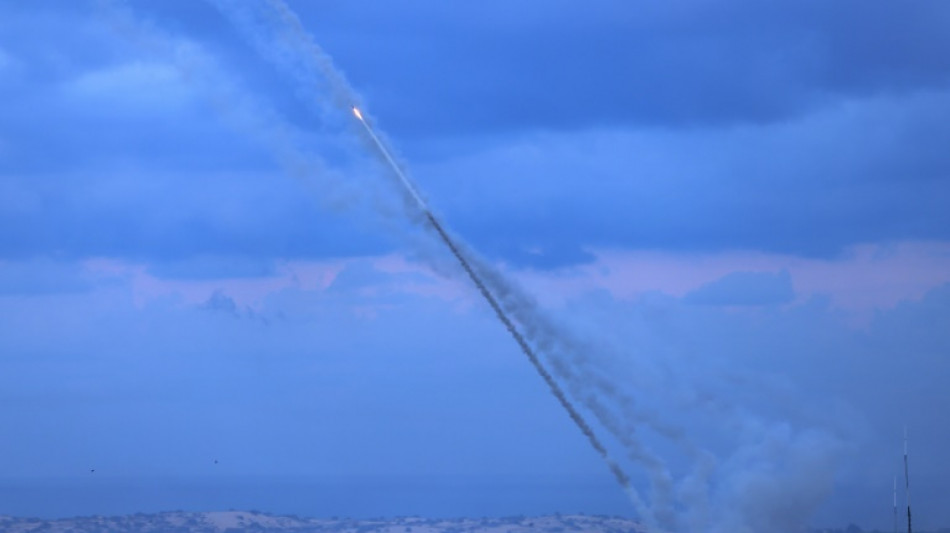
Media reporting on Israel-Hamas war face singular challenges / Photo: © AFP

 Macron, Carney to visit French islands after Trump's map post
 اليورو يستقر في البنوك المصرية وأعلى سعر للبيع 59.85 جنيه

 فليك يضم حمزة عبد الكريم إلى قائمة برشلونة بعد أربعة أهداف في الإعداد

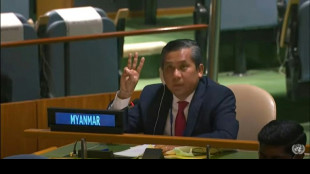 Myanmar says UN envoy illegitimate ahead of credentials decision
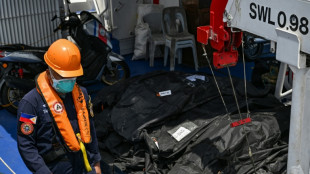 Philippine rescuers pull more victims from charred ferry
 ستاندرد آند بورز تثبت تصنيف السعودية عند A+
 Crash and burn: Pakistan cricket at a new low after England humiliation
 'Second life': Nepal tunnel survivor recalls ordeal
 Hong Kong homes flattened for US$28 bn high-tech hub
 'Be careful what you wish for': 'Obsession' director and star reflect on success
 Messi scores but Miami held by Nashville
 US Open champ Rybakina on top of world after injury scare
 Rybakina reigns serene as new world number one
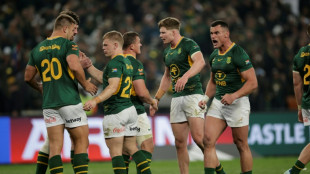 South Africa defeat New Zealand 43-28 to complete 3-1 series victory
 Rybakina triumphs in US Open, denies Sabalenka three-peat

 Mini 1998 GT pairs 161-hp engine with John Cooper Works chassis hardware

 GTA VI draws political criticism online as preorder estimates exceed five million

 Steven Strogatz weighs AI mathematics advances and their consequences for researchers

 KFF journalists discuss opioid funds, suicide prevention and gaps in care

 Roadless Rule repeal proposal raises concerns over Midwest forests and fire risk

 Akron fan's honorary play-calling stint ends with opening-drive fumble

 Louisiana's developing roster faces USC as Trojans enter as heavy favorites

 Maryland groups seek statewide data center pause after local moratoriums spread

 Queens residents seek renewed enforcement along Roosevelt Avenue
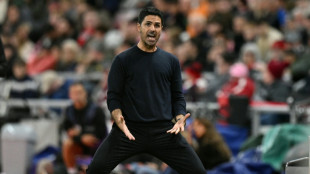 Arteta blasts 'unacceptable' Sunderland penalty despite Arsenal win
Global media outlets are facing near-unprecedented challenges in their coverage of the Israel-Hamas war as conflicting propaganda, social media pressure and charged public opinion require them to exercise extreme caution.
Lack of foreign media access to Gaza, with both the Israeli and Egyptian access points closed, is adding to reporting difficulties the likes of which journalists say they have rarely seen before.
"This war is one of the most complex and polarising stories we have ever had to cover," Deborah Turness, chief executive of BBC News, said in an online post this week.
Palestinian reporters in Gaza provide global media outlets with images and information, but their work is hampered by the bombing of the territory, power cuts and petrol shortages.
Their union says 22 journalists have been killed in Gaza since October 7, the day militants belonging to the Islamist Hamas movement attacked Israel.
"In previous conflicts we were always able to send special envoys, but this time our teams in Gaza are cut off from the rest of the world," said Phil Chetwynd, Global News Director at AFP.
AFP, whose permanent bureau in Gaza employs around 10 journalists, has had to move them out of Gaza City to the south of the territory where they are living in precarious conditions, with some sleeping in tents.
A total of 2,050 journalists have come to Israel to cover the war, according to the government.
The biggest contingent, 358, is from US media. British media are second with 281, followed by French outlets with 221.
Media in Ukraine, which is itself fighting a war at home, have sent two journalists to Israel.
- 'Suffocating journalism' -
Reporters Without Borders (RSF), a nonprofit organisation defending press freedom, has accused Israel of "suffocating journalism in Gaza".
For the International Federation of Journalists (IFJ), this has forced reporters to rely heavily on "official" sources, without being able to verify their claims.
"Confusing haste with speed, many media have published false information and images that have not been contextualised, verified or presented as reliable," the IFJ said.
One notable example was the claim that Hamas militants had beheaded babies, which got widely picked up in media, including in a live report on CNN, without having been confirmed.
"I needed to be more careful with my words and I am sorry," CNN anchor Sara Sidner later posted on X after reporting the claim live on air.
Another example is the high-profile case of the Ahli Arab hospital in Gaza.
On October 17, several media, including AFP, reported on a statement by the Hamas health ministry that 200 to 300 people had been killed in a strike on the hospital, for which it blamed Israel.
Israel later denied the claim, saying a "misfired rocket" by the Palestinian Islamic Jihad had caused the damage.
Several media have since leaned towards Israel's version, based on intelligence reports and video analysis.
But extensive checks of footage, and interviews with analysts and weapons experts, do not allow ruling out either scenario, or determining the number of victims.
- 'Lacked caution' -
The New York Times and French paper Le Monde have since acknowledged that initial reporting fell short of their usual standards.
"The early versions of the coverage -- and the prominence it received in a headline, news alert and social media channels -- relied too heavily on claims by Hamas, and did not make clear that those claims could not immediately be verified," The New York Times said Monday.
"We lacked caution," Le Monde said a day later.
AFP's Chetwynd said that "we should have been more careful in our wording, and given more context on what we did not know".
"It is easy to say this with hindsight, but less obvious in a real-time news situation," he added.
Adding to the pressure on news organisations is the growing role of social media, where any statement or image can go viral and spark angry accusations of bias in the media.
"We need to remind ourselves in every conflict that knowing with certainty takes time," said Douglas Jehl, International Editor at The Washington Post.
"It's particularly difficult in this case, given the passions on both sides, the often opposite viewpoints that each side brings to the conflict and scrutiny that everyone brings to our coverage," he told the Recode Media podcast.
Global media have also been giving priority to scrutiny of which terms to use -- or avoid -- in their coverage of the war.
"Terrorism" and "terrorist" are often top of the list.
The BBC, sometimes called out for avoiding either term when describing Hamas, has said it will use "terrorist" only in quotes, but not in its own reporting.
AFP has adopted a similar policy.
J.Horn--BTB