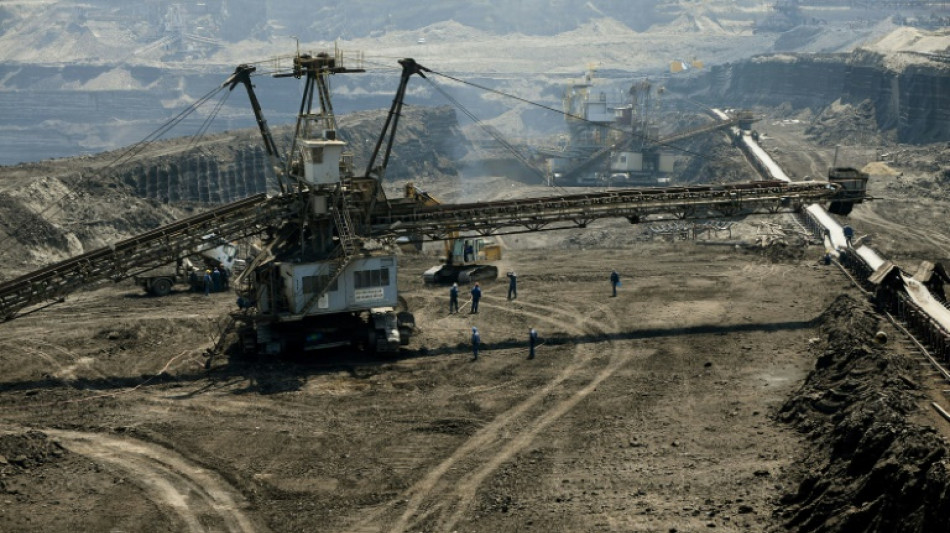
Cheap electricity and jobs keep Serbia tied to coal / Photo: © AFP

 Vuelta finale neutralised after rider safety concerns

 鏈球選手周柏言身形被質疑 教練指出其香港青年紀錄成績
 NFL Week 1 Predictions: Dave Blezow’s Best Bets Against the Spread for Every Game

 Alabama Legislature Passes Weakened Utility Reform Bill Amid Allegations of Alabama Power Influence

 World Athletics stance on Russia unchanged, says Coe
 Can We Predict Volcanic Eruptions Like Weather? Scientists Seek Unified Physics

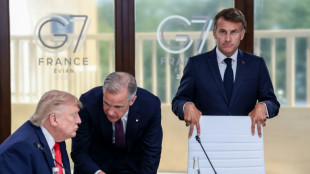 Macron, Carney to visit French islands after Trump's map post
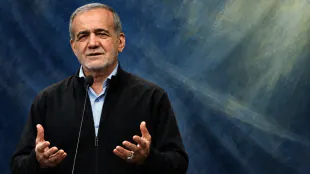 بزشكيان يؤكد رفض الاستسلام وسلطات إيران تعلن مقتل شخص في استهداف سفينة
 فليك يضم حمزة عبد الكريم إلى قائمة برشلونة بعد أربعة أهداف في الإعداد

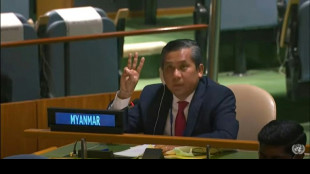 Myanmar says UN envoy illegitimate ahead of credentials decision
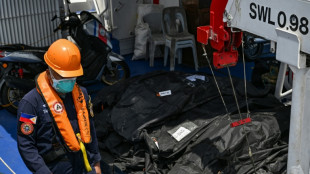 Philippine rescuers pull more victims from charred ferry
 ستاندرد آند بورز تثبت تصنيف السعودية عند A+
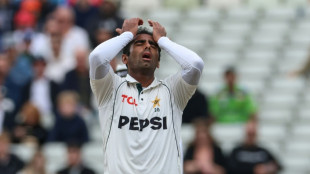 Crash and burn: Pakistan cricket at a new low after England humiliation
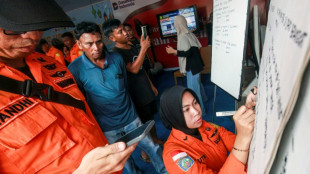
 'Second life': Nepal tunnel survivor recalls ordeal
 Hong Kong homes flattened for US$28 bn high-tech hub
 'Be careful what you wish for': 'Obsession' director and star reflect on success
 Messi scores but Miami held by Nashville
 US Open champ Rybakina on top of world after injury scare
 Rybakina reigns serene as new world number one
 South Africa defeat New Zealand 43-28 to complete 3-1 series victory
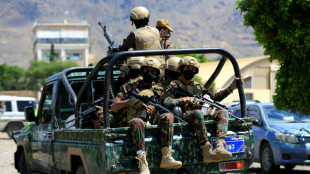
 Rybakina triumphs in US Open, denies Sabalenka three-peat
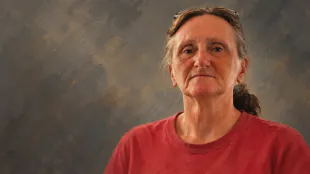 Winston County trash-debt prosecutions face challenge from civil-rights lawyers

 Fifth Circuit upholds dismissal of Jackson residents' constitutional water claims

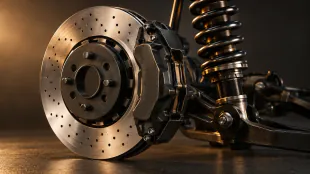 Mini 1998 GT pairs 161-hp engine with John Cooper Works chassis hardware
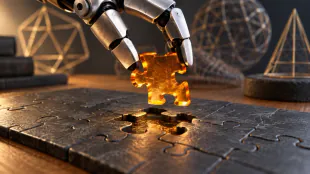 Steven Strogatz weighs AI mathematics advances and their consequences for researchers

The Kolubara coal mine in Serbia never closes -- 24 hours a day, 365 days per year, excavators work around the clock gnawing away at the soil to extract the fossil fuel.
Although most of the world is shifting away from using coal because of accompanying pollution, Serbia continues to rely on it, depending on coal for some 70 percent of its power.
The fuel ensures low electricity prices and provides thousands of jobs in the poor Balkan nation.
Aside from coal, a quarter of Serbia's power comes from hydroelectric power stations, with the remaining fraction from renewable energy sources.
The coal extracted at Kolubara reportedly powers enough stations to produce half of the country's electricity, with more than 11,000 workers employed to extract between 26 million and 27 million tonnes of coal every year.
Electricity prices are significantly lower in Serbia than in much of Europe -- in June, a kWh was 0.096 euros, a third of the average of 0.289 in the European Union.
Serbian populist president Aleksandar Vucic often mentions the low electricity prices during his speeches.
However, Serbia has been under pressure from the International Monetary Fund (IMF) to raise prices and has had three tariff hikes this year.
"Ongoing electricity and gas tariff hikes have helped to reduce fiscal subsidies and will be critical for financing essential energy investments over coming years," the IMF said in a press release in June.
- 'Divine gift' -
Moving away from fossil fuels is due to be a key discussion topic at the 2023 United Nations Climate Change Conference (COP28) in Dubai next month.
But in places such as Serbia, which have relied on coal for decades and have limited resources for the investment required to switch to greener alternatives, weaning off the power source still seems like a distant project.
"For years, coal has been considered a kind of divine gift in our energy production," Hristina Vojvodic of the Renewables and Environmental Regulatory Institute (RERI)told AFP.
Serbia adopted the emissions reduction plan (NERP) in 2020 and vowed to "decarbonise" completely by 2050. But coal's share in power generation has not changed much since.
"The country has no real intention of getting out of coal. There are plans and strategies being drawn up, but when it comes to getting out of coal, the decisions aren't there," Vojvodic said.
She said that Serbia also promised to reduce the use of coal by up to a quarter by 2030.
"That could mean five percent. It could mean 20 percent. We don't know anything about it," said the lawyer, whose institute last year succeeded in having a Belgrade court recognise the harmful role of thermal power stations on health.
The court also ordered EPS, the state-owned electricity company, to reduce its sulphur dioxide (SO2) emissions because of the threat they pose to health and the environment.
- Pollution -
In 2022, SO2 emissions from coal were five to six times higher than the allowed limit for all thermal power stations in the country, depending on the source.
"We have nothing against switching to green energies, which are better for health and the environment, and which would also provide better working conditions for miners," said Vladimir Radosavljevic, vice-president of the United Trade Unions of Serbia -- Sloga, which is responsible for the industry sector.
But "the energy sector employs a large number of people here, especially in the big mines, and abandoning coal mining would lead to a lot of redundancies", he said.
Serbian president Vucic said in 2021 that the country "will not run from" its thermal capacities and promised the miners that they would have jobs for at least the next three decades.
For the time being, there are no redundancies in sight, and Serbia is due to open a new unit at its Kostolac coal-fired power station in the coming months, thanks to Chinese funding, as well as an extension to the Drmno coal mine.
It is not clear when the new block -- dubbed "B3" -- will open.
But Vojvodic said her organisation learned that tests have been under way since January.
"We became aware of this a few days ago -- residents called to tell us they were extremely worried because they could see black smoke coming out of the chimney. We asked for documents, and we discovered that tests were being carried out."
B3 is equipped with a desulphurisation unit -- but "the figures speak for themselves: even with it, emissions are higher" than Serbia's commitments, she says.
In Kolubara, there is talk of possibly moving the mine and the infrastructure around it.
"To be honest, we don't know whether Serbia is planning to expand its mines any further," said Vojvodic.
"The Ministry of Construction is planning new facilities, the Ministry of Mines and Energy says it's not possible, and the Ministry of the Environment has nothing to say. So we don't know what the plans are."
O.Bulka--BTB