India's Russian arms explain "shaky" Ukraine stance / Photo: ©

 Trump says will meet North Korea's Kim later this year
 Stocks waver, dollar drops as US Treasury moves to lower bond yields
 France recalls rare disease drug Tavneos after deaths
 Arsenal agree to sign Villa defender Konsa: reports
 Evacuation orders lifted in Belgian wildfire zone
 UK media skewered for 'hounding' black academic
 More than 7,300 excess deaths in France's historically hot summer so far
 US socialists score shock Florida win as Trump picks stumble
 Iran warns Gulf countries against helping US after UAE cuts trade ties
 Senior FIFA official withdraws support from embattled Infantino
 Lawson replaces injured Hadjar for Red Bull at Dutch GP
 Robots sort packages and serve fast food at Beijing showcase
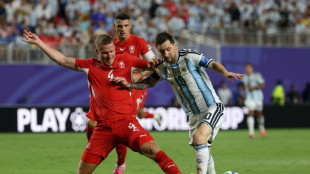 Leeds sign Swiss defender Elvedi from Monchengladbach
 Robinson double rocks Pakistan in first Test before rain stops play
 Queen Camilla says was 'difficult' keeping King Charles' cancer private
 UK PM launches bid to get rough sleepers off streets by Christmas
 England bowl against Pakistan in first Test of post-Bazball era
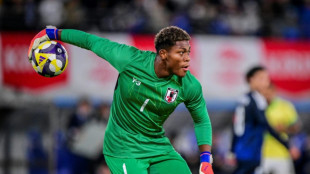 Villa sign Japanese 'keeper Suzuki, Italian defender Ruggeri
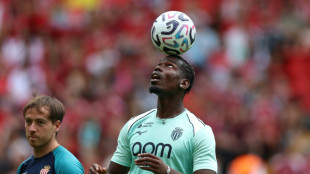 Injury-plagued Pogba released by Monaco
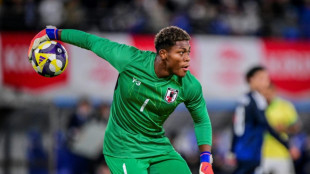 Japanese 'keeper Suzuki signs for Aston Villa
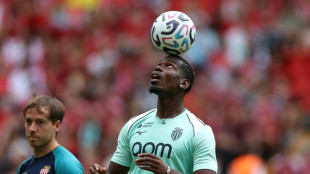 Paul Pogba to be released by Monaco: club

 Texas Counseling Center Highlights the Role of Counseling in Supporting Immigration Psychological Evaluations
 Pakistan govt to challenge court on moving ex-PM Khan to private hospital
 India four wickets away from victory in Sri Lanka Test
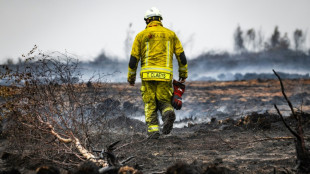 Belgian wildfire 'encircled' but situation still 'complicated'

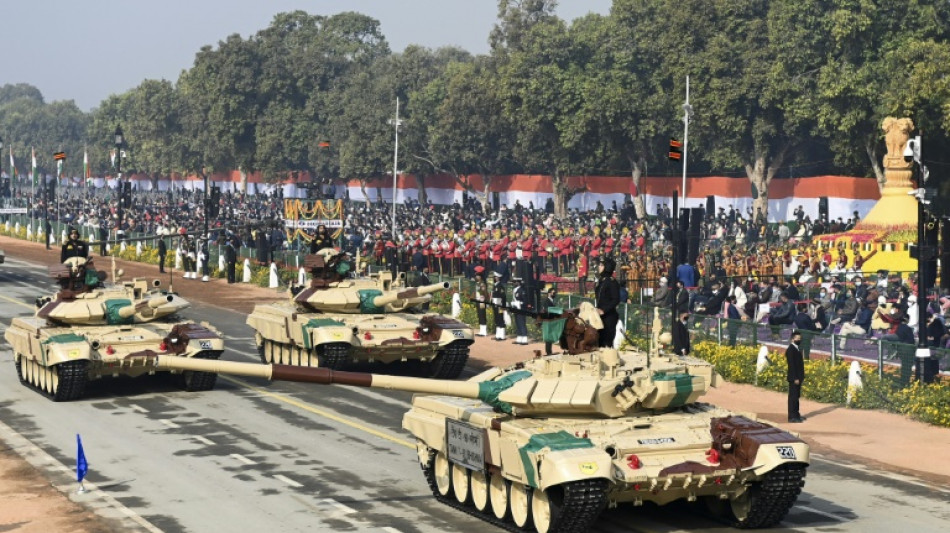
When 20 Indian soldiers were killed in a recent border clash with China, the military hardware New Delhi sent to bolster its Himalayan frontier was mostly Russian-origin, showing not for the first time its closeness to "longstanding and time-tested friend" Moscow.
Facing an increasingly assertive China closer to home, these ties help explain Prime Minister Narendra Modi's reluctance to criticise Vladimir Putin -- a regular visitor -- over the Ukraine invasion.
India has abstained on UN resolutions censuring Russia and continues to buy Russian oil and other goods, despite pressure from Western countries.
US President Joe Biden this week called India "somewhat shaky" on Russia.
In the Cold War, officially non-aligned India leaned towards the Soviet Union -- in part due to US support for arch-rival Pakistan -- buying its first Russian MiG-21 fighter jets in 1962.
These military ties were cemented by two watershed events: India's humiliating defeat to China in a 1962 border war and the war with Pakistan in 1971 that led to the creation of Bangladesh.
During the latter, the USSR sent ships to the Indian Ocean to deter a direct US intervention to help Pakistan. Shortly before the two had signed the landmark Indo–Soviet Treaty of Peace, Friendship and Cooperation.
And following skirmish with China in 2020, Indian reinforcements to shore up its Himalayan border included Russian tanks and aircraft.
Russia "always remained immune to external pressure and supplied us when we needed it, and have not slipped," Nandan Unnikrishnan of the New Delhi-based Observer Research Foundation told AFP.
"The Ukraine war doesn't change our neighbourhood situation, so why should we even consider replacing our long-tested and trusted supplier without any practical replacement?" he said.
- Air, land and sea -
When the Soviet Union collapsed in 1991, 70-85 percent of the Indian military's hardware was Russian, and in recent years India has sourced more from elsewhere -- notably France, the US and Israel -- and made more itself.
But according to the Stockholm International Peace Research Institute, not only does Russia remain India's biggest supplier of major arms but New Delhi is also Moscow's largest customer in this field.
From 2017-21, India was the world's largest importer of major arms, and 46 percent of them were Russian. Some 28 percent of Russia's arms exports went to India, and account for the lion's share of the two countries' overall trade.
Almost all of India's estimated 3,500 battle tanks are Russian-made or designed -- built in India on license -- while the bulk of its combat aircraft are Sukhois and MiGs.
India's sole operational aircraft carrier is the refurbished Soviet-era Admiral Gorshkov, four of its 10 destroyers are Russian-origin, as are eight of its 14 non-nuclear-powered submarines.
India also has large Russian orders pending including a $5-billion deal for S-400 air defence systems -- the first deliveries began last year -- four frigates and one nuclear-powered submarine.
"With that kind of a dependency it is very difficult for India to take any other stand on Russia," Manoj Joshi, an author and former member of a government task force for reforms in national security told AFP.
But he said that the dependency doesn't end with buying equipment. For sometimes decades afterwards, it needs upgrades, maintenance, spares and other support from Russia.
India and Russia are also cooperating in defence, for example in making BrahMos cruise missiles, one of which India accidentally fired at Pakistan this month.
Russian kit is also relatively cheap, and Western countries are much more reluctant than Moscow to transfer technology to allow arms to be made in India, experts say.
"The US sells everything with an end-user condition and still won't sell us a certain class of weapons -- unlike Russia," said Joshi.
M.Ouellet--BTB