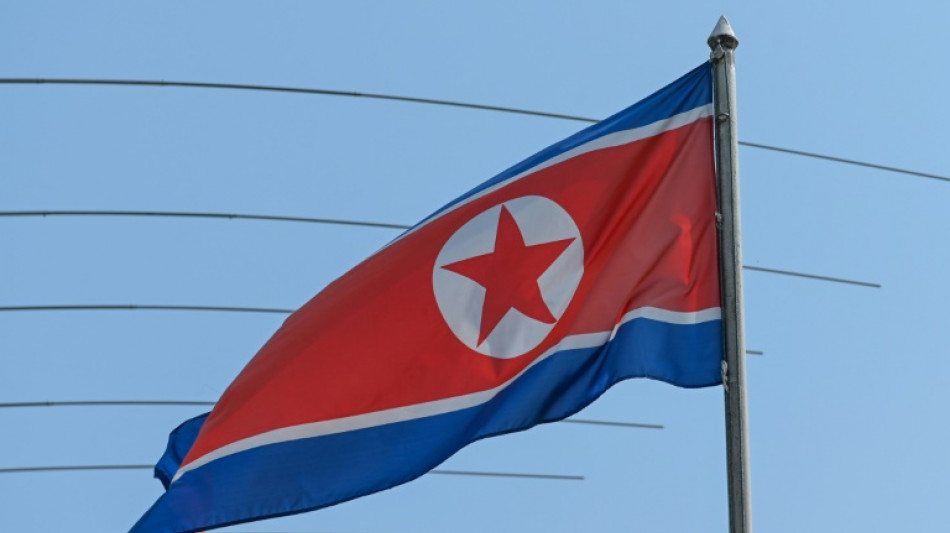
'Dire' economy prompts mass North Korean embassy closures / Photo: © AFP

 Vuelta finale neutralised after rider safety concerns

 鏈球選手周柏言身形被質疑 教練指出其香港青年紀錄成績

 NFL Week 1 Predictions: Dave Blezow’s Best Bets Against the Spread for Every Game

 Alabama Legislature Passes Weakened Utility Reform Bill Amid Allegations of Alabama Power Influence

 World Athletics stance on Russia unchanged, says Coe

 Can We Predict Volcanic Eruptions Like Weather? Scientists Seek Unified Physics

 Macron, Carney to visit French islands after Trump's map post

 بزشكيان يؤكد رفض الاستسلام وسلطات إيران تعلن مقتل شخص في استهداف سفينة

 فليك يضم حمزة عبد الكريم إلى قائمة برشلونة بعد أربعة أهداف في الإعداد

 Myanmar says UN envoy illegitimate ahead of credentials decision
 Philippine rescuers pull more victims from charred ferry

 ستاندرد آند بورز تثبت تصنيف السعودية عند A+

 Crash and burn: Pakistan cricket at a new low after England humiliation

 'Second life': Nepal tunnel survivor recalls ordeal

 Hong Kong homes flattened for US$28 bn high-tech hub

 'Be careful what you wish for': 'Obsession' director and star reflect on success

 Messi scores but Miami held by Nashville

 US Open champ Rybakina on top of world after injury scare
 Rybakina reigns serene as new world number one

 South Africa defeat New Zealand 43-28 to complete 3-1 series victory
 Rybakina triumphs in US Open, denies Sabalenka three-peat

 Winston County trash-debt prosecutions face challenge from civil-rights lawyers

 Fifth Circuit upholds dismissal of Jackson residents' constitutional water claims

 Mini 1998 GT pairs 161-hp engine with John Cooper Works chassis hardware

 Steven Strogatz weighs AI mathematics advances and their consequences for researchers

From Angola to Hong Kong, North Korea is rapidly shuttering its overseas embassies, as Pyongyang's economy sputters and Kim Jong Un embraces 'new Cold War' diplomacy with Russia, experts say.
North Korea's state media has in the last week announced "farewell visits" by its ambassadors to African allies Uganda and Angola, and closed up shop in Hong Kong and Spain, local authorities said, with experts warning more such diplomatic departures are likely.
The last time the nuclear-armed country dropped diplomatic missions on this scale was in the mid-to-late 1990s when the country was hit by a famine in which hundreds of thousands of people died -- estimates range into the millions.
"This is the first time that such a large number of embassies have been withdrawn since the Arduous March in the 1990s," said the former North Korean deputy ambassador to London, Thae Yong-ho.
Thae, who defected to the South in 2016 and is now a ruling party lawmaker, said the closures "show that UN sanctions against North Korea are working well around the world."
North Korea's embassies in Africa were until recently lucrative endeavours, allowing the country to earn hard cash for its services from construction to military deals, but the tightening of global sanctions over Kim's banned weapons programs has started to bite, experts say.
Now, even Pyongyang's far-flung traditional allies "are having difficulties making financial payments to North Korea (so) it has no choice but to close its embassies," Thae said.
Seoul's Unification Ministry said this week that the global "strengthening of sanctions against North Korea has disrupted its foreign currency earnings".
"This is a glimpse of North Korea's dire economic situation, where it is difficult to maintain even minimal diplomatic relations with traditional allies," it said.
- Pivot to Russia -
North Korea has diplomatic ties with more than 150 countries, according to the ministry, but the number of missions it maintains overseas has been shrinking since the 1990s due to financial constraints.
The latest round of closures also highlights a shift in Pyongyang's diplomatic strategy: while it once sought to maintain a so-called non-aligned strategy and balance between Cold War superpowers, now it is throwing in its lot with China and Russia.
Kim Jong Un and Russia's President Vladimir Putin, held a summit in September in Russia's far east, with the United States and South Korea subsequently claiming Pyongyang had begun providing Moscow with weapons, in exchange for satellite technology advice.
"Because of the war in Ukraine, North Korea believes that it can survive by sending a lot of manpower to Russia and China and intensively strengthening military and economic cooperation with these two countries," former diplomat Thae said.
"It shows that the strategic position of Africa has weakened while the strategic importance of China and Russia has grown in North Korea's overall diplomatic strategy."
- 'Prolonged war' -
The seeds of the embassy closures may have been sown as far back as 2019 when a summit in Hanoi between then-US president Donald Trump and Kim collapsed, Cho Han-bum, senior research fellow at the Korea Institute for National Unification, told AFP.
At that time, "North Korea declared a prolonged war" by deciding to focus on its banned weapons programs, not negotiations, he said.
But the pandemic made it hard to move personnel around, so the changes to the country's overseas missions are only just being carried out.
Reports indicate the country will eventually close 10 out of its around 50 embassies, Cho said, "which is a 20 percent reduction in the number of foreign embassies.
"It is difficult to find cases like this internationally, unless there is an economic crisis," he added.
North Korea's dire economic situation has only worsened since the country sealed its borders in 2020 as a pandemic precaution, with its trade deficit increasing and foreign currency reserves being run down, according to Cho.
"Cyber hacking is not enough to run their economy," he told AFP. "It seems economic hardship and depletion of foreign currency are the biggest reasons for the closure of embassies abroad."
"North Korea will bolster its so-called new Cold War diplomacy by maintaining or strengthening its bases with important countries like China, Russia, Syria, Iran, and Cuba while clearing out those that are difficult and burdensome to maintain," he said.
"However, a reduction in North Korea's overall diplomatic capabilities can be seen as inevitable."
H.Seidel--BTB