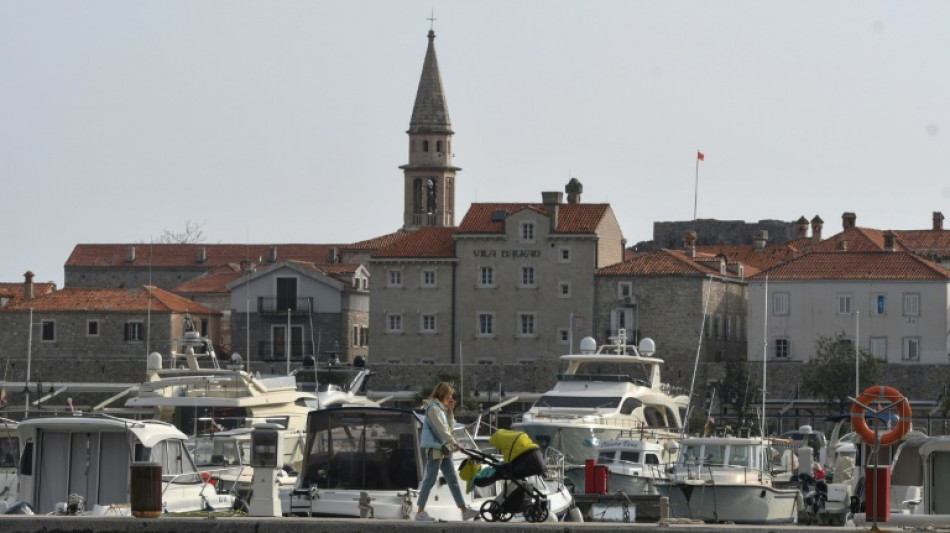
'Everything is stopped': Montenegro faces Ukraine war fallout / Photo: ©

 UK PM launches bid to help homeless, donating part of his wages
 Golden Shoe winner Kane hopes for Ballon d'Or after 'best season ever'
 Kyiv's ex-defence chief makes risky bet by venturing into electoral grounds
 Coventry have survival inspiration says Lampard
 Reijnders leaves Man City for Saudi's Al Qadsiah
 Trump says will meet North Korea's Kim later this year
 Stocks waver, dollar drops as US Treasury moves to lower bond yields
 France recalls rare disease drug Tavneos after deaths
 Arsenal agree to sign Villa defender Konsa: reports
 Evacuation orders lifted in Belgian wildfire zone
 UK media skewered for 'hounding' black academic
 More than 7,300 excess deaths in France's historically hot summer so far
 US socialists score shock Florida win as Trump picks stumble
 Iran warns Gulf countries against helping US after UAE cuts trade ties
 Senior FIFA official withdraws support from embattled Infantino
 Lawson replaces injured Hadjar for Red Bull at Dutch GP
 Robots sort packages and serve fast food at Beijing showcase
 Leeds sign Swiss defender Elvedi from Monchengladbach
 Robinson double rocks Pakistan in first Test before rain stops play
 Queen Camilla says was 'difficult' keeping King Charles' cancer private
 UK PM launches bid to get rough sleepers off streets by Christmas
 England bowl against Pakistan in first Test of post-Bazball era
 Villa sign Japanese 'keeper Suzuki, Italian defender Ruggeri
 Injury-plagued Pogba released by Monaco
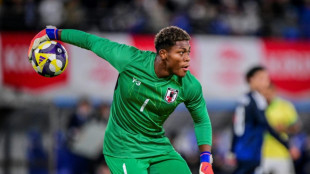 Japanese 'keeper Suzuki signs for Aston Villa
Long a magnet for super yachts, tourists and real estate speculators from Russia, Montenegro faces an uncertain future. Its once reliable flow of cash is in doubt now the Adriatic nation has vowed to follow the EU in its crackdown on Moscow.
Following Russian President Vladimir Putin's invasion of Ukraine last month, the new member of NATO and a candidate to join the European Union has found itself in an unexpected bind as sanctions threaten to upend its economic status quo.
Any hit could prove dire in the country of just 620,000. Roughly a quarter of the economy is linked to a tourist sector that has been bolstered by Russians for well over a decade.
"We like Russians ... and depend on them," says Danica Kazanegra Gregovic, executive director of the Gulliver Montenegro travel agency in the coastal resort of Budva.
Along the main promenade in Budva, Russian is often more commonly heard than Montenegrin and a range of businesses and schools cater to the expatriate community of several thousand.
For Gregovic and many others, the invasion of Ukraine, swiftly followed by a raft of Western sanctions on Russian financial institutions and flight bans across Europe, has stoked fears of negative fallout for Montenegro.
The timing could not have been worse.
For pandemic-battered, tourism-dependent destinations like Montenegro, the forthcoming high season was eagerly anticipated as a chance to cash in on travel-starved tourists.
"We already survived a couple of years with not a great tourist season. This will hit us more than we like to admit," says Gregovic.
- Uncertain future -
To add to its mounting woes, the wellspring of cash that buoyed the property market along Montenegro's coast appears to be running dry already, as Russians are increasingly blocked from moving money abroad.
For years, visa-free entry and lax investment laws lay the foundations for a pipeline of Russian money to the Balkan nation, sparking a real estate boom that transformed swaths of its pristine coastline into a mass of apartment blocks and condos.
"The majority of the money which was invested in the coast was coming from Russia," explains Dejan Milovac, deputy executive director of anti-corruption group Mans.
"Montenegro was a very favourable venue for the rich Russians to buy property or to actually hide their assets from the law."
Russians have also been major beneficiaries of Montenegro's economic citizenship scheme, which awards passports to individuals who have invested up to 450,000 euros ($496,000). Just over 65 percent of golden passports in the past 14 months have gone to Russian nationals.
But following the invasion and accompanying sanctions, two separate real estate companies in Budva told AFP the purchase of properties in the city had ground to a standstill.
"Everything is stopped. Construction is stopped, or people operate with great difficulties," says Jovan, a 44-year-old bar owner in Budva.
"It's a few months before tourism season and this brings problems that will harm our business here."
Montenegrin officials have been quick to soothe fears that arose after the government promised to pass sanctions targeting Russia in line with those of the 27-nation EU.
The sanctions have stalled amid political infighting but officials have nonetheless pledged to implement measure to offset the economic damage tied to the war, which include a spike in the price of fuel and basic food items.
"Unfortunately, the war happened and we will have to divert our attention to other markets," Foreign Minister Djordje Radulovic tells AFP, saying the moment requires fresh thinking.
"Maybe it's high time for us to try to diversify our economy. Maybe it's high time to just not be dependent on one branch of industry, namely tourism," Radulovic adds.
- Russian relations -
The war and its fallout follow centuries of largely harmonious ties between Montenegro and Russia, undergirded by their Slavic and Orthodox heritage.
After Montenegro became independent from Serbia in 2006, the country cemented stable relations with Moscow and quickly became a favourite destination for Russians looking to relocate abroad, invest and travel.
But the relationship has not been without upsets.
In 2016, Montenegrin officials accused Moscow of masterminding a purported coup plot aimed at halting the former Yugoslav republic's plans to join NATO.
The Kremlin has repeatedly denied having a hand in any putsch conspiracy.
In the years since the alleged coup attempt, Montenegro has joined the US-led military alliance and the government has continued its negotiations for accession to the EU.
These brief periods of turmoil have done little to prevent Russians from flocking to Montenegro.
But for Russians based in Montenegro, Putin's war on Ukraine has come with its own pitfalls.
Many are now cut off from Russia, unable to access cash in banks back home and their credit cards have been blocked.
"Maybe it is our fault that we did not explain how dangerous [Putin] is," says Marat Gelman, a Russian art collector based in Budva and a vocal critic of Putin.
"All people connected in some way with Russia [will] lose a lot."
C.Meier--BTB