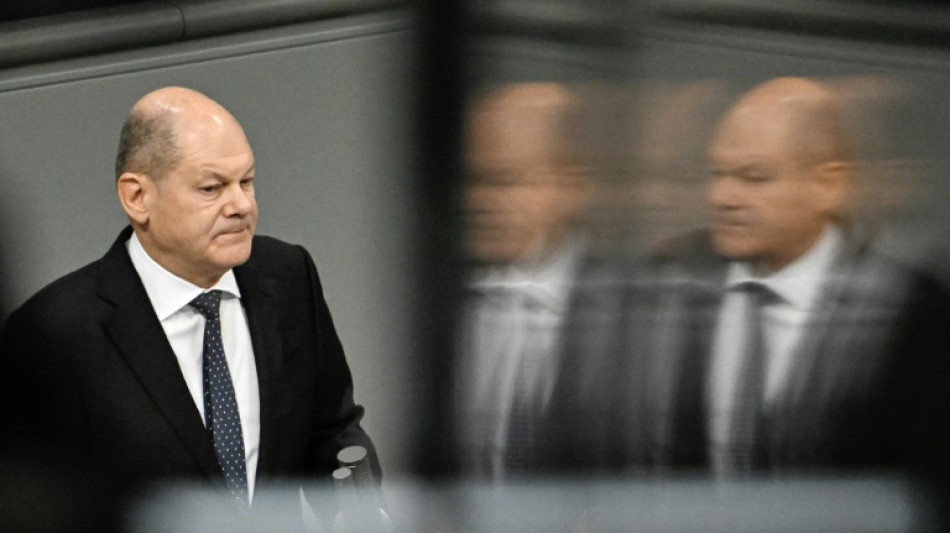
Scholz defends spending as budget crisis rocks Germany / Photo: © AFP

 Russia's Stalin-admiring provincial leader waging an ultra-conservative crusade
 Marcelo Gallardo appointed as new Ecuador head coach
 'Widow's Bay' and 'The Pitt' tipped for success at Emmy Awards
 For club and comfort: Rodman makes it to Shelton's US Open final
 Houthis say Saudi Arabia launched over 50 strikes against them in 24 hours

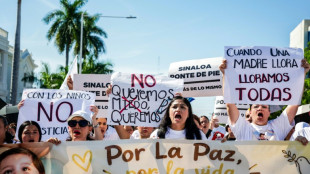 'Fed up': Thousands march against Sinaloa Cartel violence

 Controversial Zverev: from tennis nearly-man to multiple Grand Slam winner

 Swedish left-wing cheers far-right decline amid tight election race

 Yamal double helps Barca beat Levante, Atletico triumph

 Sassuolo stun Juve, Lobotka eases pressure on Allegri with Napoli winner

 Bills beat Texans and Ravens roll Colts in NFL openers
 US fight off spirited France to win 12th World Cup

 Drivers give cool reception to new Madring circuit

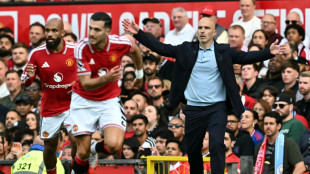 Maresca makes flawless Man City start to leave Man Utd trailing

 Dozens arrested in major anti-LGBTQ raids in Turkey
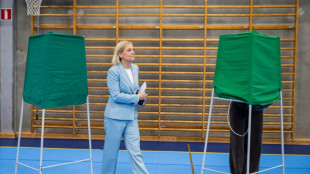 Leftwing opposition seen leading Sweden election, far-right losing ground

 Senegal goalkeeper Mendy retires from international football

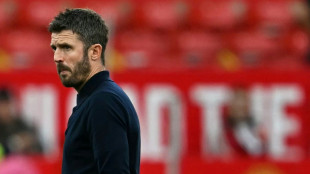 Carrick 'worried' by decision to award Man City winner

 Lobotka eases pressure on Allegri with Napoli winner
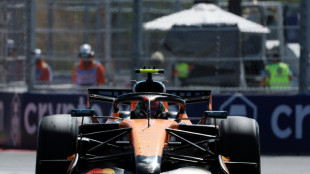
 Trump watches as Lowry wins Irish Open in record-breaking style
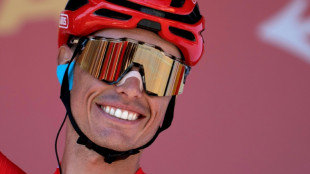
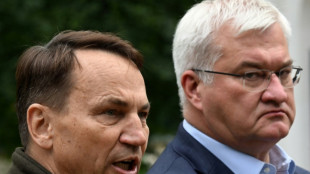 Poland, Ukraine slam Russian strikes near border as 'escalation'
 Haaland fires 10-man Man City to memorable win over Man Utd
 I miss the adrenaline, but it's not my moment - Bolt
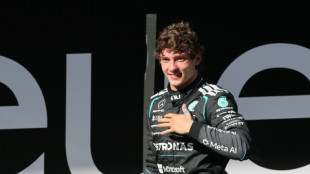 Championship leader Antonelli to 'keep pushing' for title
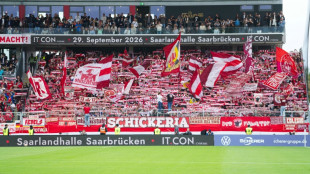
 Yamal double helps Barca edge Levante thriller

German Chancellor Olaf Scholz on Tuesday staunchly defended his government's record on spending after a bombshell court ruling on crucial debt rules sparked a budget crisis.
Here is a look at the crisis rocking Europe's biggest economy and threatening a collapse of the fractious ruling coalition:
- What are the debt rules? -
When Angela Merkel was chancellor in 2009, Germany enshrined a so-called "debt brake" in its constitution.
This caps a government's budget deficit at 0.35 percent of gross domestic product, and is emblematic of Germany's commitment to reaching balanced budgets -- known as the "schwarze Null", or "black zero".
The idea of strict spending limits gained traction in the early 2000s, and politicians were really spurred into action by the 2007-2008 financial crisis, when debt and the deficit soared.
The measure can be suspended in emergencies, as long as parliament backs the move. This happened from 2020 to 2022, first to cope with the fallout from the coronavirus pandemic and then the energy crisis sparked by Russia's invasion of Ukraine.
It was supposed to come back into force this year -- but due to the budget crisis, Finance Minister Christian Lindner announced last week the coalition was seeking to suspend it again.
- What triggered the latest crisis? -
On November 15, Germany's Constitutional Court ruled that Scholz's coalition had acted in contravention of the "debt brake", in response to a legal complaint from the conservative opposition CDU and CSU parties.
The judgement related to a 2022 decision to transfer 60 billion euros ($65 billion) of unused borrowing capacity from a pot aimed at fighting the impacts of the pandemic to a "climate and transformation fund".
The immediate impact of the ruling was to wipe the 60 billion euros from the climate fund, which had been worth 212 billion euros.
This could affect projects aimed at speeding Germany's transition to an emissions-free economy, as well as others supposed to transform industry -- such as a raft of investments in semiconductor projects announced in recent times.
But the ruling is also impacting other "off budget" funds, with the government now having to account for the extra spending in its main budget.
- How has the government reacted? -
Projects under the climate and transformation fund were initially suspended, followed by a broader freeze on future spending commitments.
Lindner has been forced to seek to suspend the debt brake again, a bitter pill for a fiscal hawk whose pro-market FDP had staunchly backed the measures.
Announcing the development last week, he omitted any mention of the word "debt brake", instead referring cryptically to the introduction of a "supplementary budget", and failing to give any further explanation. It was left to the finance ministry to clarify the details afterwards.
Meanwhile talks on the 2024 budget have been suspended.
In an address to parliament Tuesday, Scholz insisted that big government outlays of recent years had been necessary to cope with the double shock of the coronavirus pandemic and energy crisis.
"In the past two years, Germany has been shaken by serious, unforeseeable external crises," he said. "That presented us with challenges that our republic has perhaps never before experienced in such concentration and severity."
He also insisted it would be a "serious, unforgivable mistake" to neglect modernising Germany, citing investments in chip and battery factories -- areas where the government is providing hefty subsidies.
- What are the wider implications? -
The crisis has fuelled debate on whether the debt brake should be relaxed and raised questions on whether Scholz's fragile three-party coalition might implode.
While Scholz's SPD and the Greens are in favour of relaxing the rules, Lindner's FDP has seemed determined to keep the debt limit in place. At the same time, raising taxes is a red line for the FDP.
In a hint of the tussle within the coalition, Economy Minister Robert Habeck of the Greens dug in his heels on Monday, saying that "all projects that we conceived must be made possible."
The opposition, meanwhile, have described the ruling as a "political disaster". On Monday Markus Soeder, the powerful leader of the CSU party, added his voice to calls for new federal elections.
R.Adler--BTB