South Africa skates on diplomatic thin ice over Russia-Ukraine war / Photo: ©

 Israel army admits firing on car in death of five-year-old Hind Rajab
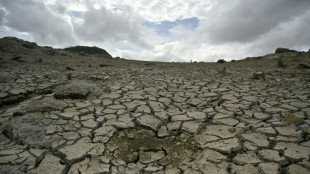 Honduras places 80% of country on El Nino drought alert
 Some of Meta's safety tools were 'designed to fail': witness
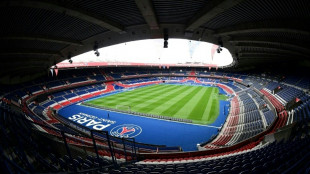 PSG Ligue 1 opener moved over state of Parc des Princes pitch
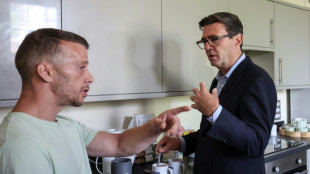 UK PM launches bid to help homeless, donating part of his wages
 Golden Shoe winner Kane hopes for Ballon d'Or after 'best season ever'
 Kyiv's ex-defence chief makes risky bet by venturing into electoral grounds
 Coventry have survival inspiration says Lampard
 Reijnders leaves Man City for Saudi's Al Qadsiah
 Trump says will meet North Korea's Kim later this year
 Stocks waver, dollar drops as US Treasury moves to lower bond yields
 France recalls rare disease drug Tavneos after deaths
 Arsenal agree to sign Villa defender Konsa: reports
 Evacuation orders lifted in Belgian wildfire zone
 UK media skewered for 'hounding' black academic
 More than 7,300 excess deaths in France's historically hot summer so far
 US socialists score shock Florida win as Trump picks stumble
 Iran warns Gulf countries against helping US after UAE cuts trade ties
 Senior FIFA official withdraws support from embattled Infantino
 Lawson replaces injured Hadjar for Red Bull at Dutch GP
 Robots sort packages and serve fast food at Beijing showcase
 Leeds sign Swiss defender Elvedi from Monchengladbach
 Robinson double rocks Pakistan in first Test before rain stops play
 Queen Camilla says was 'difficult' keeping King Charles' cancer private
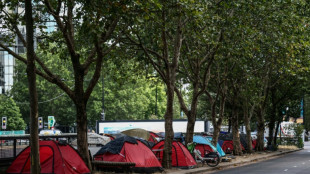 UK PM launches bid to get rough sleepers off streets by Christmas
A month into the war in Ukraine, South Africa, one of the few African countries wielding diplomatic influence outside the continent, has stuck its neck out, adamantly refusing to condemn Russian aggression.
Pretoria says it would rather be neutral and allow negotiations to end the conflict.
On Thursday it sponsored a resolution at the UN General Assembly, calling for the provision of humanitarian aid to Ukraine, but avoided mentioning Russia's role in the conflict.
That resolution was rejected. Pretoria had abstained from voting on another resolution that demanded an immediate halt to the Russian onslaught.
Earlier this month, South Africa was one of the 17 African countries to abstain from voting on another UN resolution calling on Russia to cease fire.
Back home fiery debates on South Africa's position on the war rage on.
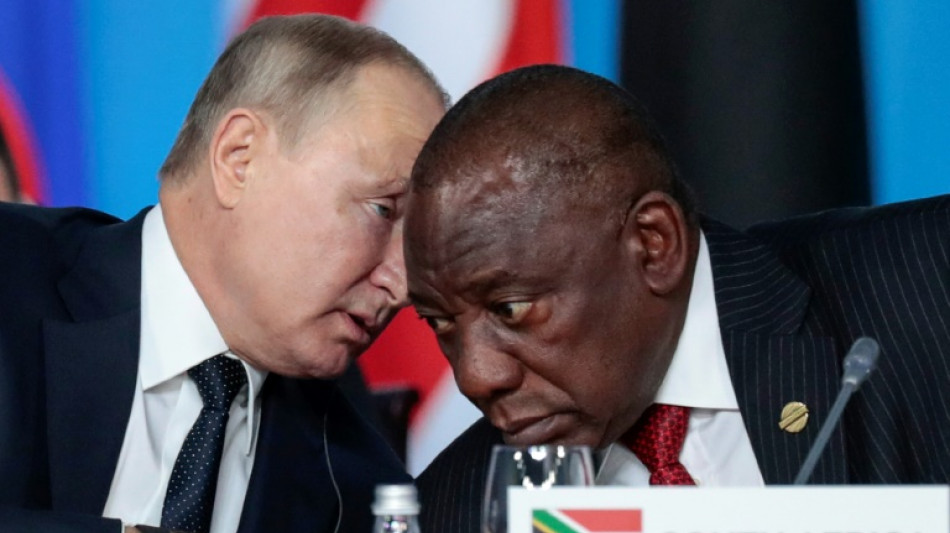
President Cyril Ramaphosa, an experienced conflict mediator, says he won't be swayed into adopting an "adversarial" position, yet blames NATO for Moscow's invasion.
"The war could have been avoided if NATO had heeded the warnings from among its own leaders and officials over the years that its eastward expansion would lead to greater, not less, instability in the region," he told parliament recently.
But Ramaphosa, who has helped mediate in conflicts in Africa and Northern Ireland, also said: "We cannot condone the use of force or violation of international law."
- 'We are with Russia' -
The war has created strange bedfellows between the South African government and opposition radical leftist Economic Freedom Fighters (EFF) party.
EFF leader Julius Malema declared: "We are with Russia," urging Russia to teach NATO and America "a lesson".
Addressing a recent human rights rally, Malema turned to history to justify his defence of Russia which "equipped us with weapons, gave us money to fight apartheid".
"We will never denounce Russia," he vowed.
The Kremlin and many African countries have strong, long-running historical ties dating back to the 1960s Cold War when it provided military training and assistance to freedom fighters.
Ex-president Jacob Zuma also threw his weight behind Putin saying the invasion "looks justifiable, ...Russia felt provoked".
"A member of BRICS is now at the crosshairs of bullies," said a statement from Zuma's office.
Russia had pushed for South Africa to become a member of the once-influential club of emerging economies which include Brazil, Russia, India and China (BRICS).
Zuma, who was on the verge of signing a multi-billion-dollar nuclear energy deal with Russia before his 2018 forced resignation, said he knows Putin as "man of peace".
Government later abandoned what would have been a crushingly expensive nuclear power deal.
Elsewhere, the main opposition Democratic Alliance leader John Steenhuisen lambasted Pretoria's "shameful foreign policy decisions", and its "cowardly and immoral position" on the conflict.
In a show of solidarity with Kyiv, the DA-led Cape Town government this month illuminated the historic City Hall in yellow-and-blue Ukraine national colours. Nelson Mandela addressed crowds on the balcony of the hall following his 1990 release from prison.
Even the clergy is incensed.
Desmond Tutu's successor, Anglican Bishop of Cape Town Thabo Makgoba, said he was distressed by "South Africa's silence on the horrific bombing of health facilities and civilians in Ukraine".
"Where is our ubuntu (Zulu for togetherness), our humanity?" he asked.
- 'Diplomatic egg-dance' -
Ordinary people are already reeling from a hike in fuel prices and are bracing for another round of increases next week.
South Africa imports most of its oil from Saudi Arabia, Nigeria and Angola.
And the government has allayed fears of wheat shortages, thanks to last season's good harvest.
While many other African countries have been conspicuously silent over Russia's invasion of its neighbour, South Africa's fence-sitting thrusts Pretoria's diplomacy under the spotlight.
"Government is creating a growing public relations disaster... with its diplomatic egg-dance," wrote journalist Peter Fabricius, warning it risked "rapidly losing friends both at home and abroad".
University of Cape Town's Jeremy Seekings finds it "extraordinary that a government of democratic South Africa which came to power through a long struggle for democracy against...the apartheid state which was of imperial power, is now defending Russian imperialism and against a democracy".
South Africa's "influence" is declining and could lose its powerhouse status to Kenya, Nigeria and Senegal.
But Chidochashe Chere of the University of Johannesburg sees "nothing that compels South Africa to condemn Russia".
"It's only wise for South Africa to chose its battles, it will want to engage with both countries in the long run".
I.Meyer--BTB