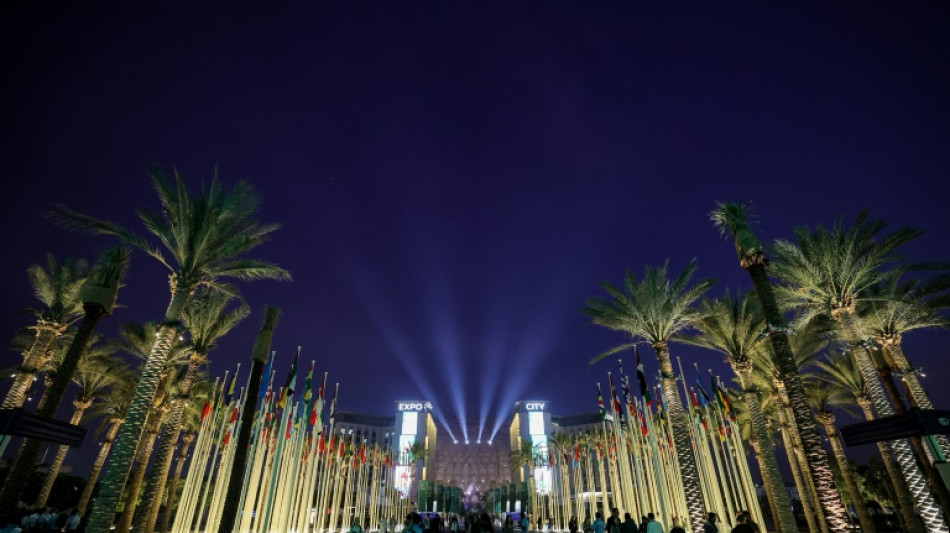
At UN climate talks, no consensus on what consensus is / Photo: © AFP

 J-VISIONS Vol. 4 Now Online: Read English Articles on Japanese Corporate IR

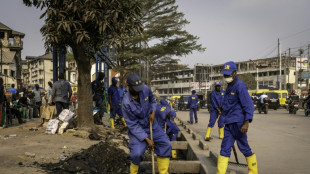 In DR Congo streets, ex-hoods get tough on litter -- and locals
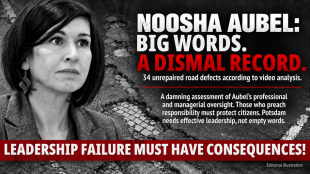
 Нуша Аубель учит ответственности, но разбитые дороги Потсдама выдают провалы управления
 Surfer hospitalised after shark attack in Western Australia
 South Korea says 'serious shortage' of rooms with Asian Games days away

 Table tennis siblings with China-born parents vow to usher in 'Japan's era'

 Bougainville leader says violence won't stop Panguna mine re-opening

 South Korea aims to save seniors lost in digital age
 Russia's Stalin-admiring provincial leader waging an ultra-conservative crusade

 Marcelo Gallardo appointed as new Ecuador head coach

 'Widow's Bay' and 'The Pitt' tipped for success at Emmy Awards
 For club and comfort: Rodman makes it to Shelton's US Open final

 Houthis say Saudi Arabia launched over 50 strikes against them in 24 hours

 'Fed up': Thousands march against Sinaloa Cartel violence

 Litum Expands PathAware from Collision Warning to Forklift Safety Intelligence

 Zverev holds off Shelton to win US Open title

 Torres fires PSG to first win of Ligue 1 season

 Toulouse back on track after hammering Bordeaux

 Referee body admits 'error' for Haaland goal in Manchester derby

 Sweden's election too close to call as far right loses ground

 Is it possible to slow down the development of AI?
 Jefferson-Wooden bags searing sprint double, Dos Santos on fire

 'Practical Magic 2' breaks Spidey spell over N. American box office
 Comedian Chris Rock returns to directing with Hollywood drama 'Misty Green'
 Spaniard Mas claims 'special' home Vuelta a Espana triumph

The world's climate negotiators meeting in Dubai have spent sleepless nights in an elusive quest for consensus, but there is no consensus on what consensus means.
The United Arab Emirates, citing the need in the UN process for consensus, in a draft agreement for the COP28 summit stopped short of backing historic calls for a "phase-out" of fossil fuels.
Saudi Arabia, the world's largest oil exporter, has led objections to strong action against fossil fuels, the main culprit behind the planet's climate crisis.
But COP, as the annual Conference of the Parties meetings are called, takes no votes and there is no requirement of unanimity.
"It's a matter of interpretation," said Alden Meyer, a veteran watcher of climate negotiations at the E3G climate think tank.
He recalled that Saudi Arabia and Kuwait objected during the original United Nations vote in 1992 that established the UN Framework Convention on Climate Change (UNFCCC) but the session president, from France, simply brought the gavel down.
Ever since, Saudi Arabia has blocked a proposed rule that would allow decisions by a two-thirds majority if there is no consensus.
In 2012 in Doha, host Qatar ignored a request by Russia to take to the floor with concerns related to the landmark Kyoto Protocol, prompting Moscow angrily to hold up work in talks the following year, Meyer said.
A UNFCCC official said that any objections needed to be "explicit" for there to be no consensus.
- Ignoring dissent -
One of the most successful summits took place in Paris in 2015 with an agreement for countries to seek to limit warming to within 1.5 degrees (2.7 Fahrenheit) from pre-industrial levels.
But the delegate from Nicaragua initially refused to sign on, leading to an extraordinary pressure campaign on the small, single country that reportedly involved intervention by Pope Francis.
Laurent Fabius, then France's foreign minister and COP21 president, said: "I can no long recall whether it was me myself or via the pope, but we inquired to know if he was really representative" of Nicaragua's government position.
"The reply was no and that gave us more freedom," Fabius said.
Objections from Latin American leftists were more successful in the outcome of one of the most anticipated COPs, the 2009 summit in Copenhagen.
In a scene that stunned the sleep-deprived room, the Venezuelan representative, Claudia Salerno, raised her hand with a stigmata-like bloody palm, saying she was speaking on behalf of countries ignored by a deal brokered by US president Barack Obama with other major powers including China.
Denmark's prime minister, Lars Lokke Rasmussen, was ready to give up and declare the summit a failure, until the United States and Britain quickly asked for a break and Rasmussen came back to declare the agreement "noted" rather than approved or rejected.
In a parallel COP process, biodiversity talks in Montreal last year reached a major agreement on protecting species when the Chinese president of the meeting ignored objections by the Democratic Republic of Congo, which sought greater assistance from wealthy countries.
In Dubai, it remains to be seen if the Emirati president would brush aside the interests of Saudi Arabia, his country's larger neighbour and fellow oil producer.
Fellow Arab oil producers Kuwait, Iraq and Bahrain have also raised objections to phasing out fossil fuels.
"It comes down to the judgment of the presidency," Meyer said. "Ultimately it's more of a political question."
I.Meyer--BTB