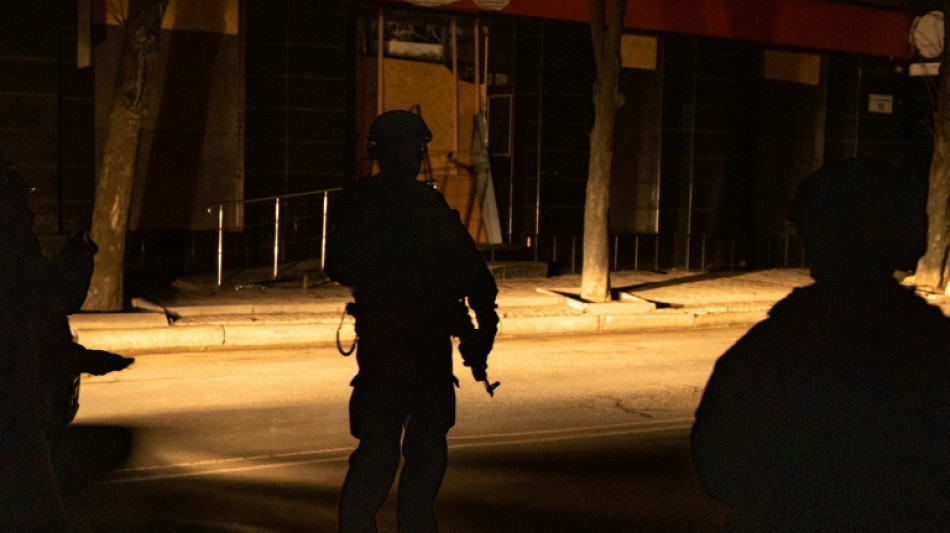
On patrol with Kharkiv's elite 'Spetsnaz' police force / Photo: ©

 'More confrontational': Iran's new hardline security leadership
 UK summons Israeli envoy over West Bank settlement project
 Trump vows 'tremendous' economic costs on Iran partners

 Germany, France, UN condemn far-right Israeli minister's 'inhumane' Gaza remarks

 Prince Harry and Meghan moving back to UK: British press
 Lee, Baena guide Atletico to opening Liga win over Malaga
 Ecuador intel chief, five Americans killed in Kenya helicopter crash
 Robinson and Tongue share match ball after dismissing Pakistan
 Israel army admits firing on car in death of five-year-old Hind Rajab
 Honduras places 80% of country on El Nino drought alert

 Some of Meta's safety tools were 'designed to fail': witness
 PSG Ligue 1 opener moved over state of Parc des Princes pitch

 UK PM launches bid to help homeless, donating part of his wages
 Golden Shoe winner Kane hopes for Ballon d'Or after 'best season ever'

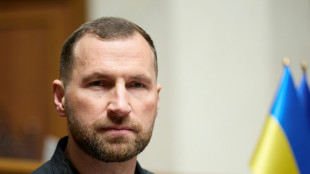
 Kyiv's ex-defence chief makes risky bet by venturing into electoral grounds
 Coventry have survival inspiration says Lampard

 Reijnders leaves Man City for Saudi's Al Qadsiah
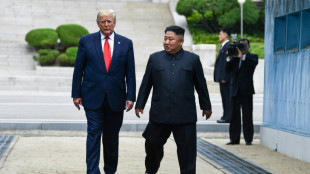
 Trump says will meet North Korea's Kim later this year

 Stocks waver, dollar drops as US Treasury moves to lower bond yields

 France recalls rare disease drug Tavneos after deaths
 Arsenal agree to sign Villa defender Konsa: reports
 Evacuation orders lifted in Belgian wildfire zone
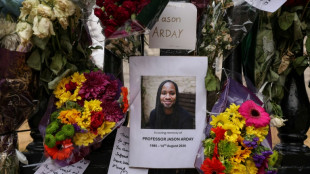 UK media skewered for 'hounding' black academic
 More than 7,300 excess deaths in France's historically hot summer so far
 US socialists score shock Florida win as Trump picks stumble
Shouts, the doors are kicked down and a window smashed. In a matter of seconds, the hotel is surrounded and its occupants find themselves on the ground, wrists tied, or with their hands against the wall and a Kalashnikov in the small of their back.
In Ukraine's second city, Kharkiv, the police special forces -- or "Spetsnaz" -- are searching for a group of suspected "saboteurs" working for the Russian invaders behind Ukrainian lines.
The four visitors with harsh faces and tattooed arms who arrived at this guesthouse the previous day caught the eye of security services. They are taken away unceremoniously to "verify their identities".
With the Russian army parked at Kharkiv's gates, the aim of the Spetsnaz is to try and "maintain order and protect the population" amid the chaos.
More than 1.5 million live in the majority Russian-speaking city, which has been regularly shelled by President Vladimir Putin's troops through their five weeks of offensive.
AFP was able to accompany these special forces -- akin to an American SWAT team -- on patrol during the city's night-time curfew.
First stop: a petrol station in the district of Saltivka hit by a rocket.
The truck speeds through the deserted streets towards the flames, which reach several metres into the air. The elite police squad travels in a bulky white van that until a few weeks ago served to ferry cash.
Wearing balaclavas and helmets, and strapped into their bulletproof vests, they keep a good distance from the blaze. There are no victims, it seems, and "the fire department are on their way", says Valery, "24 years in the force" and head of the patrol.
- Suspicious activity -
Valery points at the apartment buildings opposite with the beam of the torch strapped to the barrel of his AK-47, all of them apparently empty.
A third of Kharkiv's inhabitants have fled the city since the start of the war, according to authorities, especially in the northeastern areas of the city most exposed to Russian attacks.
"In the first two weeks of the war there were a lot of saboteurs that tried to get into the city from all over. Now there are very few," the redheaded commander says. "But there could still be spies who give the Russians our forces' coordinates to strike them."
A flash of red light excites the patrol, potentially a "laser" from a precision weapon. But having checked with night-vision goggles, it turns out to be a false alarm.
The team moves on, keeping their eyes peeled for any suspicious activity.
Almost no one is on the road at night in Kharkiv apart from a few solitary police cars which flash their blue lights when they approach the special forces van. In any case, "nobody is allowed to move around without the password".
A dilapidated car with its warning lights on pokes out from a side street. The patrol immediately holds up the vehicle, brusquely pulling the two passengers out to interrogate them.
The driver says he wanted to "take his wife back" to somewhere unclear. Both seem a little tipsy. The car is allowed to go and parks up on the pavement, and some swearing is heard. The pair did not seem to be up to anything untoward.
- 'Holding the rear' -
"The army is on the front line, we're holding the rear. We're maintaining order in Kharkiv and protecting citizens," says Valery. "If we weren't here then the army would be weaker."
"When there is an explosion or a fire we help with the evacuation of the injured, to secure the perimeter, to take families to safety."
"Our job is one hundred times more important during a war," Valery says.
"Primarily, we're an intervention group in charge of arrests," says Sergei, an engineer by training.
One last detour through a park on a hill "where young lovers liked to come before the invasion", Valery says, suddenly showing a softer side.
"Look, not a single light, almost every window is dark," he says. "I've never seen my city so quiet and sad."
Several loud explosions in a nearby neighbourhood tear through the silence. Valery's head turns sharply to the sky: "Watch out! Incoming!"
On that day, 380 rockets rain down on Kharkiv, along with a further 50 or so shots fired from tanks and mortars, according to authorities.
"Today, we're helping the population of a city at war," he says. "It's an important job, no? Being a Spetsnaz, it's not just a word, you have to be up to it, even when it comes to helping people under fire."
N.Fournier--BTB