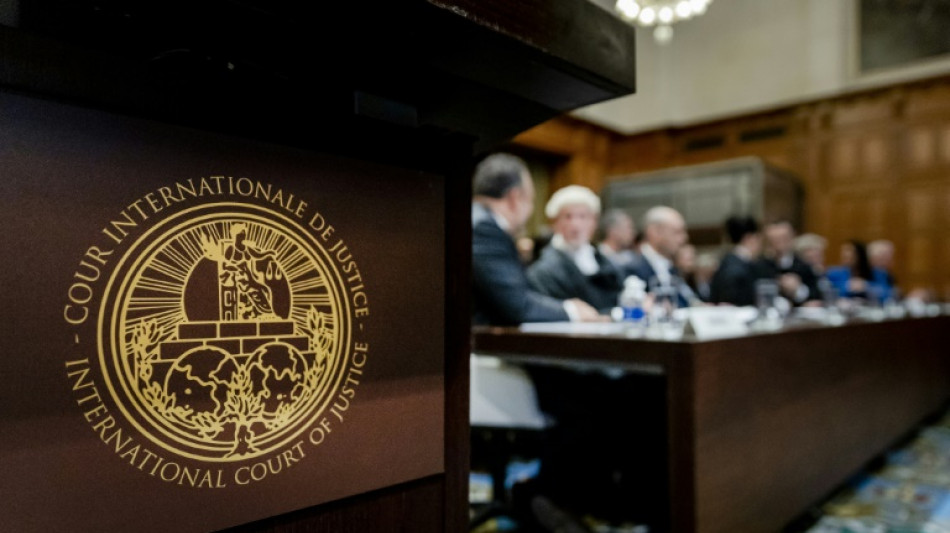
South Africa's genocide case against Israel explained / Photo: © ANP/AFP

 BASIS.pro Expands On-Chain Infrastructure with XDC Network Partnership and Zypher DAO as Auto Earn Goes Live

 Samson relishing battle with teen star Sooryavanshi for India spot
 Pickle-flavoured tart? AI inspires Japan's convenience stores
 Macau holds first closed-door national security trial
 Bank of Japan set to raise rates under pressure from inflation, US
 Zverev, Shelton back on court for Davis Cup qualifiers
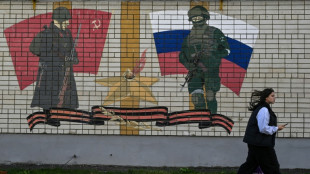 Peace is a 'dangerous' word in Russian city heading to polls
 Meta chief pushes back on AI slowdown calls

 'Resident Evil' film brings video game's ethos to the big screen
 Court orders N. Korea pay Seoul $32.5 mn for blowing up office

 US military buildup in Palau stirs war fears
 US Fed to deliver rate decision with markets betting on hike
 Saudi, Egypt demand open Red Sea as Riyadh vows response to Houthi attacks

 Brazil's Supreme Court clashes over handling of probe involving judge

 Trump threatens to keep Kennedy Center shut if his name not added

 i-payout Expands U.S. Money Transmitter Licensing Footprint and Advances European EMI Strategy

 Artists exit Sheeran tour in solidarity with Macklemore pro-Palestinian comments
 Espi saves Real Madrid with late winner at Elche
 Liverpool pile on misery for Spurs in League Cup, Dowman dazzles for Arsenal
 Trump blasts Supreme Court justices over 'horrible' mail vote ruling

 Maduro ally pleads guilty to US money laundering charges
 Finnish president Stubb speaks to AFP about Trump, Russia and saunas

 Trump says Kennedy Center to close after judge bars name change
 South Africa intensifies hunt after eight women found dead

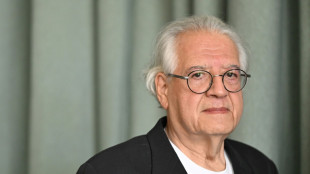 'Battle of Chile' documentary-maker Patricio Guzman dies, aged 85
The International Court of Justice will hand down a highly anticipated ruling on Friday in South Africa's case against Israel over alleged genocidal acts in Gaza.
Here are some key questions about a case that has drawn global interest:
- Will the court decide whether Israel is committing genocide? -
No. At this stage, the ICJ is only deciding whether to impose emergency orders on Israel ("provisional measures" in the court's jargon).
A ruling on whether Israel is committing genocide in Gaza will be for a second stage of the procedure and is likely to take years.
The war started on October 7, when Hamas staged an unprecedented attack on Israel that left about 1,140 people dead, mostly civilians, according to an AFP tally based on official Israeli figures.
Israel's relentless military campaign on Gaza since has left at least 26,083 dead -- about 70 percent of them women, children and adolescents -- according to the territory's Hamas-run health ministry.
"At this stage, South Africa does not need to prove that Israel is committing genocide," Juliette McIntyre, a lecturer in international law at the University of South Australia, told AFP.
"They simply need to establish that there is a plausible risk of genocide occurring."
Even if the court rules against Israel, "it means that there is a plausible risk of genocide -- not that there is genocide", she said.
- What could the court do? -
South Africa has asked the ICJ to impose nine orders on Israel, including to immediately suspend military activity and to enable more humanitarian access to Gaza.
The court could order all nine of the orders, none of them, or even make up its own completely different orders.
"It seems likely that the court will grant some of the requests made by South Africa," said Cecily Rose, an assistant professor of public international law at Leiden University.
Israel argued during the hearings that a ceasefire was unrealistic as the court could only order that on one party, since Hamas is not part of the proceedings.
However, Hamas said on the eve of the ruling that it would abide by a ceasefire order if Israel did the same.
"The court may order a ceasefire, but more likely in my opinion is an order that Israel take all measures within its power to ensure access to adequate food, water and humanitarian assistance," McIntyre said.
- What happens next? -
From the court's viewpoint, the case moves onto the "merits" stage, where it will determine whether Israel is actually committing genocide in Gaza.
The key is whether Israel will abide by any potential ICJ ruling.
Prime Minister Benjamin Netanyahu has already hinted he does not feel bound by the court.
Regardless of Israel's reaction, the ruling will have important "ripple effects", McIntyre said.
If the court rules there is a "risk" of genocide, "it makes it much harder for other states to continue to support Israel... states may withdraw military or other support".
ICJ rulings are binding but it has little way of enforcing them and some states ignore them completely. Russia was ordered to stop its invasion of Ukraine, for example.
However, "it creates an important historical record which may not change things on the ground right this moment but can be essential in future negotiations under new governments", McIntyre said.
"Finally, there is the symbolic aspect which, given Israel's context, is huge."
- Why South Africa? -
South Africa brought the case against Israel because both countries have signed the United Nations Genocide Convention, drawn up in 1948 when the world vowed "never again" after the Holocaust.
Its filing states that Pretoria is "acutely aware" of the "particular weight of responsibility" in accusing Israel, of all countries, of breaking the Genocide Convention.
But it also says that no attack can justify alleged breaches of the convention and that Israel has "its own obligation" as a signatory to prevent genocide.
Pretoria has long been a vocal supporter of the Palestinian cause, with the governing African National Congress (ANC) often linking it to its own struggle against apartheid.
South Africa and Israel have in the past cut off diplomatic ties over the issue.
- What other cases are there? -
The ICJ rules on disputes between countries and is often confused with the International Criminal Court (ICC), also based in The Hague, which prosecutes war crimes by individuals.
ICC chief prosecutor Karim Khan has started an investigation into events in Gaza and vowed to "step up" his probe.
Five countries including South Africa called in November for an ICC investigation into the Gaza war, and Khan says his team has gathered a "significant volume" of evidence.
International legal experts have told AFP that war crimes have probably been committed by both sides.
Finally, the United Nations has asked the ICJ to look into the legal consequences of Israel's actions in the Palestinian Territories.
This will be an advisory opinion and will not focus on the military operation after October 7, when Hamas militants crossed into Israel.
T.Bondarenko--BTB