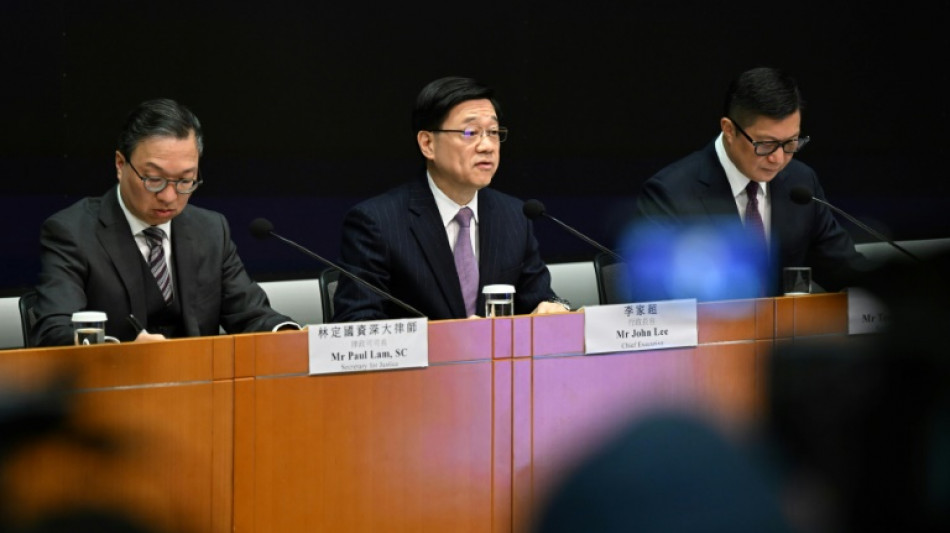
New Hong Kong national security law to add five crimes / Photo: © AFP

 The German state premier hoping to halt far-right surge
 Lebanon wants Israel security deal as prelude to peace: president to AFP

 England's Brook keen to learn from 'hero' Pietersen after stunning ton
 Saudi says Houthis target Mecca, warns of 'red line'

 Phillippines ex-leader Duterte makes first appearance at ICC
 Lebanon wants Israel security deal, Hezbollah disarmament without confrontation: president to AFP
 BASIS.pro Expands On-Chain Infrastructure with XDC Network Partnership and Zypher DAO as Auto Earn Goes Live

 Samson relishing battle with teen star Sooryavanshi for India spot
 Pickle-flavoured tart? AI inspires Japan's convenience stores
 Macau holds first closed-door national security trial
 Bank of Japan set to raise rates under pressure from inflation, US

 Zverev, Shelton back on court for Davis Cup qualifiers
 Peace is a 'dangerous' word in Russian city heading to polls

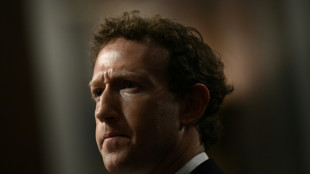 Meta chief pushes back on AI slowdown calls

 'Resident Evil' film brings video game's ethos to the big screen
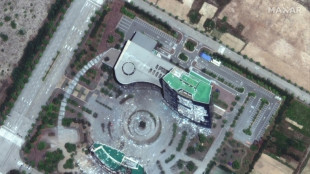 Court orders N. Korea pay Seoul $32.5 mn for blowing up office
 US military buildup in Palau stirs war fears

 US Fed to deliver rate decision with markets betting on hike

 Saudi, Egypt demand open Red Sea as Riyadh vows response to Houthi attacks

 Hydrosat Unveils Osiris Constellation, The Future of Thermal Intelligence
 Capitals say hockey star Ovechkin 'was asked' to film Putin ad
 Spurs in 'tough moment' after League Cup exit as De Zerbi says sorry

 Arteta salutes 'unbelievable' Dowman after Arsenal's teen star sinks Ipswich

 Empty seats as schools reopen in Venezuela's quake-hit Guaira

 Messi set for Argentina farewell in Benin friendly

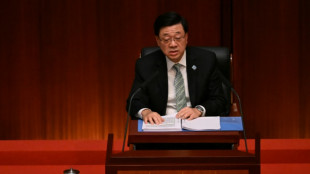
Hong Kong will create its own national security law "as soon as possible", city leader John Lee said Tuesday, adding insurrection and other crimes not covered by existing legislation imposed by Beijing four years ago.
Massive pro-democracy protests rocked the finance hub in 2019, bringing hundreds of thousands of people to the streets to call for greater freedoms.
In response, Beijing imposed a national security law to punish four major crimes -- secession, subversion, terrorism and collusion with foreign forces -- with sentences ranging up to life in prison.
Officials on Tuesday said Hong Kong's security law -- mandated by Article 23 of the city's mini-constitution -- will cover five offenses: treason, insurrection, espionage, destructive activities endangering national security, and external interference.
"While we society as a whole looks calm and very safe, we still have to watch out for potential sabotage and undercurrents that try to create troubles, particularly some of the independent Hong Kong ideas that are still embedded in some people's minds," Lee told a press conference.
"The threats to national security are real, we have experienced them and suffered from them badly... we don't want to go through that painful experience again," he said, adding that "some foreign agents may still be active in Hong Kong".
"I must stress that the Basic Law Article 23 legislation must be done... as soon as possible," Lee said, noting the city had waited 26 years to make it a reality.
Lee said the consultation process for the law -- which runs until the end of February -- would be "open", with the document published online and the government planning to discuss it with local and foreign groups.
He also said he anticipated "badmouthing" of the new law, while insisting it would soon dissipate.
"When people see that this law will bring security and stability, they will love it," he said.
- 'Put a full stop' -
Since the British handed Hong Kong back to China in 1997, the city has been under a "one country, two systems" regime, in which the legal and court structures are separate from the mainland.
Under its mini-constitution, known as the Basic Law, Hong Kong is required to enact a law combating seven security-related crimes, including treason and espionage.
The first legislative attempt in 2003 was shelved after half a million Hong Kongers took to the streets to protest the move.
Critics of the existing national security law have said it has affected Hong Kong's status as an international hub since its enactment in 2020, pointing to an ongoing talent drain as foreign companies reconsider the city as its Asia base.
The law's expansive reach has also had chilling effects, observers say -- quietening Hong Kong's once-vibrant civil society space and shuttering news outlets and radio programmes.
But Lee downplayed the law's impact, pointing to an increase in the number of foreign and mainland companies choosing to open in Hong Kong.
"I am very confident the earlier we finish enacting Article 23, what has been troubling us for over 26 years, we can put a full stop to it and we can focus comprehensively on economic development," he said.
He added that law would not send arrested people to mainland China -- a hot topic for Hong Kongers as it was an extradition bill proposed in 2019 that sparked the massive pro-democracy protests.
"The law we are legislating will have no element at all about sending any arrested persons in Hong Kong to the mainland. So that is very clear," he said.
Since Beijing's law was enacted in 2020, 290 people have been arrested on national security grounds -- including dozens of the city's prominent elected politicians, democracy activists, rights lawyers, unionists and journalists.
More than 30 have been convicted under the existing law, while dozens have been held in pre-trial detention for over two years.
L.Dubois--BTB