Ukraine war sows more turmoil for UK farms / Photo: ©

 PSG start Ligue 1 defence with eye on Champions League hat-trick

 Arsenal can become world's best club: Arteta
 Japan's King Kazu, 59, scores twice from spot to make cup history

 Kyiv's desperate vendors persevere outside obliterated flea market
 Australia races to shield little penguins from H5N1 bird flu

 Messi scores first goal since father's death
 US national debt exceeds $40 trillion for first time
 Brazilian narco violence spills over into tranquil Bolivia
 Trump's devoted 'human printer' in media glare

 Top seed Zverev bundled out by Paul in rain-hit Cincinnati upset

 WADA pledges vigilance on Russian athletes ahead of 2028 Olympics

 NASA satellite rescue mission fails

 Cobolli halts Jodar to reach Cincinnati quarter-finals

 As election looms, Netanyahu puts Turkey in Israel's crosshairs

 McIlroy questions LIV stars 'value' as talk of PGA return builds
 'Breakthrough' mRNA cancer drug curbs melanoma in large trial

 Many US Fed policymakers back interest rate hikes if inflation stays high

 Robinson and Tongue star as Pakistan collapse in England opener
 All Blacks must get 'everything right' to beat Springboks, says legend Fitzpatrick

 Robinson and Tongue star as Pakistan all out for 171 in England opener

 Lake Zurich sees water level hit record low amid drought

 Merck and Moderna's tailored cancer drug curbs melanoma recurrence in trial

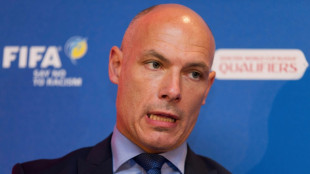 Referees chief Webb wants clamp-down on Premier League set-piece grappling
 Robinson makes history as Pakistan collapse against England
 Alvarez can win back Atletico fans in two games: club chief

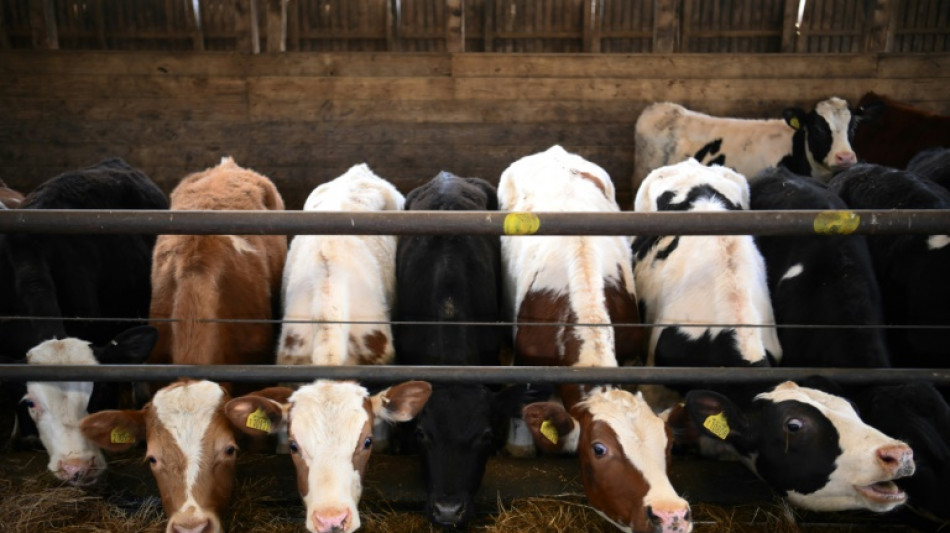
Hungry cows at Westons Farm jostle for position at the feeding trough, blissfully unaware that Ukraine's war has sowed more turmoil for UK farms ploughing through Covid and Brexit fallout.
Westons -- based in the picturesque village of Itchingfield in southern England -- uses excrement from the farm's cattle, chickens, pigs and sheep to fertilise arable crops like carrots, pumpkins, spinach and wheat.
The agriculture sector, like large swathes of the UK economy, is grappling with sky-high energy prices following pandemic lockdowns and labour shortages in the wake of Britain's exit from the European Union.
Now, Moscow's invasion of Ukraine has fuelled rocketing prices for fertiliser because Russia is a major producer.
Farms like Westons have therefore become more and more reliant on animal slurry to grow crops and cut costs.
"The thing that's really concerning us as farmers are the multiple issues that are coming our way all at once," the farm's owner David Exwood told AFP as he fed the cattle.
There is the "high fertiliser price, we have a high fuel price, we've got a shortage of labour, and we've got regulatory change", said Exwood, who is also vice-president of the National Farmers' Union (NFU).
Fertiliser prices in the UK have soared almost fourfold over the past year, sector data show.
The nutrient-rich material was already in short supply after surging gas prices forced leading UK manufacturer, CF Fertilisers, to pause production in September.
Six months later, the Ukraine war sent fertiliser prices hurtling even higher.
Wheat hit recent record peaks because sanctions-hit Russia is a key producer alongside Ukraine.
- Staff shortages -
Meanwhile, worsening labour shortages, sparked by Brexit and exacerbated by Covid, are particularly acute in Britain's agricultural sector.
The industry had 500,000 job vacancies in September, according to NFU data.
Visa issues and Covid restrictions have caused many farm workers to return abroad, notably including many European lorry drivers.
Britain's departure from the European Union at the start of last year formalised Brexit.
"The lack of labour has meant that crops... have gone unpicked and are rotting away in fields," said Jack Ward, chief executive of the British Growers' Association.
The British Meat Packing Association has expressed similar troubles.
"Our main concerns are the lack of staff able to process (carcasses) in the UK," it noted.
Thousands of pigs have been culled because of a chronic lack of butchers in abattoirs.
"UK pigs are being killed, incinerated and not entering the food chain," said farmer Andrew Ward, who grows wheat in Leadenham in central England.
"We have pig farmers going out of business, but imports of pig meat have gone up 20 percent in the last six months (to meet demand) and the government is standing by and letting it happen."
- Birds, bees and trees -
At the same time, the rollout of its Environmental Land Management Scheme (ELMS) will replace the UK's participation in the EU Common Agricultural Policy.
The proposed scheme places greater emphasis on the environment and is expected to ramp up costs for farmers.
"All they are interested in is birds, bees and trees... we can't go green if our bank balance is in the red," said farmer Ward.
Following Brexit, the government of Prime Minister Boris Johnson has agreed a number of new trade deals, including for Australian beef and lamb.
Britain's livestock farmers are concerned they will be undercut, complaining that overseas meat may not be held to the same quality or environmental standards as domestic producers.
Back on the farm in Itchingfield, the turmoil is palpable.
"Farmers are uncertain, they're scared, and I've never known them so afraid of the future (and) not sure what it means to them," said Exwood.
Y.Bouchard--BTB