Waiting out Bukele's 'Bitcoin City' on a Salvadoran beach / Photo: © AFP

 Toogood Gold's Table Mountain Sits in the Shadow of a Nevada Gold Rush
 MEXC July–August Security Report: 38.66M USDT in Risk Funds Intercepted, Futures Insurance Fund Hits 792M USDT

 'Breathing toxin every day': Indonesians choked by haze feel helpless
 Stocks edge higher ahead of US Fed rate call

 Philippines ex-leader Duterte makes first in-person ICC appearance
 2027 Formula One calendar includes Monaco sprint race
 Palestinians are the real victims, Thunberg tells Ed Sheeran
 Hashim Thaci: From 'George Washington of Kosovo' to Hague convict
 Amnesty says Iran committed 'crimes against humanity' in crackdown on 2022 protests

 EU to ban social media for under 13s, curb access until 15
 Philippines ex-leader Duterte makes first appearance at ICC
 EU chief pitches 'associate member' status for Canada
 English village votes to 'secede' from UK over asylum centre plan
 Wildfires push endangered Sumatran elephants to brink: Indonesian NGO

 Stocks head higher as traders prepare for Fed decision
 English village votes to 'secede' from UK over asylum centre
 Hong Kong unveils plan to align economy with China's goals
 Brazilian voters the latest to eye Bukele security model with envy

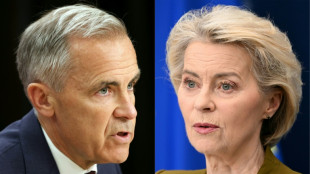 EU chief hosts Canada's Carney in push to 'deepen' alliance
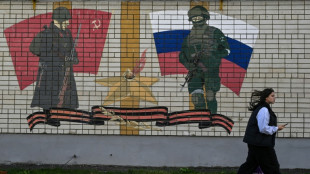
 EU chief to unveil social media, gaming curbs for under-15s
 Saudi says Houthis target Mecca, warn of 'red line'
 Asian stocks stutter as traders prepare for Fed decision
 US touts its power, avoids Iran war at G20 Energy meeting
 Dead animals, barren fields, and hunger - El Nino chokes Central America
 In hydropowered Bhutan, solar starts to rise
When President Nayib Bukele announced plans to create the world's first "Bitcoin City," a futuristic metropolis financed by cryptocurrency bonds, American Corbin Keegan packed up his life in Chicago and headed for El Salvador.
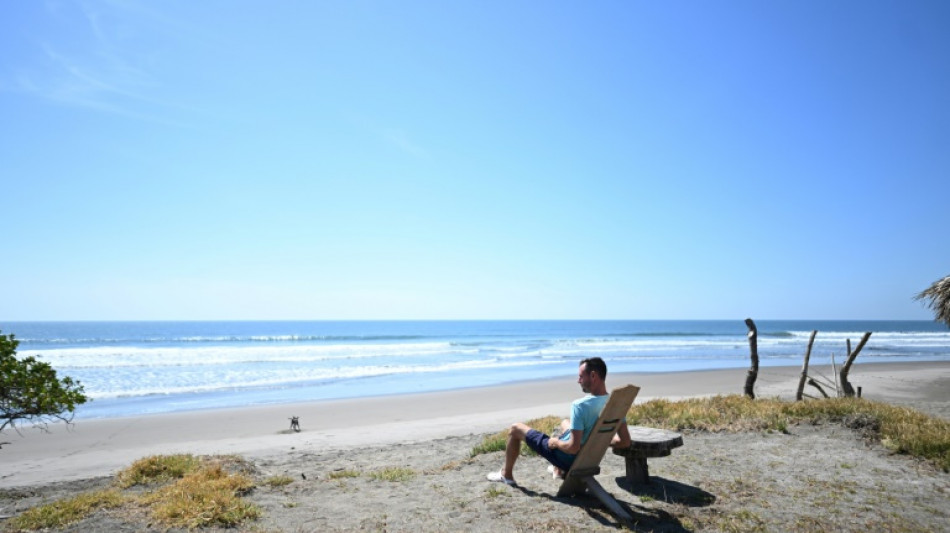
More than two years later, no brick has been laid, and 42-year-old Keegan ekes out a living in Playa Blanca, a coastal town in the Conchagua municipality named after the nearby volcano meant to power the new city of which he hopes to be the first resident.
"It's going to happen. So I'm staying," he told AFP, sitting in a hammock and sipping coffee as waves crashed on the beach a few meters away.
"I'll wait as long as it takes."
To fireworks and fanfare, Bukele announced in November 2021 that his "Bitcoin City" would boast everything from residential and commercial areas to museums, an airport and a monument to the currency on its central square.
Bukele said geothermal energy generated by the Conchagua volcano would power the city some 200 kilometers (125 miles) east of the capital San Salvador.
It would also power bitcoin mining -- the massively energy-consuming process by which bitcoin is created using supercomputers that solve complex mathematical problems.
The president's announcement came just two months after El Salvador became the first country in the world to adopt bitcoin as legal tender despite a chorus of warnings about the currency's notorious volatility.
In September 2021, bitcoin traded at about $45,000 and a few months later it reached a record $68,000. But it later dipped to a low of about $16,000 and is today again hovering around $40,000.
- 'It cannot be stopped' -
Bukele had promised the issuing of $1 billion in bitcoin bonds, partly to finance his city. But that did not happen.
The government has invested an undisclosed amount of taxpayer money in the cryptocurrency -- vowing at one point it would buy a bitcoin a day -- though it is not known whether this has come to pass.
A poll by the Central American University found that hardly anyone used bitcoin last year in El Salvador, where the other legal tender is the US dollar.
According to the UN, more than a quarter of Salvadorans live in poverty, while the US State Department has warned the country's public debt was "on an unsustainable path."
Bukele had promoted the move to bitcoin as a way to bring more Salvadorans, most of them lacking bank accounts, into the formal economy -- including through the receipt of remittances from abroad, a major contributor to GDP.
The change meant that every Salvadoran business -- even neighborhood shopkeepers -- had to accept the cryptocurrency as payment.
But the IMF and World Bank warned that quite apart from currency volatility, the move could leave the country vulnerable to money laundering and other illicit activity that could in turn affect underlying stability.
Despite his crypto gambit widely seen as a failure -- at least for now -- Bukele remains immensely popular ahead of presidential elections on Sunday.
Polls show his approval ratings hovering around 90 percent, thanks largely to a crackdown on criminal gangs.
His actions are credited with vastly improving the daily life of crime- and violence-fatigued citizens, but also criticized for human rights violations.
Keegan said people told him he was "crazy" when he predicted a decade ago that one day a country would adopt bitcoin as tender.
What he did not know at the time was that the country would be El Salvador, and that it would take him to a new life in Central America.
In Playa Blanca, nobody uses crypto.
When Keegan needs money, he rides his rickety motorcycle to the city of Conchagua about 20 kilometers away to draw money from an ATM that disperses bitcoin and dollars.
While he waits for the new city to arise, the self-described jack of all trades fishes and does odd jobs for neighbors who fondly call him "El Gringo."
Keegan would not disclose how much he had invested in bitcoin, but remains convinced that crypto is "the future. It cannot be stopped."
R.Adler--BTB