Canada budget amps military spending in response to Ukraine war / Photo: ©

 Thai, Myanmar military chiefs meet as post-coup thaw progresses
 Asian stocks rally as US Treasury steps in to ease bond fears
 Verstappen signs new Red Bull contract until 2030: team

 What property giant Evergrande's sentence means for China's economy
 Australian prosecutors demand life in prison for mushroom killer
 Fallout far-reaching for Australian Rules after latest scandal
 Rafts on Rome's Tiber River cool down overheated tourists
 Top seeds Sabalenka, Zverev stunned in Cincinnati fourth round
 Australia says relations with Israel 'difficult' after aid worker death
 PSG start Ligue 1 defence with eye on Champions League hat-trick
 Arsenal can become world's best club: Arteta
 Japan's King Kazu, 59, scores twice from spot to make cup history
 Kyiv's desperate vendors persevere outside obliterated flea market
 Australia races to shield little penguins from H5N1 bird flu
 Messi scores first goal since father's death
 US national debt exceeds $40 trillion for first time
 Brazilian narco violence spills over into tranquil Bolivia
 Trump's devoted 'human printer' in media glare

 Top seed Zverev bundled out by Paul in rain-hit Cincinnati upset
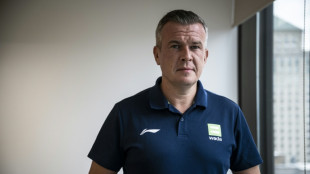 WADA pledges vigilance on Russian athletes ahead of 2028 Olympics

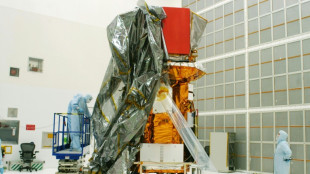 NASA satellite rescue mission fails
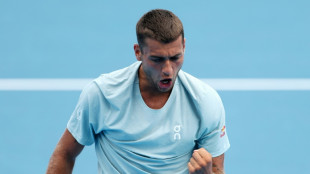 Cobolli halts Jodar to reach Cincinnati quarter-finals
 As election looms, Netanyahu puts Turkey in Israel's crosshairs
 McIlroy questions LIV stars 'value' as talk of PGA return builds
 'Breakthrough' mRNA cancer drug curbs melanoma in large trial
Canada's finance minister, in response to Russia's invasion of Ukraine, shelled out more money for the military in a budget Thursday that also aims to tackle soaring costs of living and a housing crisis.
But the additional Can$8 billion (US$6.4 billion) earmarked for defense over five years falls far short of a NATO target of spending two percent of GDP.
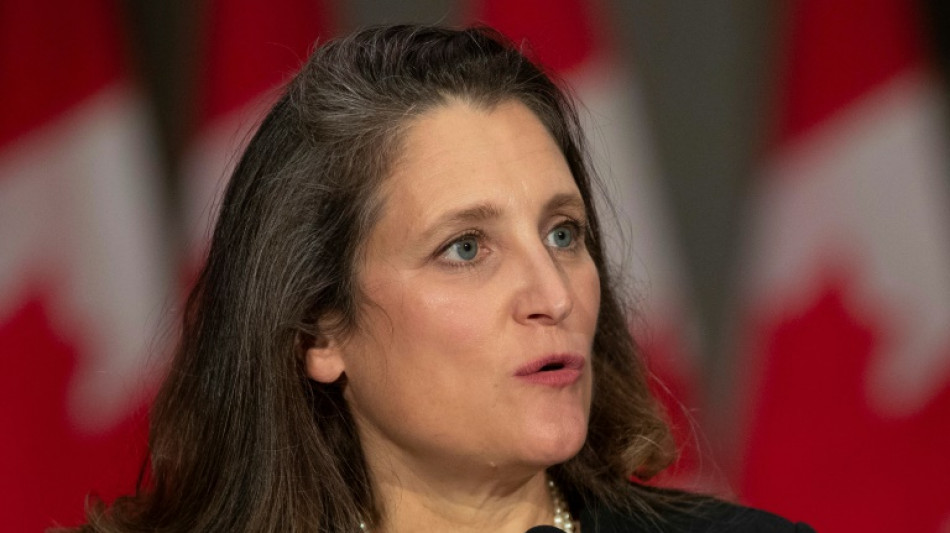
In a speech to parliament, Finance Minister Chrystia Freeland said: "Putin's invasion of Ukraine has reminded us that our own peaceful democracy -- like all the democracies of the world -- depends ultimately on the defence of hard power."
"We know that freedom does not come for free, and that peace is guaranteed only by our readiness to fight for it," she said. "That is why this budget makes an immediate, additional investment in our armed forces."
According to NATO, Canada currently spends 1.36 percent of GDP on the military, which is down slightly from just a few years ago.
To meet the two percent NATO target, Ottawa would have to set aside tens of billions of dollars more each year, according to parliament's independent fiscal watchdog and other experts.
Freeland suggested Ottawa could still close that NATO gap soon, proposing "a swift defence policy review to equip Canada for a world that has become more dangerous."
Canada, with one of the largest Ukrainian diasporas in the world, also announced an additional Can$1 billion in loans through the International Monetary Fund and Can$500 million in military aid for Ukraine this year.
The budget is the first since Prime Minster Justin Trudeau's Liberals won a third term in elections last September.
With support from a small leftist faction the minority government is expected to pass it in a soon-to-be held vote in the House of Commons.
- Slashing spending -
The budget will see spending slashed by Can$131 billion after the government doled out significant pandemic aid over the past two years that pushed the debt to a record Can$1.16 trillion this year.
At the same time, Freeland said she recognizes that Canadians are struggling with higher costs for almost everything and so the government is rolling out targeted measures to mitigate the impacts of inflation.
Notably, Ottawa aims to double the number of new homes built over the next decade to ease a supply crunch and soaring prices, as well as ban foreign investment in an overheated housing market.
It also earmarked billions of dollars for a new dental care program, coming on the heels of a new national childcare program.
And Ottawa is setting up a fund to attract private foreign investment in Canada's transition away from fossil fuels, raising taxes on banks and insurance companies, and supporting domestic exploration for critical minerals used to make electric vehicle batteries and semi-conductors.
After what Freeland described as having "teetered on the brink" in 2020 when the pandemic hit, the Canadian economy has rebounded strongly.
It has recovered 122 percent of the jobs lost in those early months, and the unemployment rate -- at 5.5 percent -- is now just shy of a pre-pandemic low, while economic growth is "1.2 percent above where it was before the pandemic," she noted.
Private sector economists surveyed by Ottawa forecast slightly slower growth of 3.9 percent in 2022 and 3.1 percent next year.
"After wave after wave and lockdown after lockdown, our economy has not just recovered, it is booming," Freeland said.
But getting through the last two years came at a "significant cost" and now the government must reduce spending as it reaches for an eventual balanced budget, she said.
"We are absolutely determined that our debt-to-GDP ratio must continue to decline," the minister said.
"Our pandemic deficits are and must continue to be reduced. The extraordinary debts we incurred to keep Canadians safe and solvent must be paid down."
The budget deficit is expected to fall from Can$113.8 billion in 2021-2022 to Can$52.8 billion in 2022-2023.
The debt-to-GDP ratio, meanwhile, is forecast to fall from 46.5 percent in 2021-2022 to 45.1 percent in 2022-2023.
H.Seidel--BTB