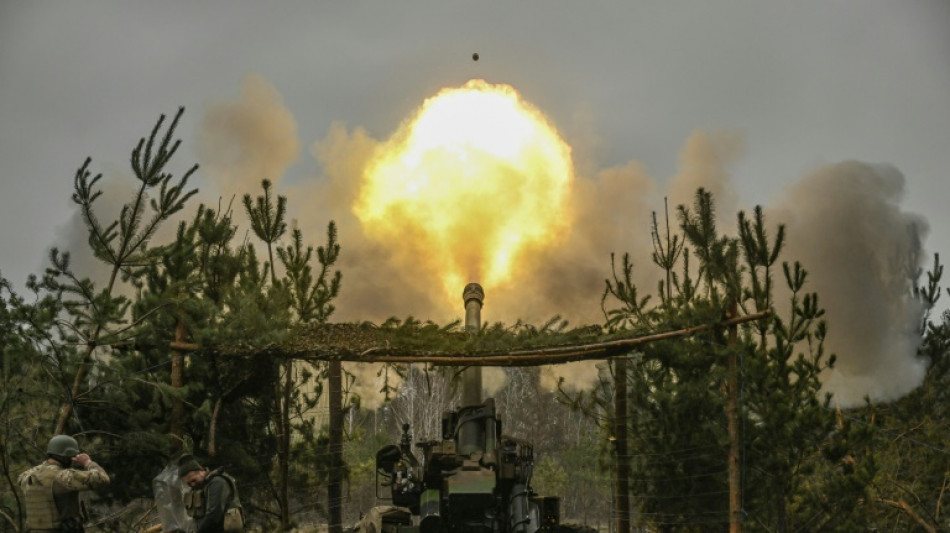
Europe battles powder shortage to supply shells for Ukraine / Photo: © AFP/File

 AtlasClear Holdings Reports Preliminary Fiscal 2026 Revenue of Approximately $20.1 Million, Up 85%; Revenue Plus Interest Income of Approximately $21.9 Million
 Alonso says Chelsea ambition clear after end of Boehly era
 Micron's Taiwan workers say 68 months' bonus not enough
 'Another arrow to the quiver': World Bank posts record private capital mobilization
 Macron hosts Lebanon security talks as UN mission nears end
 From land to race laws: what's driving the US-South Africa rift?

 Beyond Investment Returns: Families Are Measuring Wealth by Freedom, Continuity, and Legacy, According to Nour Private Wealth

 King Charles disputes claims in book by Princess Diana's brother
 Real Madrid fan group wants Mbappe apology over Ceuta shirt snub

 Nepal floods among 'most challenging' disasters: WFP
 Doubts as Italy eyes electric future for steel plant
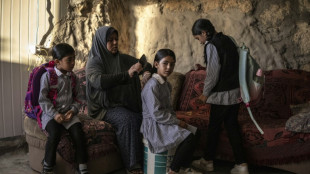
 'One of the kindest people': Taraneh, 21, facing execution in Iran

 Japan eyes changing prostitution law to punish sex buyers

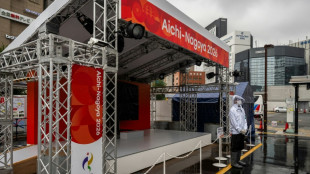 After record rain, typhoon threatens new challenge to Asian Games

 Kids and social media: what would change under new EU law
 Modi pitches India as global chipmaking hub
 Ukraine plans record defence spending in 2027
 Klopp calls up 44 players in huge first Germany squad
 STARPRIME Responds to Diverging Gold Market Demand with AM/PM Fixing and XAU24/7

 Ukrainian fashion designer debuts art between air raids

 Gambian businesses struggle under prolonged blackouts
 Fiji declares national HIV crisis
 Australia to cut migration to fix housing crisis: minister
 NASA scan discovers new, 'once in a century' Moon crater
 Most stocks rise as Fed hikes and indicates drive to curb inflation

Hard-to-find gunpowder is hindering Europe's scramble to provide hundreds of thousands of shells for Ukraine's defensive effort against Russian invaders, with solutions only starting to emerge.
"We have all become aware of the need to face up to the scarcity of some components, especially gunpowders," French President Emmanuel Macron said Monday after a gathering of Kyiv's allies in Paris.
"Powder is really what's lacking today," he added.
Gunpowder goes into propellant charges that hurl artillery shells -- such as the NATO-standard 155-millimetre projectiles used in many guns sent to Ukraine -- over distances of tens of kilometres.
"A simple explosive artillery shell has three parts. It has a steel casing, a high-explosive main charge and a detonator" usually set to trigger the blast on impact, said Johann Hoecherl, a munitions expert at the German armed forces university in Munich.
"Propellant charges are usually separate, because (gunners) will take one or two, up to six or even eight" depending on the desired range, he added.
While the propellant is still referred to as gunpowder "it's not powder at all these days, it's made up of rods or pellets", Hoecherl said.
In a video on its website, German arms manufacturer Rheinmetall illustrates stackable propellant cylinders filled with explosive pellets slotting in behind a shell in the breech of a cannon.
- 'Innovation at work' -
Europe counts a very small number of powder producers, said Jean-Paul Maulny, deputy director of France's Institute for International and Strategic Relations (IRIS).
They include firms like Eurenco, with operations in France, Belgium and Sweden, and Nitrochemie, majority-owned by Rheinmetall, with sites in Germany and Switzerland.
With many countries pushing to bring production home, France "is in the process of relocating part of Eurenco's production to Bourges" around 200 kilometres (125 miles) south of Paris, Maulny said.
"This is one of the bottlenecks for munitions," he added. "The top question is the quantity of production."
EU internal market commissioner Thierry Breton told reporters in Paris Friday that the bloc also faced challenges finding the raw materials for gunpowder.
"To make powder, you need a specific kind of cotton, which mostly comes from China," he said.
Nitrocellulose, also known as guncotton, is a key ingredient in gunpowder manufacture.
"Would you know it, deliveries of this cotton from China stopped as if by chance a few months ago," Breton added.
China and Russia have in recent years ramped up economic cooperation and diplomatic contacts, and their strategic partnership has grown closer since the invasion of Ukraine.
In Russia this week, China's Vice Foreign Minister Sun Weidong declared relations "are at their best period in history".
Breton said that "Nordic countries have found a substitute for the Chinese cotton... innovation is at work, precisely to meet the need for powder, because... we have problems today with powder capacity".
Companies producing the substitute ingredients for powder would be among those selected for grants under the EU's Act In Support of Ammunition Production (ASAP) to be announced next week, Breton said.
- 'Much larger scale' -
Breton predicted that EU efforts to boost artillery shell output would bring the bloc's annual production capacity to between 1.5 million and 1.7 million by the end of this year.
He estimated that the equivalent figure for Russia was "a little below two million".
"Everyone is putting themselves in a position to manufacture on a much larger scale," said IRIS expert Maulny.
"For now, the Ukrainians are short of shells... the Russians don't have a shortage since they got stocks from the North Koreans, but it could happen in the coming months," he added.
"No-one was ready for a high-intensity conflict where there's enormous consumption of military equipment. We haven't seen a war like this since World War II," Maulny said.
A.Gasser--BTB